Papal conclave to begin Tuesday
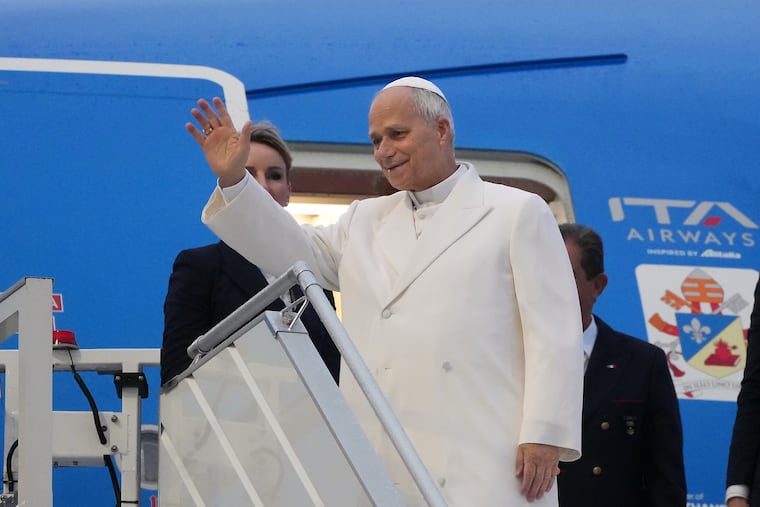
VATICAN CITY - The conclave to elect a successor to Pope Benedict XVI will begin Tuesday after a morning Mass in St. Peter's Basilica.
VATICAN CITY - The conclave to elect a successor to Pope Benedict XVI will begin Tuesday after a morning Mass in St. Peter's Basilica.
The precise times haven't been set, but the cardinals will likely be inside the Sistine Chapel by late morning Philadelphia time. They will enter the conclave just 12 days after Pope Benedict abdicated, taking advantage of his last-minute rule change that gave them the option of starting earlier than the previously required 15 days after the papacy was vacated.
About 150 cardinals have been meeting since Monday to give short speeches on what they want to see in a new pope. Only 115 of them are under 80 and therefore eligible to vote. They were to meet again Saturday.
More than 100 cardinals have given short speeches, according to the Vatican spokesman, the Rev. Federico Lombardi, who attends the meetings and is permitted to give vague summaries. On Friday the topics included interreligious dialogue, bioethics, social justice, the importance of proclaiming God's love and mercy, collegiality - the relationship between bishops - and the role of women in the church.
Lombardi did not elaborate on any of those, including the latter. But he arrived at the news conference with a large bouquet of flowers that he presented to a female reporter in honor of International Women's Day. As is customary on that day, "The Holy See offers flowers to many of the different women working there," said the Rev. Thomas Rosica, who gives summaries of the Italian news conference in English and French.
The meetings of the cardinals have been formal, with cardinals signing up to make five-minute speeches on the topic of their choice. There had been reports that many cardinals wanted a different process, used by some religious orders to identify potential new superiors, in which they would work the room having 10-minute one-on-one conversations on what the church needed and who might make a good pope. That apparently did not happen during the official meetings.
But Lombardi and - prior to the media blackout - Cardinal Donald Wuerl of Washington pointed out that there were long coffee breaks when the cardinals could speak informally.
With 115 electors, 77 votes will be required for the two-thirds majority. At this point in the run-up to the 2005 conclave, the Italian newspapers were reporting a big push for Cardinal Joseph Ratzinger, who went on to be elected. This time there is reportedly more tension, particularly between the traditionally powerful Vatican cardinals and many of the diocesan cardinals who want to see the Vatican bureaucracy reformed.
According to two Italian newspapers, La Stampa and La Repubblica, Cardinal Angelo Sodano, dean of the college of cardinals and the former secretary of state, is backing two South Americans of recent European heritage for pope and secretary of state. Both worked for many years in the Vatican.
For pope, he and some other Vatican cardinals are said to back Cardinal Odilo Pedro Scherer, 63, of Sao Paolo, a Brazilian of German heritage who worked in the Vatican's Congregation for Bishops from 1994 to 2001.
As his secretary of state, they would reportedly like to see Cardinal Leonardo Sandri, 69, an Argentinian of Italian heritage who was the former "substitute" or chief of staff at the Vatican and most recently headed its Office for Eastern Churches.
Sandri is also rumored to be a papal contender.
But American and European cardinals who want to see a major overhaul of the Vatican bureaucracy are reported to be giving serious consideration to Cardinal Angelo Scola, 71, of Milan, an intellectual heavyweight known for his dialogue with Muslim leaders, who has never held a full-time post at the Vatican.
The newspapers suggest that if there is an impasse between the Scherer and Scola camps, other candidates may emerge. They suggest that the leading contenders would be Cardinal Peter Erdo of Hungary, 60, who was twice elected president of the European Bishops' Conference, and Cardinal Marc Ouellet, 68, a Canadian scripture scholar who was formerly archbishop of Quebec and most recently head of the Vatican's Congregation for Bishops.
As a dark horse they suggest Cardinal Malcolm Ranjith of Sri Lanka, a papal diplomat who formerly worked in the Vatican's Worship Office, where he championed revival of the Latin Mass and excoriated communion in the hand.
Meanwhile, workers were installing electronic jamming devices in the Sistine Chapel to prevent information leaks and applying opaque film onto the windows of the House of St. Martha to keep people from seeing inside the building.