China strife and survival
This story originally ran in the Sunday Review section of the Philadelphia Inquirer on Sept. 26, 1999.
Dreams of Capitalist success have elbowed aside the doctrine that sustained previous generations
This story originally ran in the Sunday Review section of the Philadelphia Inquirer on Sept. 26, 1999.
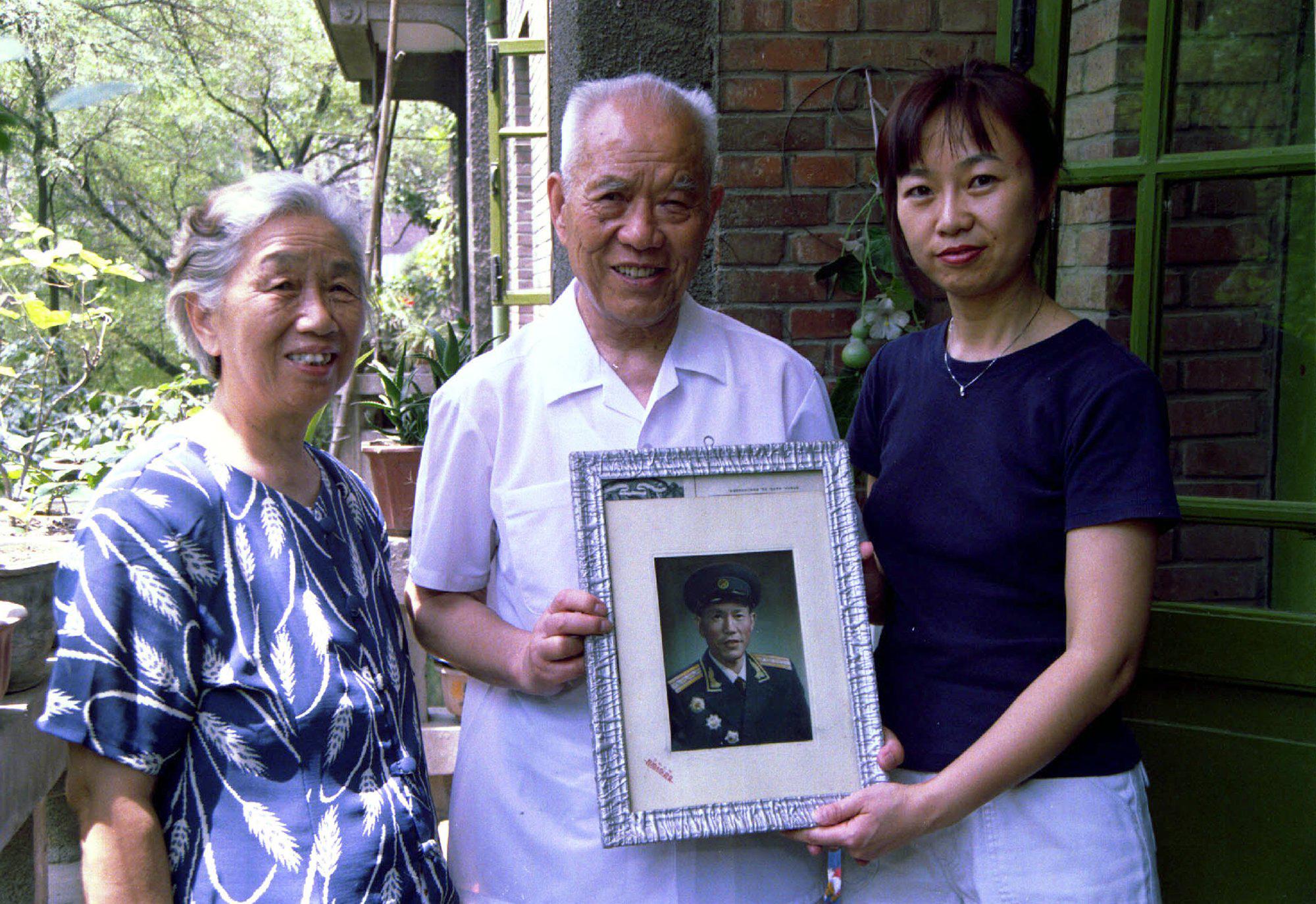
BEJING —His eyes are clouded with the milky veil of cataracts. One lid droops. But they can see the past clearly. With a blink, 82-year-old Zhong Renhui summons up a morning 50 years ago when he was a soldier in a Red Army garrison in the craggy mountains of southwestern Guizhou province.
It is Oct. 1, 1949. All the troops are huddled around radios straining to hear the scratchy broadcast from Beijing, more than a thousand miles away. Mao Tse-tung stands at a podium at the Gate of Heavenly Peace in front of the Forbidden City. He declares the creation of a communist nation - the People's Republic of China.
"The Chinese people have stood up," Mao pronounces in words that would become immortal.
The garrison thunders with hoots and hollers, the soldiers intoxicated with victory. Thirty-two years old at the time, Zhong had spent nearly half his life with his finger on the trigger of a rifle, fighting the dual enemies of Japanese invaders and the ruling Nationalist government, or Kuomintang (KMT).
Mao's declaration seals their victory.
"We got what we were fighting for," Zhong said at home in Beijing.
Zhong Renhui has been an actor in one of the greatest dramas of the century: the epic of modern China.
The Chinese people have hurtled through a century of upheaval, struggle and disorienting change. They have survived invasions and civil war, famine and anarchy. They fought to bring the Chinese Communist Party to power and now watch in disillusionment as corruption destroys its credibility. Only in recent years have they enjoyed anything close to peace and prosperity.
As the People's Republic of China celebrates its 50th anniversary on Friday, Oct. 1, China is in flux. The economy is a mishmash of ham-handed central planning and runaway capitalism. All the old promises from the state - free education, free health, jobs for life, generous pensions - have been broken.
The Communist Party stubbornly holds onto power. But the tenets of Marxism-Leninism and Mao Tse-tung are more required reading than practiced principles. The rule of the jungle prevails.
In the family of Zhong Renhui, the changes are visible.
Zhong Renhui still ardently believes in the Chinese Communist Party. His generation fought to build a nation. In his hometown in Jiangxi province, 200 young men ran off with the Red Army in the 1930s and 1940s; only six lived to see liberation day in 1949.
But today, the younger members of the Zhong family are struggling with a more singular battle - to get a job, make money, maybe prosper.
Like his great-uncle before him, 19-year-old Zhong Xinming has set out from his home in Jiangxi province. The college junior spent the summer looking for work in boomtowns of southern China.
Their lives are bookends to an epoch. The elder Zhong fought a revolution, while his young nephew is part of China's evolution.
"China has gone from poor to rich, from small to big, from weak to strong," Zhong Renhui said. "It would be impossible to have today's life if people didn't sacrifice and struggle in the past. "
Living in a leafy Beijing compound for senior members of the party, Zhong enjoys a quiet life with his wife, 71-year-old Ding Xin, also an old revolutionary. He eschews the personal driver and big black sedan accorded most retired cadres.
Little in his apartment, which is spacious but simple, hints at his past. There is a black-and-white photograph from 1964 showing him standing next to Chou En-lai, Mao's second-in-command. An old article about Zhong from the military's Liberation Daily is stashed in a drawer. A Chinese edition of Red Star Over China by the American journalist Edgar Snow, which has a picture of Zhong's Red Army unit, sits on the shelf.
About the only reminder of his life as a Red rebel is a black tattoo on his forearm - the Chinese character for his family name. Sixty-six years ago, he and his friends were so full of zeal after joining the Red Army that they used ink and needles to make tattoos for each other.
"I didn't expect it to last so long," he said with a little laugh, his dimples showing.
* Zhong Renhui was born on Oct. 27, 1916, the third of five sons of poor peasants from Ruijin, a remote, mountainous region of Jiangxi province in southeastern China.
In the villages around Ruijin, the communists found eager recruits among peasants like Zhong Renhui's father. The family rented land from a rich landlord who took half of their crops as payment. Before every harvest, the family ran out of food and had to borrow from friends or eat rice husks and wild plants.
When Zhong Renhui joined the Red Army in the early '30s, the communist troops were a ragtag corps of peasants. While Generalissimo Chiang Kai-shek's KMT troops had weapons and aid from the United States, the Red Army had to scavenge for rifles, snatching them from the stiffened arms of enemy corpses.
As a teenager, Zhong was eager to join Mao's army, but less for lofty reasons of ideology. He had three goals that seem as clear to him today as they were then: to expel Japanese invaders in northeastern China; to topple the KMT; and to overthrow rich landlords.
Japan set out to conquer China, slowly at first, before a full-scale invasion in 1937. Chiang made fleeting attempts at uniting with the communists to fight the Japanese. But he later turned on the communists and set out to annihilate Mao's rebels.
The first time Zhong saw battle, the Red Army suffered a humiliating defeat at the hands of the KMT. On April 10, 1934, KMT troops surrounded a communist base near the town of Guangchang, north of Ruijin. They outnumbered Red Army foes by more than two to one and had fighter planes and machine guns. Zhong's unit hid in trenches in the mountain forest.
Death surrounded him. After 18 days of battle, one out of every five Red Army soldiers had been killed or seriously wounded. Civilians, too, got caught in the crossfire. "It left a deep impression," Zhong said. "Ruijin was such a small city but so many people died. "
To avoid annihilation, the Red Army retreated, embarking on Oct. 16, 1934, on the epic Long March. For one year and three days, marchers followed a tortuous route that wound west before looping north to Yan'an in central Shaanxi province. More than 100,000 people set off on the nearly 6,000-mile journey - an odyssey akin to walking across the United States, twice. Fewer than 8,000 made it to the end. The soldiers wore nothing but threadbare cotton clothes and straw sandals. Zhong's older brother, Zhixiong, also joined the Long March exodus.
Soldiers scaled snow-covered peaks in Sichuan province without proper shoes or coats. Desperate commanders concocted their own remedies to keep troops warm.
They ate root of ginger. They sipped a boiled brew of hot peppers. Countless died along the way, their iced corpses littering the trail.
"Some died of cold. Some died of hunger or from eating poisoned wild vegetables," Zhong recalled. "Some were so hungry they ate leather straps. "
Once at Mao's base in Yan'an in the parched, yellow plateaus of central China, Zhong worked for a unit that entertained soldiers. He taught soldiers battle songs, played the harmonica, and performed in skits.
After 16 years as a front-line soldier, Zhong lost count of his battles. He covered thousands of miles on foot, crisscrossing 10 provinces in the pursuit of - or retreat from - Japanese and KMT foes. "Good legs," Zhong quipped, slapping his thighs.
He was not invincible. On March 16, 1936, his unit headed east into Shaanxi province. The soldiers crossed the Yellow River and marched into a town called Huoxian, where Zhong and his unit went to hang communist slogans at a train station.
KMT troops ambushed them. Zhong fell. He clutched his neck and pulled away his palm, which was soaked with warm blood. "When I lost consciousness, I felt I was falling from a high mountain to the ground," he recalled. "I thought, 'I'm dying. Does my brother know? ' "
A crew of soldiers came to carry away the corpses. Someone noticed that Zhong was still breathing and saved him. At the hospital, Zhong was visited by a pint-sized commander: Deng Xiaoping, who later ruled China after Mao's death in 1976. Deng remembered the young actor and told doctors, "Don't lose him. "
Some time later, as Zhong played his harmonica for another patient, a commander summoned him to meet a visitor. He walked into a room and stood face to face with Mao Tse-tung, who patted him on the shoulder and invited him to lunch.
From Yan'an, the communists staged one of the most amazing comebacks in military history. Allies of the KMT, particularly the United States, would agonize for years over who lost China. Scholars argue that Chiang's fixation with conquering the communists distracted him from the more formidable Japanese army. Fighting two fronts, the KMT was spread thin.
The Red Army, meanwhile, capitalized on its stronghold with peasants and launched successful attacks against the Japanese. Along the way, it won people's loyalty.
* As one of the victors, Zhong should have enjoyed a triumphant life, reaping the benefits of battle. But no one, not even an old revolutionary, was spared from the tumult to come.
Zhong was the garrison commander in southwestern Yunnan province in 1958 at the start of Mao's disastrous attempt at agrarian reform - the Great Leap Forward.
Peasants were organized into communes and forced to try new farming techniques that seriously reduced output. Leaders in the provinces lied about their grain production to curry favor with Mao.
Zhong challenged local officials. "I was a farmer, I knew these numbers couldn't be true," he said. "They just made up figures. "
He paid for his honesty. In 1959, he was stripped of his military post and reassigned to an army factory as deputy director, an insult to the former commander. "I could not give up my principles," he said. "I wanted to protect the nature of the Communist Party. "
Zhong eventually rebounded. He became the senior party official at the factory.
But the country - and Zhong - were rocked again by upheaval.
Mao, who grew increasingly paranoid with age, thrust China into a decade of lawlessness during the Cultural Revolution (1966-1976). He manipulated the country's youth to attack all authority figures. The chairman sought revenge against not only individuals but whole classes of people.
Zhong - the Long March veteran, honored soldier, party stalwart - was accused by young Red Guards of being a "capitalist roader," an epithet that refers to someone who follows the capitalist road. He was publicly harangued.
The factory shut down. His family back home in Ruijin suffered as well. His younger brother, the head of a school, died after being beaten by students.
"If there was no Cultural Revolution, China's development would have been so much better," Zhong said.
The Cultural Revolution is one of Zhong's two big regrets. The other is the corruption now infecting the party. Every day there are new reports of brazenness - party members who run smuggling rings, bosses at state factories who steal funds for private villas, cadres who invest in the stock market instead of building public projects.
"Why did they become officials? They become so corrupt. They use their power for their own private interests," he said.
His daughter Ann, 40, added: "Every time we talk about bad things like corruption he's unhappy. He has to recognize that it is true. But he always says it's not the party but the actions of individuals. "
Was it worth it - the 16 years of fighting, persevering through political campaigns, the humiliations as well as the victories?
Zhong does not skip a beat: "It was. People's living standards are better. China is stronger."
For the young, peaceful revolution: Zhong Xinming is following in his great-uncle's footsteps. But instead of backing communist promises, Zhong is drawn to capitalist dreams.
This story originally ran in the Sunday Review section of the Philadelphia Inquirer on Sept. 26, 1999.
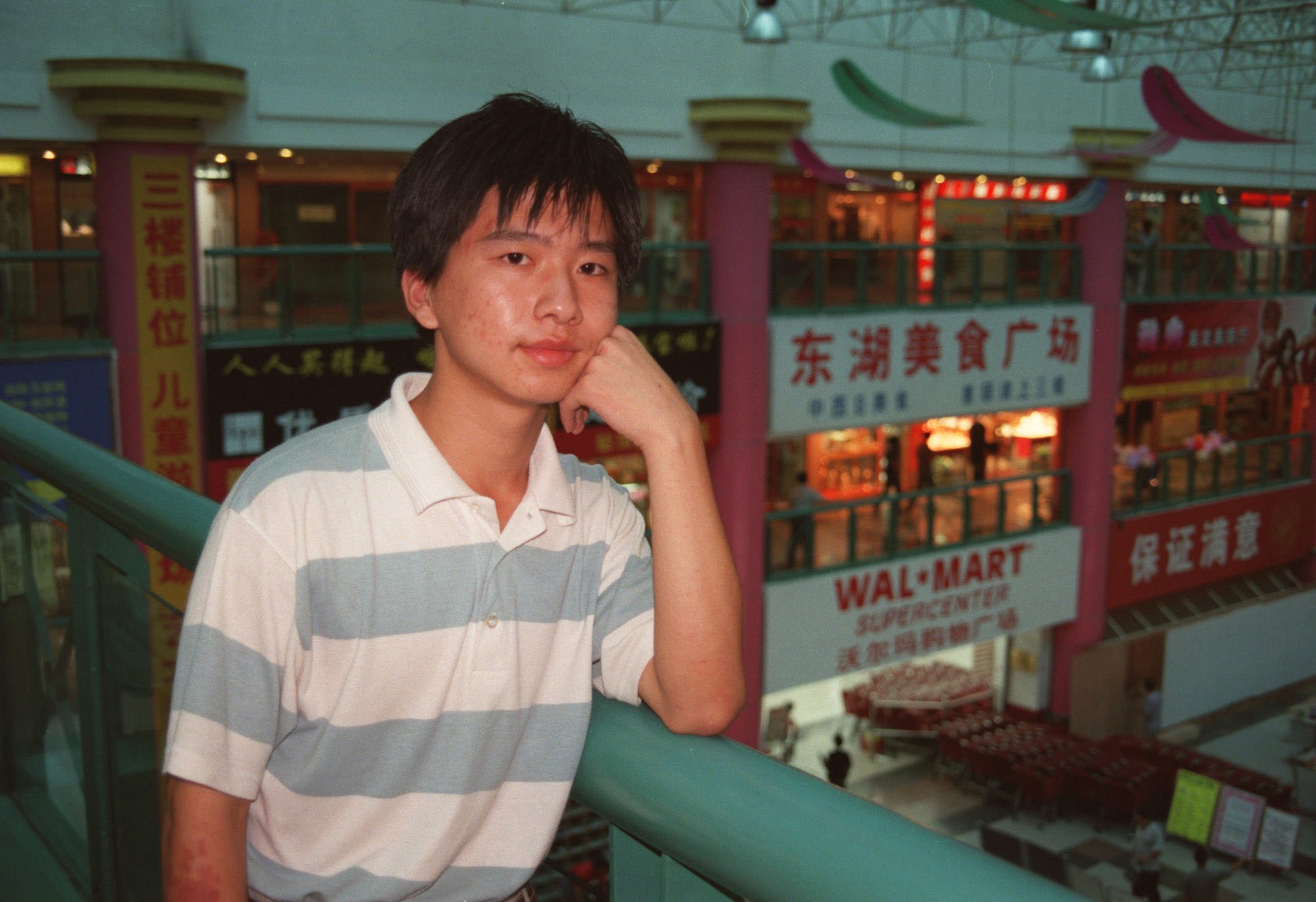
RUIJIN, China — Just as his great-uncle had done decades earlier, Zhong Xinming recently left his home here on an odyssey of transformation.
But while Zhong Renhui, now 82, had left as a teenage soldier in straw sandals to rid China of Japanese invaders and the ruling Nationalists, 19-year-old Zhong Xinming set out with a more personal plan: to own a computer, learn English and drive a car.
"These are the passports to the 21st century," said the earnest college student, intent on succeeding in a China vastly changed from the one his great-uncle helped build.
Since the creation of the People's Republic of China on Oct. 1, 1949, the nation that was once the "sick man of Asia" now dominates the region as a military and economic powerhouse. The country that for centuries looked inward now reaches out. The society that under Mao Tse-tung chanted "Down with Capitalist Roaders" now follows the maxim of Deng Xiaoping: "To Get Rich is Glorious. "
In the early years of communist China, the nation's industrial base was similar to that of Belgium, a country with a population 1 percent the size of China's. But in the last 20 years, China's economy has quadrupled. Today, China ranks among the world's top 10 trading nations.
In 1979, when Deng Xiaoping opened China to the world, people glimpsed what could be and they dreamed - of a refrigerator, a television, a stereo.
Those dreams seem small and quaint today. One out of four people owns a television, and one out of 12 has a telephone. Computer use is soaring. China now has four million people wired to the Web, and the number increases by double-digit percentages each year.
A typical factory worker makes about $120 a month, but an educated office worker for an international joint venture could expect to make $1,000 a month.
Zhong Xinming was born in 1980, just as China was waking from the economic coma of the Mao era. All he has known is increasing prosperity. He doesn't just want to own luxury appliances - he wants to own a whole company.
He and his friends can drive Honda motorcycles to shopping malls with Western-style outlets such as Wal-Mart. As members of the urban elite, they can surf the Web at Internet cafes, defying the antiquated controls of the communist government trying to limit what people hear or read. They can buy bootleg video discs of movies such as Titanic or the banned Seven Years in Tibet.
The government doesn't guarantee them jobs for life. That promise of an unbreakable "iron rice bowl" - a job for life and cradle-to-grave welfare - sustained their parents' generation. But it has been replaced by the capitalist lures of wealth, mobility and independence. Today's youth spend less time on government work assignments after school and concentrate more on sending resumes to multinational companies such as Motorola, enrolling in M.B.A. programs, or starting their own businesses.
Everyone in China grows up reading Mao's little red book of quotations. But today's young people would rather analyze the autobiography of Microsoft's Bill Gates.
Maurice Meisner, a China scholar at the University of Wisconsin, calls the advances in China "one of the greatest achievements of the 20th century. "
"I believe that few events in world history have done more to better the lives of more people than the Maoist victory of 1949 and the socioeconomic transformations that followed from it," he wrote recently for the Asia Research Centre in London.
As a teenager, Zhong Renhui left home to battle his way across China.
Last summer, his grandnephew took off from Ruijin on his own adventure: He set out to find a job in southern China. Zhong Xinming, a serious, focused teen who looks as if he spends more time indoors than out, traveled to the boomtown of Dongguan to learn what it was like to hold a paying job for the first time in his life.
"I just want to rely on myself," said Zhong.
That emerging attitude is one of the most marked changes of all in China.
"People's minds have changed so much," Zhong said. "Before, everyone thought the iron rice bowl was enough. Now we don't think so. Today, with your ID card, you can go anywhere in China. You can get yourself set up with any company any place. You can have opportunities. "
"I want to set up a factory or company someday," Zhong said. Switching to halting English, his major at school, he added: "I want to go into the international world market. "
It is a lofty goal for a college student who only last May left his home province of Jiangxi for the first time.
He was born in Ruijin, where his parents and much of the Zhong clan still live. A hotbed of communist activity against the ruling Kuomintang, Ruijin was where the Chinese Communist Party established its first capital on Nov. 7, 1931.
Before last summer, Zhong Xinming had been no farther than Nanchang, the capital of Jiangxi province, where he attends college. But on May 10, he boarded a train with 10 classmates for an 18-hour train ride on hard wood seats to Dongguan. Set in the Pearl River delta near Hong Kong, Dongguan was nothing but rice paddies 20 years ago. Today, it is a mecca for China's converts to capitalism. "Tai ku," Zhong said of Dongguan. "Very cool. "
When Deng opened China's economy in 1979, the first investors to march across the threshold were overseas Chinese from Hong Kong. They poured money into Guangdong province, just across the border, and built joint-venture factories for making toys, shoes, clothing and appliances. Millions of migrant workers flocked to the area to strike it rich. Sleepy villages such as Dongguan became boom towns of white-tile offices, factories, blue-glass hotels, neon-lit bars and open-air storefronts.
It only took Zhong a day to find a job. He got hired as a quality inspector for a Taiwanese factory that had 1,000 workers making ballpoint pens for export to countries such as the United States, where they retail for $10.
Zhong earned the equivalent of $100 a month, high for the factory. But he didn't last long. He quit after a month. In all that time, he said, the factory only gave him two days off.
"It was not whether you want to work that much - you must," he said. "I said, 'So what if I'm making 800 yuan, I don't want to work for you. ' "
He decided to focus his job search on something more promising such as computers, but that work proved hard to find. A week after quitting the factory, he had four computer-related interviews. Eventually he got one of those jobs but kept it only briefly, returning home at his parents' urging to prepare for school.
"My son can create his own world," said Zhong Xinming's mother, Xie Lanjiao, who works for an office of the Communist Party in Ruijin. "His generation is more mentally prepared than ours to accept this idea. "
Zhong declares what he wants from life in one word: "Independence. "
His focus is getting ahead in business. He skirts political talk entirely, as a dangerous pastime. He was too young to be scarred by the Tiananmen protests of 1989, when young people demonstrated for democracy, and where hundreds, perhaps thousands, died in a bloody government crackdown.
In the decade since the thwarted Tiananmen democracy movement, Chinese people have learned to stay out of politics. People have more economic freedom than ever - freedom to chose their jobs and move from city to city - but political freedom is still severely limited.
Zhong is not sure whether he will return to Ruijin after college. A city of 100,000 with another 460,000 in the surrounding countryside, Ruijin has lagged behind the rest of China in its economic progress.
As for his three goals - "the passports to the 21st century" - he has the computer, a laptop his parents gave him. The English is coming. The car might take a while.
Zhong said he'd like to team up with computer engineers at school and hatch an idea for a software business. Or maybe after graduation he will work as a wholesale agent for a multinational such as McDonald's. "I don't want just any old job," he said. "I'll have to investigate the market, see what's there. "
Fifty years since the start of the People's Republic of China, Zhong is part of a second liberation. "I just want to go straight ahead," Zhong said. "Mentally now I think I can achieve whatever I want to achieve. I have confidence."