Phillies might be overvaluing Jonathan Papelbon
Teams that have chosen other closer options haven't been proved wrong.

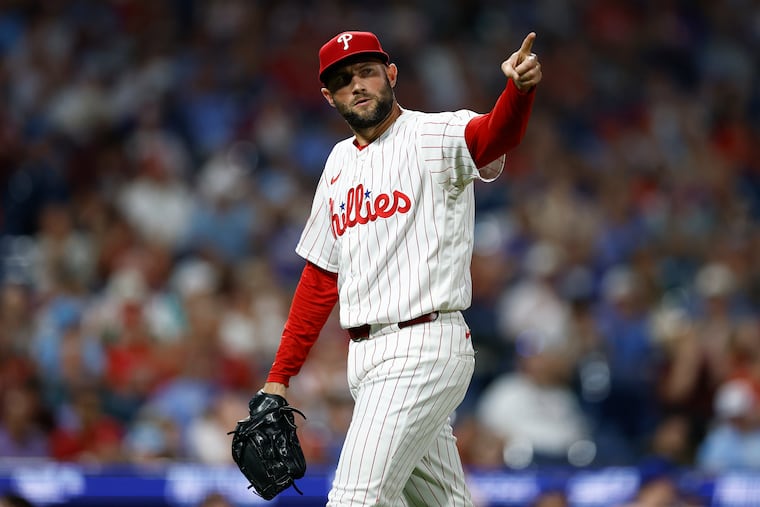
FORGET ABOUT the vesting option. Forget about the outspokenness. If you want to know why Jonathan Papelbon is still giving you something to boo, just look at the closers who have been traded over the last year.
PLAYER A: 2.02 ERA, 122 saves, 9 blown saves, 8.7 K/9, 2.3 BB/9, 1.0 HR/9
PLAYER B: 2.32 ERA, 122 saves, 15 blown saves, 9.5 K/9, 2.0 BB/9, 0.7 HR/9
Torn? What if I told you Player A is three years younger than Player B?
The Angels decided they wanted Player A last year, so they traded a marginal top-100 second-base prospect and three lesser minor leaguers for Huston Street. Player B, obviously, is Papelbon. The numbers are 2012-15, and if you go back to the trade deadline last year, they are tilted slightly more in Street's favor.
Next one . . .
PLAYER A: 2.70 ERA, 17 saves, 2 blown saves, 42 SO, 4 BB, 0 HR, 33 1/3 IP
PLAYER B: 1.96 ERA, 23 saves, 3 blown saves, 37 SO, 11 BB, 1 HR, 41 1/3 IP
Torn? What if I told you Player A is three years younger? And he pitches in the American League? And, most important, he's willing to pitch in whatever role you need, in case you decide to stick with your current closer?
You can argue that the Tigers made the wrong choice when they chose Player A. It certainly looked like it in the playoffs. But given their comparable numbers through the day of the trade last year, plus Papelbon's insistence that he close and his ability to leverage a no-trade clause, you can understand why the Tigers were satisfied acquiring Joakim Soria.
We haven't even broached the subject of money, and we've already decided that it was perfectly rational to prefer Street to Papelbon and, at the very least, it wasn't irrational to prefer Soria. The third closer traded? Craig Kimbrel, in the offseason. We won't even bother breaking that one down.
Now, if the Tigers made Ruben Amaro Jr. an offer for Papelbon last July that was anything close to what they traded for Soria, and the Phillies rejected it, then they messed up. Badly. The big chip was righthander Jake Thompson. At the time of the deal, the 2012 high school second-rounder had a 3.14 ERA, and excellent strikeout, walk and home-run rates at Class A Lakeland. He has continuedthat performance at Double A this year, with a 4.41 ERA, 8.0 K/9, 3.1 BB/9 and 0.4 HR/9 in 81 2/3 innings over 16 starts. Baseball Prospectus and Baseball America both had him ranked as a Top 50 prospect heading into the season (in fact, Baseball Prospectus had him ranked ahead of Aaron Nola, and Baseball America had him a few slots behind).
You can't eliminate the possibility that the Phillies thought Papelbon was worth more than that. They do have a bit of a history with overestimating his worth (for our latest reminder, we have the two-year, $18 million extension Street signed in May, meaning he'll end up making less in six seasons than Papelbon will have made over the last four).
We'll never know what, exactly, the Phillies could have landed for Papelbon last year because anything we do hear is leaked to make somebody look good or somebody else look bad, and because the words "ask" and "offer" are so malleable that they have very little actionable meaning if unassigned to concrete objects.
"The Phillies are asking too much for their players," a rival executive said.
Well, yeah, because if the executive thought the Phillies were asking too little, or just the right amount, then he would be making a trade with them. Give us names, or we'll just whisper self-evident statements to ourselves and save everybody the trouble. I'm hearing a certain sports columnist has been telling people that he'll listen to offers for anything he owns. He's ready to deal if the price is right. Literally, everything is on the table. Like, literally literally. All of it is on the table. In the kitchen. Right now.
One example of concreteness: the report from well-respected ESPN scribe Jayson Stark that suggested the Phillies went into a holding pattern while they were in late-stage talks about Papelbon, opting to wait until they introduced new president Andy MacPhail, who was only three years removed from his previous organzation and thus clearly incapable of being hired any earlier than the middle of the most pivotal two-month stretch of the baseball calendar. If that really ends up preventing the Phillies from completing a better deal than whatever one they can drum up between now and July 31, then it is just another example of the kind of organizational malpractice that got them here to begin with.
But . . .
I don't buy that it will. The Phillies have the ability to make Papelbon's salary less expensive than anybody else on the market. Even if the option vests and the Phillies contribute zero money, his contract is comparable with what he'd get if he was on the free-agent market (Luke Gregerson, $18.5 million guaranteed, Francisco Rodriguez, $13 million, etc.). You'll have to work hard to convince me that there is another closer who will be available for a Soria/Street type price (read the last six words again before you throw Aroldis Chapman or Kimbrel at me).
Email: dmurphy@phillynews.com
Blog: ph.ly/HighCheese