How Democrats hope to use SEPTA cuts to flip the state Senate for the first time in 31 years
Democrats hope to attach commuter pain to vulnerable Republicans from the collar counties, who they blame for the impending service cuts — and connect it to President Donald Trump's federal cuts.

With planned SEPTA cuts days away, the future of transit in Pennsylvania is dominating public discussion in a way state budget issues rarely do — so much so that the topic could become a focal point in Pennsylvania’s 2026 midterms.
If cuts take effect next week, they are all but certain to play a role up and down the ballot as Democrats look to retain the governor’s office and hope to flip the state Senate and the last GOP Congressional district in Southeastern Pennsylvania.
Democrats and Republicans in Harrisburg have spent weeks swapping accusations of blame for who is responsible for the impending 20% service cuts and 21.5% fare increase, some of SEPTA’s largest in decades. But it’s Democrats who are already preparing to capitalize on the impact of the cuts, as part of a midterm election that they already see as an opportunity.
Reduced service on Regional Rail lines, eliminated bus routes, canceled late-night subway routes, and worse traffic would hamstring people trying to get to work, kids heading to school, or sports fans visiting the city for a game. Democrats in the Southeast hope to connect that commuter pain to vulnerable Republicans from the collar counties, who they now blame for the impasse.
» READ MORE: Why Harrisburg is unlikely to save SEPTA before cuts go into effect
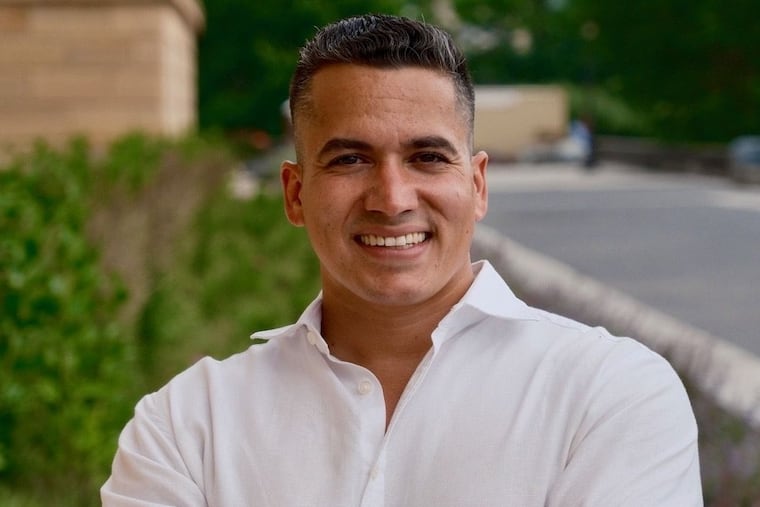
“These folks, I think, are going to pay a short-term political price,” said State Rep. Malcolm Kenyatta (D., Philadelphia) of his Republican colleagues in Harrisburg. “I hope everybody, when they go to the Eagles game and can’t leave without waiting for an Uber for six hours, recognizes who did this.”
Kenyatta, who is also the vice chair of the Democratic National Committee, previewed a Democratic attack that cuts across political races, tying the SEPTA cuts more broadly to discontent over President Donald Trump’s slash-and-burn style of reducing the size of federal government and Congress’ recent passage of Medicaid cuts in the One Big Beautiful Bill.
“SEPTA is just the state Republican version of the federal incompetence,” Kenyatta said.
Eye on the state Senate
At the top of Democrats’ target list is flipping the state Senate, which has been in Republican control for 31 years. Democrats, who control the governorship and the state House, have cut away at the GOP’s strong majority in recent elections and now only need to flip two seats to tie control of the chamber in 2026, when half the 50-member state Senate is up for reelection.
Sens. Frank Farry (R., Bucks) and Tracy Pennycuick (R., Montgomery) are both up for reelection in 2026.
Democrats are also laying the groundwork to boot freshman Sen. Joe Picozzi (R., Philadelphia), who flipped his Northeast Philadelphia seat last year but won’t be on the ballot again until 2028.
“I don’t think a single person voted for their state legislators asking them to make traffic worse,” said Neil Makhija, a Democrat who chairs the Montgomery County Board of Commissioners.
But Senate President Pro Tempore Kim Ward (R., Westmoreland) said she thinks any efforts to politicize the SEPTA debate will fail because the cuts will hurt Democratic constituencies, largely concentrated in Philadelphia and the collar counties that SEPTA serves, more than GOP ones.
“They are overplaying their hand, and they do so at their own peril,” Ward said. “Most of these Democratic representatives must feel very confident that they’re never going to get a primary, because this affects their constituents more than it affects our constituents.”
Senate Republicans also point to the fact that Democrats have had control of the House and the governor’s office, yet have still been unable to find a solution to the transit funding problem. Some have even speculated that Democrats rejected viable funding plans because they see political advantage in a shutdown.
“Some of the loudest voices come from politicians who are trying to make political headway and not find good solutions,” Pennycuick, the Republican who represents Montgomery and Berks Counties, said in a text message.
At least one Democratic-aligned political action committee has been targeting the three Southeastern Pennsylvania senators in Facebook and Instagram ads, claiming they are “leaving SEPTA riders stranded.” The PAC, Better PA, has spent more than $4,600 on the posts since May, according to Meta’s ad library.

SEPTA plans to enact a 20% cut in all service and a major fare increase, beginning Aug. 24, to close a $213 million operating deficit. Here’s information that can help you navigate the new public transit landscape:
- Everything we know about how SEPTA could change on Aug. 24
- Use our interactive tool to see how SEPTA’s cuts will change routes in your area
- Red sign at your SEPTA bus stop? It’s an alert about the route’s future.
- How SEPTA cuts will impact Philly sports fans
- Here are the best commuting alternatives to SEPTA
- How much could your commute increase? Use this tool to get an estimate.
The Pennsylvania Senate Democratic Campaign Committee started posting photos of the three suburban Republican state senators on its social media accounts, accusing them of not doing enough to prevent the cuts. “Old enough to know better. Young enough to sell Philly out,” said one post targeting Picozzi, who is 30 years old.
“They’re clearly orchestrated in what they’re doing. That’s telling me it’s political,” Farry said. “If the Democrats’ goal of flipping the Senate is more important than the SEPTA riders and the SEPTA workforce, that says a lot about the character of the people that are partaking in this debate.”
State Sen. Vince Hughes (D., Philadelphia), who chairs the Senate Democrats’ campaign arm, called the accusation that his party is slow-stepping the process for potential political gain “absolutely not true,” noting House Democrats’ passage of mass transit funding on five occasions over the last two legislative sessions. (Each proposal included the same funding mechanism — using a larger portion of the state’s sales tax to go to mass transit — that the Senate GOP has opposed for years.)
It’s the Senate GOP who is putting their members in a bad spot politically, Hughes added.
“Why would they ask their own members to put up a vote that mandates fare increases in perpetuity, that takes money out of Southeastern Pennsylvania and spreads it across Pennsylvania and not spend in this region?” Hughes asked. “Why would they ask their own members to put up a bad vote?”
Democrats, for now, are balancing their messaging between attacking Republicans ahead of the midterms and insisting the goal is a funded SEPTA.
“The policy piece always comes before the political side,” said state Sen. Steve Santarsiero, a Democrat who represents parts of Bucks County and chairs the Bucks County Democratic Party.
But Santarsiero acknowledged that Republicans’ handling of SEPTA may make flipping the Senate easier, especially given the rural-vs.-urban divide emerging again between the Philadelphia region and the rest of the state.
“People are going to start to see that and realize, ‘Hey wait a minute, why do they have a say in this if that’s their attitude?’” he said.
» READ MORE: The SEPTA funding debate digs up Pennsylvania’s perennial rural-vs.-urban divide
Picozzi has already drawn some heat from constituents who held two protests at his Northeast Philadelphia office this week.
The freshman lawmaker, who won in a surprise upset in November, flipping a Democratic-held seat, said attack ads against him were “undermining the results for our city.”
He dismissed the possibility that SEPTA would become an issue for his reelection in a few years, though. “I think people are sick of political theater … and most reasonable people recognize I am a freshman senator. I can’t bring anything to the floor. I can’t force them to vote on anything.”
The closed-door negotiating table over the state budget consists of Democratic Gov. Josh Shapiro, Senate Majority Leader Joe Pittman (R., Indiana) and House Majority Leader Matt Bradford (D., Montgomery).
For Shapiro, too, the issue looms, politically. He has built a brand on being the governor of a divided state legislature, who can work with both parties to solve problems. A failure to reach a deal for his home region could damage that reputation — for his reelection campaign next year and potential presidential pursuits in 2028.
State Treasurer Stacy Garrity, a Republican who announced Monday she was officially running against Shapiro, mocked Democrats for rejecting the Senate GOP funding plan for SEPTA.
Connecting SEPTA to races for Congress
While members of Congress have no vote on how the state allocates its transit funding, the issue is already seeping into a key suburban congressional race. Democrats hoping to unseat U.S. Rep. Brian Fitzpatrick, the lone Republican representing Southeastern Pennsylvania in the U.S. House, have noted his relative absence from the discourse.
“If Fitzpatrick won’t even show up back home to fight for SEPTA funding… then he doesn’t deserve to represent Bucks and Montgomery families in Congress,” DCCC spokesperson Eli Cousin said.
Jason Salus, the chair of the Montgomery County Democratic Party, argued the Republican member of Congress could impact negotiations with one call to Farry. Fitzpatrick and Farry represent the same area and Fitzpatrick was the best man at Farry’s wedding.
“I suspect that if Congressman Fitzpatrick called him and said this is too important to let go, he would listen,” Salus said.
Farry, in response, pointed out the fact that Bucks County Commissioner Bob Harvie, a Democrat who is challenging Fitzpatrick, sits on the SEPTA board.
“This just shows their lack of seriousness on the issue, and their attempts to cover up for Fitzpatrick’s opponent,” Farry added.
The National Republican Congressional Committee, the GOP campaign arm for U.S. House races, has similarly tried to imply Harvie, Fitzpatrick’s likely opponent, is somehow responsible for the beleaguered agency’s financials.
“Bob Harvie is attempting to secure more money for an organization that he runs, by whining and complaining and without making his involvement clear to voters,” NRCC spokesperson Maureen O’Toole said.
In an interview with the Inquirer, Harvie called the attacks “idiotic.”
“These problems existed when I got there,” Harvie said of SEPTA’s financial woes, adding that he has mentioned his role as a board member when he speaks about SEPTA issues.
Fitzpatrick’s team did not directly answer when asked about what solution he favors in the SEPTA impasse or about potential political fallout. A spokesperson, Casey Lee Waldron, instead said the federal lawmaker “opposes any cuts to SEPTA. He expects state leaders and the SEPTA board to deliver a bipartisan agreement that guarantees full funding and uninterrupted service. Anything less is unacceptable.”
“Transit is too important to Pennsylvania’s families and economy to be caught in political gridlock,” Waldron said.