Bloomberg gives Democrats $80M in eleventh-hour midterm push
Megadonor Michael Bloomberg wants House Democrats to have a governable majority — not just the 218 votes needed for Hakeem Jeffries to become speaker.
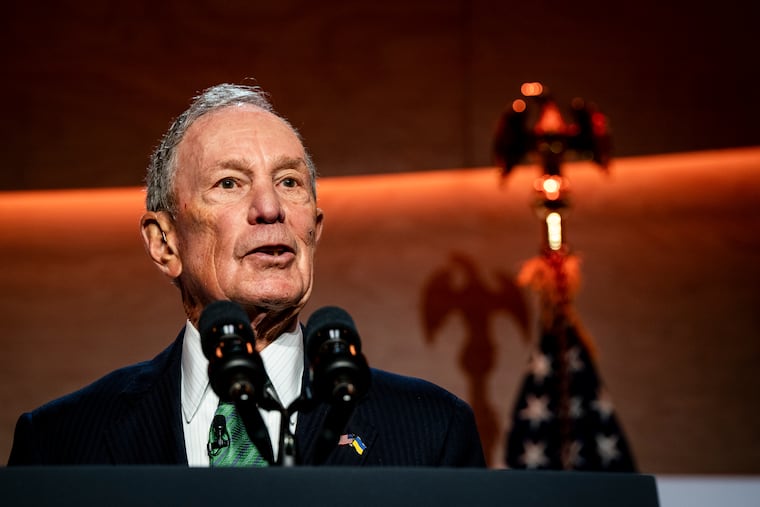
Around this time every election year, Democrats begin to wonder: Where is Michael Bloomberg?
And then, like clockwork, he makes his move — spending big money to help Democrats.
Bloomberg, the former New York City mayor and Democratic megadonor, is again serving as a late-arriving white knight for the party, sending about $80 million in September and October to help Democrats in the midterms, his team told the New York Times.
The giving, some of which is still underway, will make him one of the largest known left-leaning donors in the midterms. His team provided details on the donations before most of them show up in new campaign finance filings Tuesday and Thursday.
“He believes in participation in our democracy,” Howard Wolfson, Bloomberg’s political adviser, said in an interview. “And obviously, the scale of his participation, given his resources and his means, is greater than other people’s financially. But other people are participating in different ways.”
Will the money make a difference? After all, Bloomberg spent more than $1 billion on his own failed 2020 presidential campaign. “He is of the view that resources matter in campaigns,” Wolfson said.
Still, Wolfson said that Bloomberg, 84, who exited elected office more than a decade ago, “expects a result.”
Bloomberg is particularly focused on ensuring a sizable Democratic majority in the House of Representatives, the chamber that Democrats are most hopeful of flipping and that he tends to focus on. Bloomberg’s autumn budget is similar to what he spent during the fall 2018 campaign, which his team sees as the gold standard for when he was able to make an impact politically.
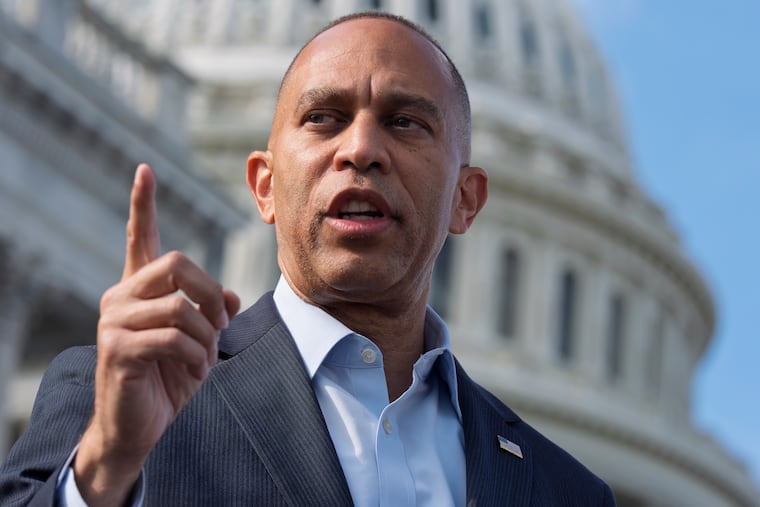
“Mayor Bloomberg played an incredibly instrumental role in the decisive midterm election in 2018,” Rep. Hakeem Jeffries of New York, the minority leader, said in a statement. “The extraordinary support from Mayor Bloomberg will once again help Democrats flip the House.”
At least $50 million of Bloomberg’s latest spending is headed to House races, including $24 million to Everytown for Gun Safety, a group he co-founded that is focused on the House this year. Another $16 million is going to House Majority PAC, the super political action committee aligned with Jeffries. The money makes Bloomberg the largest disclosed donor for both groups.
Because Democrats are favored to win the House, big donors are sending more money to races for the Senate, which is seen as a toss-up. Bloomberg wants Jeffries to have a governable majority — not just the 218 votes needed to become speaker.
“The difference between 221 and 230, in terms of the House majority, really matters,” Wolfson said, referring to how many seats Democrats could end up holding next year.
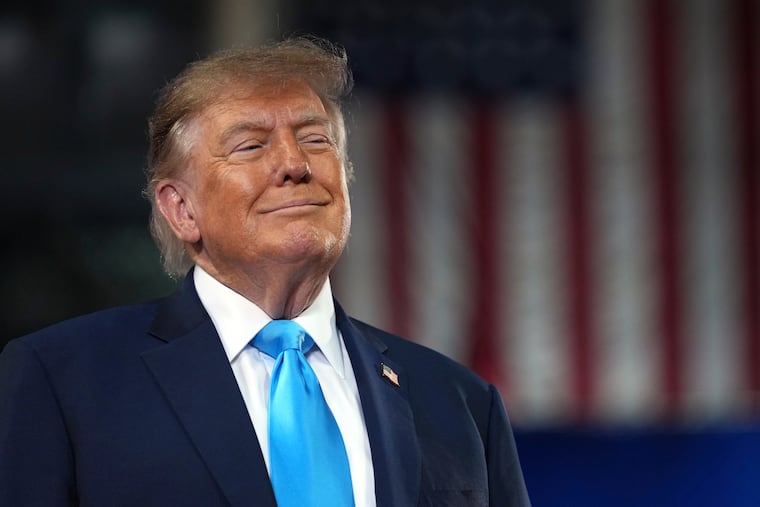
Bloomberg’s infusion of cash will offer some relief to Democrats who have watched apprehensively as Elon Musk and President Donald Trump’s super PAC have unleashed hundreds of millions of dollars to support Republicans.
Much of Bloomberg’s largess has gone toward helping Democrats keep up with Republican spending on television and digital advertising across the country.
Wolfson said that Bloomberg remained deeply concerned about what he sees as the leftward drift of the Democratic Party, particularly on issues like Israel. Bloomberg is not “directing” money to left-wing supporters of the Democratic Socialists of America, Wolfson said.
Given his financial muscle and deeply held political views, Bloomberg is likely to play a role in helping to shape Democrats’ 2028 presidential primary race.
He has not made a decision on whom to support, Wolfson said, but one of Bloomberg’s donations this cycle backed Gov. Josh Shapiro of Pennsylvania, a potential Democratic candidate for president.
“He is a pragmatist. He is a centrist,” Wolfson said of Bloomberg. “I would be surprised if in the end he didn’t support someone who shared that orientation and was from that wing of the party.”
This year, around the time of Bloomberg’s donations, Everytown and House Majority PAC said they were working together on a roughly $10 million ad campaign for eight female House Democratic candidates who have worked on gun safety activism. Bloomberg’s funding of Everytown effectively freed up some of House Majority PAC’s money to be used elsewhere.
Bloomberg plans to soon spend an additional $10 million in House races, Wolfson said. During the spring, Bloomberg also spent $11 million to ensure that Assembly member Micah Lasher emerged from a contentious primary to succeed Rep. Jerrold Nadler of New York.
Since Sept. 1, Bloomberg has made other contributions, including $5 million to the super PAC allied with the League of Conservation Voters; $3.5 million total to a group focused on electing Democratic scientists and doctors; $2.5 million to a super PAC backing James Talarico, the Democratic nominee for Senate in Texas; and $8 million to help Democratic candidates for governor in half a dozen battleground states. Wolfson said Bloomberg also donated $2.5 million in September and October to a super PAC backing the reelection bid of New York Gov. Kathy Hochul.
This article originally appeared in the New York Times.