Trump invokes antisemitic trope again at rally for Kansas senator
President Donald Trump has used the term before, but when called out for it last year claimed he did not know its meaning.
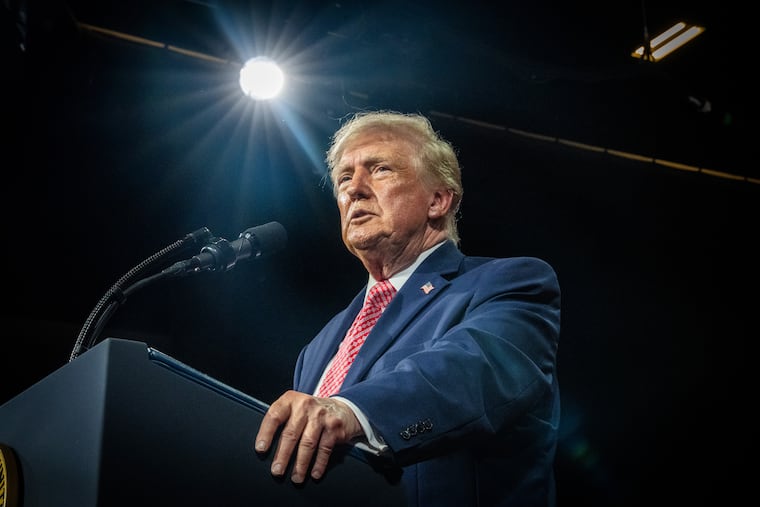
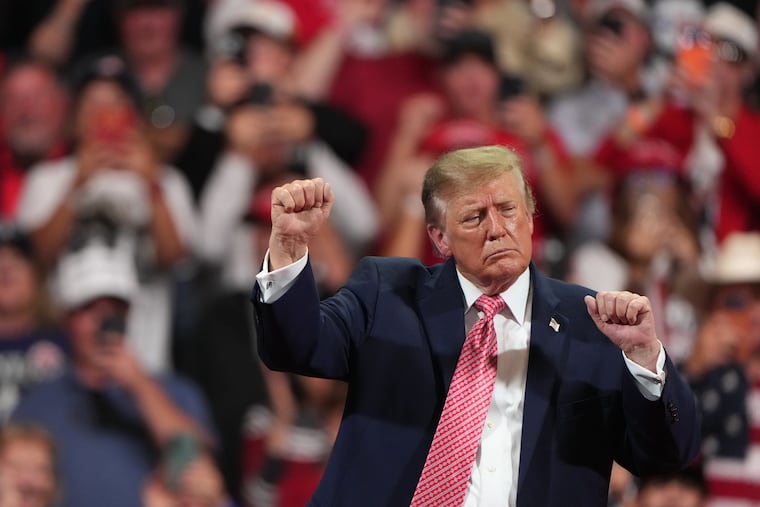
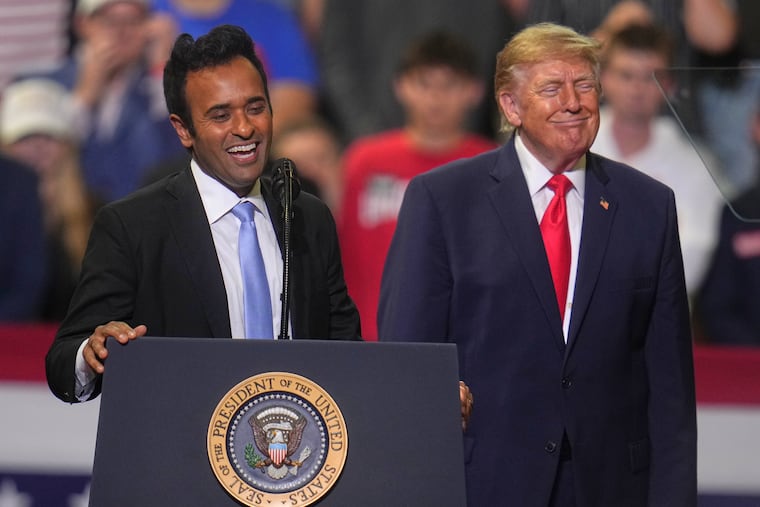
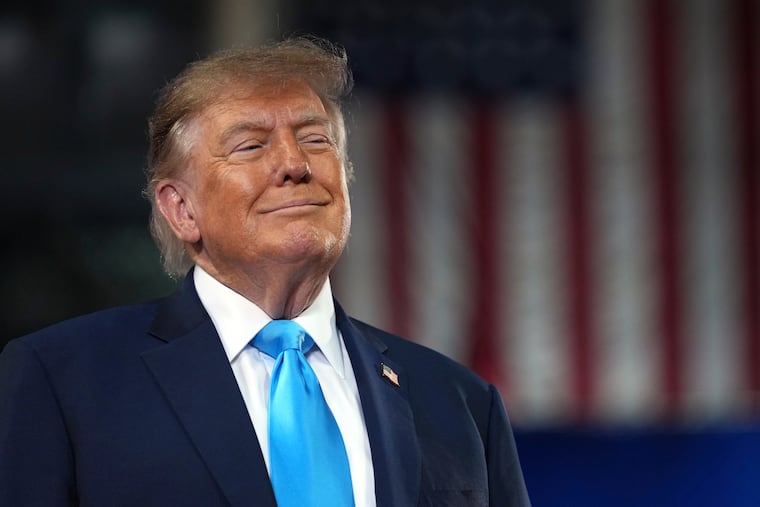
President Donald Trump invoked a centuries-old antisemitic trope to defend the aggressive debt-collecting tactics of Sen. Roger Marshall, the first-term Republican fighting for reelection in Kansas, before the senator began his political career.
At a rally Monday with Marshall in Park City, Kan., the president said Marshall’s opponents had unfairly cast him as “some kind of a Shylock-type guy,” an apparent reference to recent reporting by the New York Times that revealed that Marshall had filed lawsuits against more than 700 patients with outstanding medical bills during his decades-long career as an obstetrician-gynecologist. Marshall, the Times reported, routinely charged an 18% annual interest rate and garnished patients’ paychecks and bank accounts. Trump did not mention the Times by name.
Shylock is the name of the Jewish moneylender from Shakespeare’s The Merchant of Venice. The character, who demands a pound of human flesh as collateral for a loan, has become shorthand for antisemitic representations of avarice and usury.
At the rally, Trump sought to make the case that Marshall had been following the law.
“He’s a fine person,” Trump said of Marshall, who is not Jewish. “And he was given a bum rap because he was mandated by law to request, strongly, money owed from patients. You’re not allowed not to do it. You have to, by law, go after those people. And they made it like, ‘Oh, he was some kind of a Shylock-type guy.’”
Doctors have wide discretion on how to handle unpaid bills and are not required by law to sue patients or involve debt collectors.
“The term ‘Shylock’ is rooted in a longstanding antisemitic stereotype,” the Anti-Defamation League wrote Tuesday on social media, after the Times reached out to the Jewish advocacy group for comment on Trump’s remarks. “Regardless of intent, its use can reinforce harmful tropes about Jews and normalize language that has long been used to target the Jewish community.”
It was not the first time Trump has used the term publicly. During a rally last year in Iowa, he said that farmers should not have to go to, “in some cases, Shylocks and bad people” to borrow money. Afterward, Trump said he didn’t know it was an antisemitic slur.
“You view it differently than me,” Trump told reporters at the time. “I’ve never heard that.”
Jewish leaders and lawmakers last year quickly denounced his use of the term. The Anti-Defamation League called the trope “extremely offensive and dangerous.” Rep. Jerry Nadler (D., N.Y.) said it was “one of the most recognizable antisemitic slurs in the English language.”
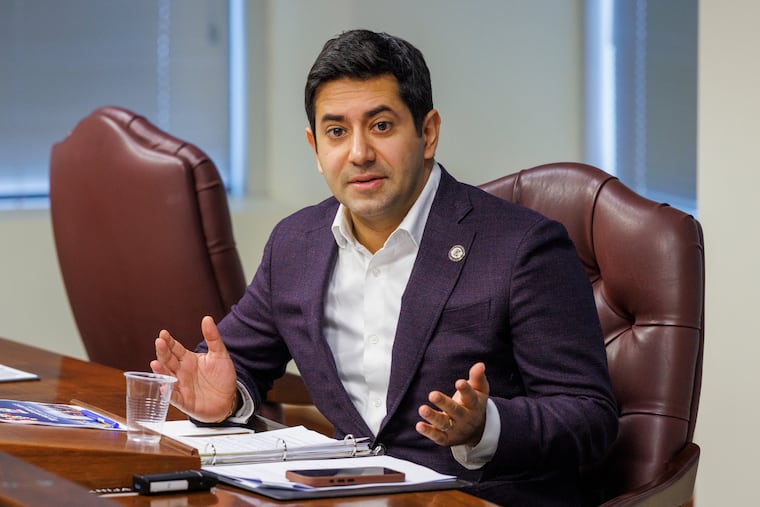
The Senate race in Kansas, which Republican leaders did not view as competitive just a few months ago, has evolved into one of the tightest contests of the midterm elections. Marshall faces Adam Hamilton, a megachurch United Methodist pastor who is vying to become the first Democrat from Kansas elected to the Senate since 1932.
During the campaign, Hamilton has turned Marshall’s debt-collecting practices into fodder for political attacks and advertisements, one of which shows a former patient of Marshall’s saying she had been arrested while eight months pregnant for a $50 missed payment. Lawyers for Marshall called the ad “defamatory,” though Hamilton’s campaign continued to use it.
Other politicians have faced criticism for using the term “Shylock” in the past. In 2014, then-Vice President Joe Biden apologized after he said it during a speech.
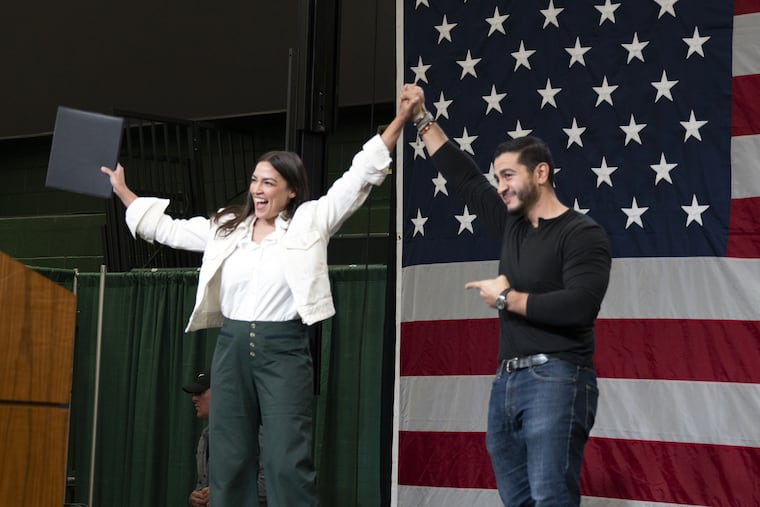
Trump’s comments come at a time when Republicans up and down the ballot, and across the country, have been trying to win over Jewish voters who feel disillusioned by the Democratic Party’s posture toward Israel. Republican leaders have seized on opportunities to draw a contrast on issues relating to Israel and antisemitism, often casting their Democratic opponents as threatening. Republican leaders have been relentless in their use of Islamophobic attacks against Abdul El-Sayed, the Democratic candidate for Senate in Michigan, who is Muslim. Trump recently claimed that the candidate “hates Jews,” to which El-Sayed responded, “I love and revere Judaism and the Jewish people.”
Republican Senate candidates across the Midwest have struggled to make their case to voters amid rising energy prices and Trump’s unpopular war in Iran. Some, like Rep. Ashley Hinson in Iowa and former Rep. Mike Rogers in Michigan, have sought to distance themselves from the president on these issues. Marshall has not.
For years, Trump and his campaign have been accused of stealthily trying to win over racists and antisemites, a claim they reject. In 2016, Trump, then the presumptive Republican presidential nominee, posted an image on Twitter depicting Hillary Clinton beside a Jewish star and piles of money that had previously appeared on a message board known for antisemitism and white supremacy.
During Trump’s second term, official government social media accounts, including those for the White House, have made dozens of posts that invoke white supremacist and neo-Nazi messaging, drawing condemnation from Jewish leaders and experts in online extremism.
This article originally appeared in the New York Times.