House votes to limit Trump on Iran; Senate fails to advance similar measure
The votes marked the first test of Republican support for the conflict since President Donald Trump resumed military strikes against Tehran this month.
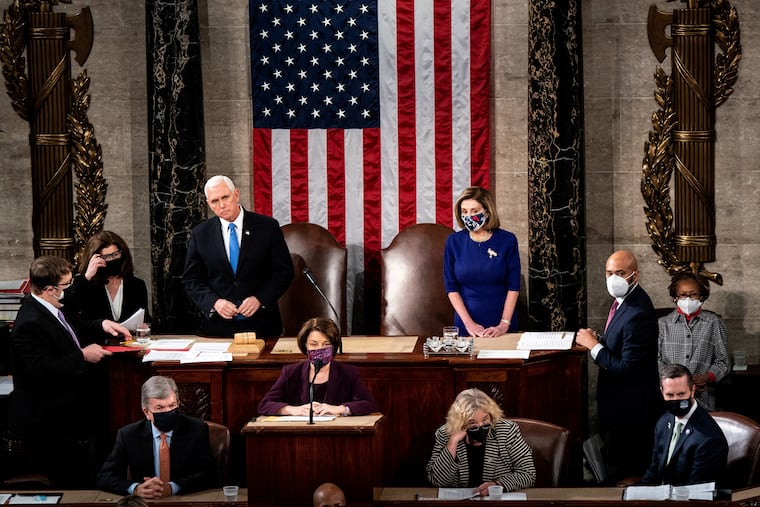
The House passed a measure to halt the war in Iran on Thursday, as Democrats mounted a last-minute bid to constrain the escalating conflict before lawmakers left Washington for a monthlong recess.
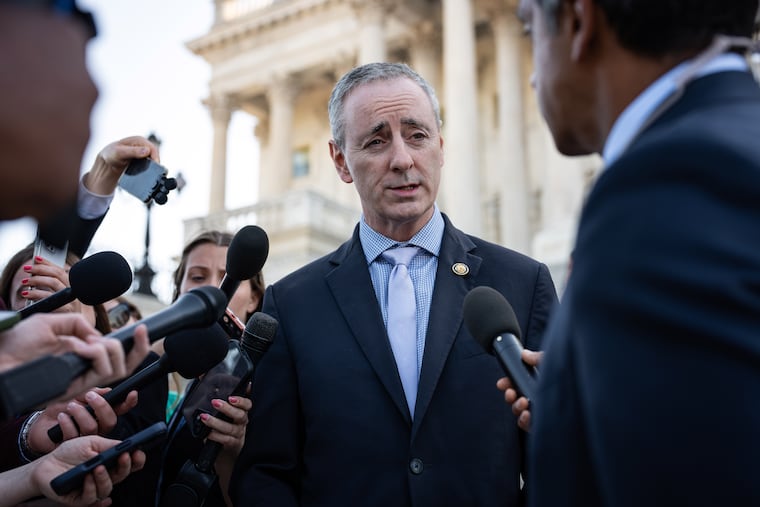
The effort led by Rep. Pramila Jayapal (D., Wash.) passed by a vote of 214-208. Four Republicans — Reps. Brian Fitzpatrick of Pennsylvania, Thomas Massie of Kentucky, Warren Davidson of Ohio, and Tom Barrett of Michigan — joined Democrats in supporting the measure.
The Senate blocked consideration of a similar resolution hours later on a 49-47 procedural vote.
Sen. Susan Collins of Maine was the lone Republican to join Democrats in supporting the measure. Sen. John Fetterman (D., Pa.) voted against it.
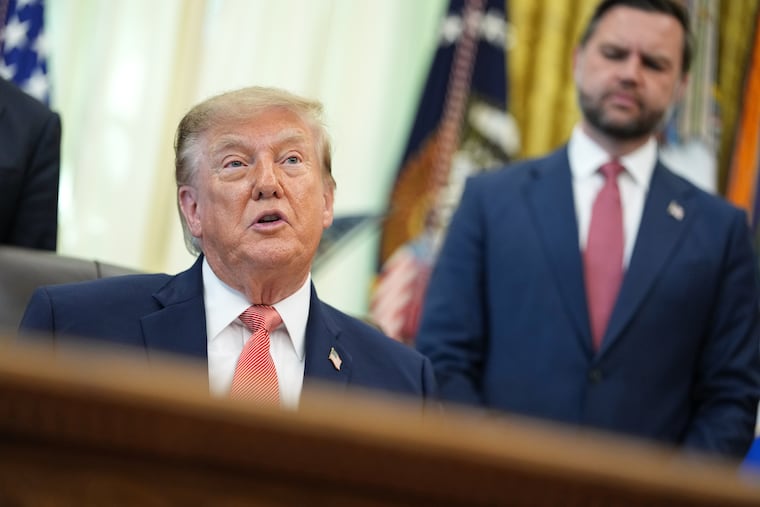
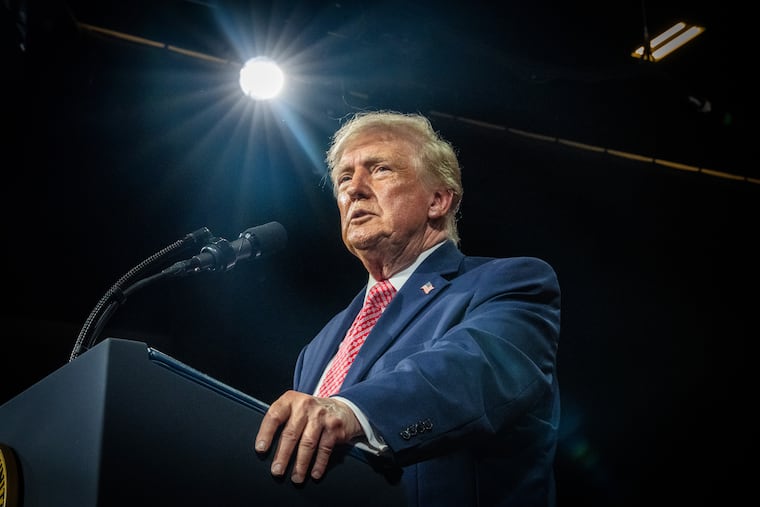
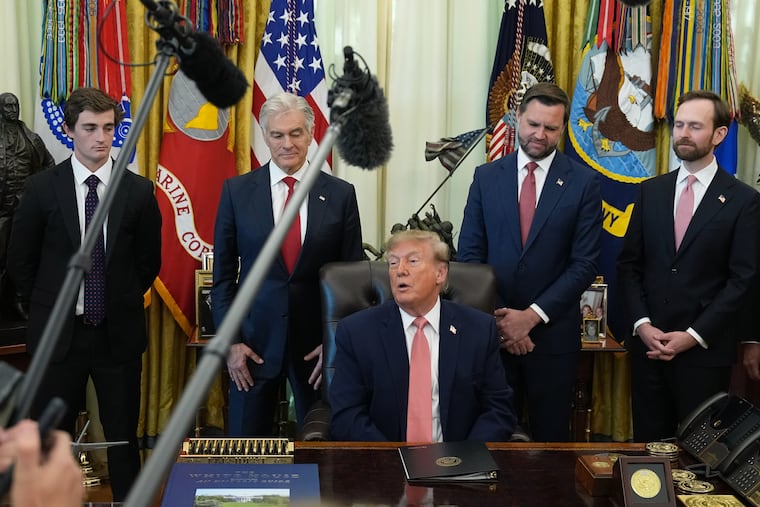
The votes marked the first test of Republican support for the conflict since President Donald Trump resumed strikes against Iran this month. U.S. Central Command, which oversees military operations in the Middle East, announced it had conducted its 12th consecutive day of airstrikes as Trump pledges to retaliate for the deaths of several American service members killed by Iranian attacks in the last week.
By returning to the war, Trump has forced some vulnerable Republicans into a tenuous political position ahead of the November midterm elections. Iran has closed the Strait of Hormuz — spiking global food and energy markets — and the Houthis, its proxy force in Yemen, have threatened to halt Saudi Arabian oil transiting the Red Sea.
A Washington Post-Ipsos poll earlier this month found that nearly 70% of respondents thought that the war was not “worth fighting.” Eighteen U.S. service members have died during the conflict, with nearly 430 injured.
Earlier this week, Defense Secretary Pete Hegseth told lawmakers the war will cost about $37.5 billion by the end of September. Congress is debating how to proceed with a $73 billion package to restock the Pentagon’s inventory of precision weapons and cover other costs incurred by the conflict.
“When you’re digging yourself a hole, the first thing you should do is stop digging — and that’s what this resolution seeks to do,” Sen. Chris Van Hollen (D., Md.), who introduced the resolution, said on the Senate floor before the vote. “Let us stop pretending that Congress has no role to play while American service members remain in harm’s way.”
Sen. Tim Sheehy (R., Mont.), a Navy SEAL veteran who served in Afghanistan and Iraq, countered that passing the resolution would send the wrong message to the U.S. troops fighting the war.
“Think about the people who are deployed right now standing on that wall with a loaded weapon who have volunteered to defend our country and our way of life,” Sheehy said on the Senate floor. “Because they are there defending us in a just war.”
The Trump administration’s return to military strikes in Iran has also divided some Democrats over how best to respond.
The successful vote in the House and the failed one in the Senate came after both chambers approved a separate resolution last month meant to halt the war. Trump has argued the measure lacks the power of law, infuriating Democrats who say the war is being conducted unlawfully without lawmakers’ consent.
The White House has pressured Republicans to oppose such resolutions. Trump complained when he met with Republicans senators last month that the passage of one of the resolutions was undermining his negotiations with the Iranian government.
Sen. Bill Cassidy (R., La.) supported the resolution that passed last month but opposed a subsequent one after being briefed by the White House. He voted against Thursday’s resolution.
Two other Republicans who have voted for similar resolutions in the past, Sens. Lisa Murkowski of Alaska) and Rand Paul of Kentucky), did not vote. Sens. Mitch McConnell (R., Ky.) and Katie Boyd Britt (R., Ala.) also missed the vote.
Rep. Gregory Meeks (D., N.Y.), the top Democrat on the House Foreign Affairs Committee, said Thursday that he will introduce a resolution to sue the Trump administration over its refusal to abide by their efforts to rein in the war.
Trump “should be coming directly to Congress” to explain why he has continued his war effort in Iran, Meeks said. “Since he’s not, then we should be suing the administration to say ‘You must come to Congress at this point.’”
Sen. Tim Kaine (D., Va.), the architect of Democrats’ strategy to force war powers votes, said he did not think the failed procedural vote in the Senate undercut the successful passage of the war powers resolution last month.
“The substantive vote has been taken,” Kaine said after Thursday’s vote. “Both houses have said, Mr. President, you either have to withdraw troops or” seek authorization from Congress to continue the war.
Still, Kaine said he was turning his attention to pushing back against the war through the appropriations process, through which Congress could exert leverage over the war by refusing to fund it. The House passed a resolution Wednesday taking the first step toward sending $73 billion to the Pentagon and U.S. intelligence agencies, largely to cover the cost of the conflict, but the measure faces an uncertain future in the Senate.
Senate Majority Leader John Thune (R., S.D.) said the Senate would not take it up immediately as bipartisan negotiations over government funding play out — an approach that some Senate Republicans say is a mistake. The Senate could use the measure to fund the government later if those negotiations collapse.
After the House vote, Rep. Jason Crow (D., Colo.), a co-sponsor of Jayapal’s resolution, said Democrats would continue to force votes on similar resolutions and predicted that more House Republicans would support them after hearing from frustrated constituents while the chamber is on recess over the next four weeks.
“They’re going to get crushed,” Crow told reporters after the vote. “When we come back in September, I bet we have more people joining with us saying, ‘All right, let’s wrap this up.’”
Senate Minority Leader Chuck Schumer (D., N.Y.) signaled that Senate Democrats would also continue to force votes on similar resolutions.
“We will keep forcing votes until Senate Republicans stop playing dumb and summon up the courage to do what is right,” Schumer said on the Senate floor.