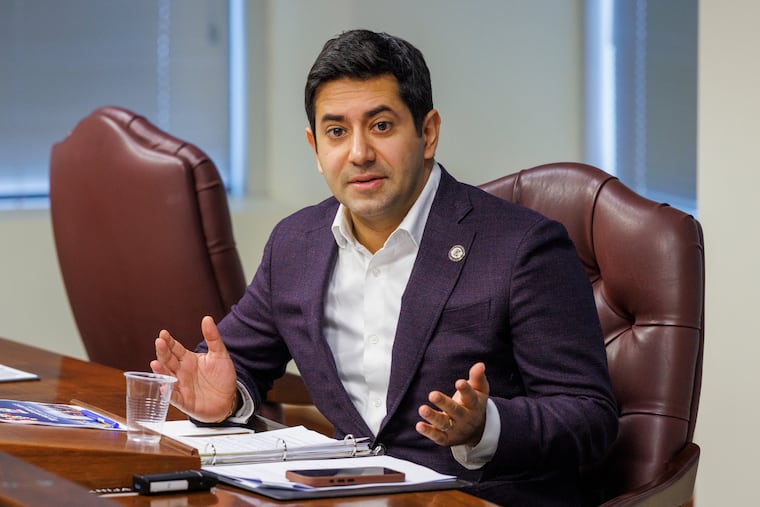
Zack Mullock says Van Drew made harmful cuts to Medicaid and Medicare. The South Jersey Republican begs to differ.
Van Drew was adamant that he would not vote for legislation that impacts Medicaid or Medicare unless the cuts are “specifically aimed at reducing waste, fraud, or abuse.”
Susan Coll-Guedes was baffled when she saw a photo of U.S. Rep. Jeff Van Drew, a Cape May County Republican, smiling with scissors at a ribbon-cutting ceremony for a group home provider agency.
“He cut Medicaid, which is the funding for group homes for people with disabilities,” said Coll-Guedes, whose adult son has Down syndrome and is on Medicaid.
The Galloway resident is a self-proclaimed “Mom for Mullock,” who supports Democrat Zack Mullock, the Cape May mayor who is challenging Van Drew in the Nov. 3 midterm election. She wasn’t interested in politics until President Donald Trump’s One Big Beautiful Bill Act made major changes to Medicaid eligibility and decreased federal funding for the program.
While the cuts don’t directly target her son, she’s concerned the changes will have a domino effect on the program as a whole, she said in interviews this month.
Back in August, behind the red barn of Independent Spirits Distillery, a small business along farmland in Gloucester County’s Woolwich, Mullock told an audience of about 75 people that he gets “daily reminders” from South Jersey residents who are scared about the law’s cuts to social programs like Medicaid, which provides health coverage for low-income people and people with disabilities, including tens of thousands of people in the district.
Mullock is among the many Democrats across the country attacking Republican incumbents for slashing social safety net funding to help pay for Trump’s policy priorities — including tax breaks for the wealthy — while still adding $3.4 trillion to the national deficit.
“I cannot fathom cutting for the very poorest to give to the very wealthiest,” Mullock said to the receptive audience brought together by the Woolwich Democrats. “It’s absolutely insane, and that’s exactly what Jeff Van Drew did when he voted for the Big Beautiful Bill. It was passed by one vote. One vote. And that tells you just how important these elections are.”
“If I was in his shoes, that bill would not have passed,” he added.
Local Democrats see Mullock as their best shot yet at ousting Van Drew, but the race flew under the national radar until earlier this month when the Democratic Congressional Campaign Committee added it to its list of “districts in play,” which Van Drew mocks as a “wish list.”
Van Drew was first elected as a Democrat in 2018 before changing parties and vowing his loyalty to Trump one year later. He’s been reelected three times since then with his closest challenger still falling nearly 6 points behind him in 2020.
On Tuesday, the University of Virginia’s Center for Politics’ Sabato’s Crystal Ball shifted the district’s rating from “safe Republican” to “likely Republican,” meaning Van Drew remains favored to win but less comfortably than before.
Mullock is hoping dissatisfaction with the impacts of Trump’s policies will help him pull off an upset in the district, which stretches from Gloucester County to the Jersey Shore.
How Trump’s law will impact Medicaid
Prior to his vote for Trump’s law last year, Van Drew was adamant that he would not vote for legislation that impacts Medicaid or Medicare unless the cuts are “specifically aimed at reducing waste, fraud, or abuse.”
That’s exactly how the Trump administration has framed the new changes, along with saying that the cuts will help preserve the programs in the long term.
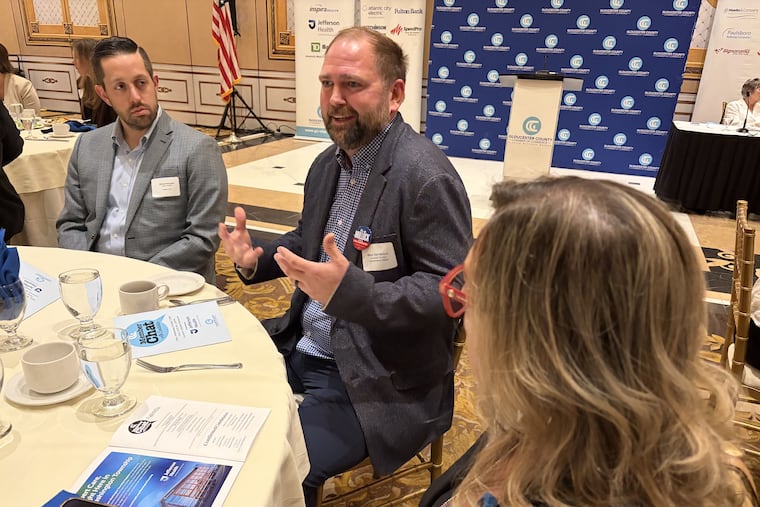
“I was on the forefront of saying that we shouldn’t hurt seniors, we shouldn’t hurt children, we shouldn’t hurt the disabled, that we shouldn’t be harming those folks,” Van Drew said at a recent candidate forum held by the Gloucester County Chamber of Commerce after Mullock criticized his vote at the same event.
Cuts to SNAP have already taken effect but Medicaid cuts won’t begin until after the midterms in January 2027. Democrats are pledging to reverse them if they take control of Congress.
Van Drew defended the changes, particularly a new requirement for Medicaid recipients ages 19 to 64 to file paperwork every six months to show they work, volunteer, or take academic classes 20 hours a week to qualify for the program, unless they meet exemptions carved out for people with disabilities.
“If you are able-bodied and you don’t have children, and aren’t planning on it, and aren’t a senior citizen, and don’t want to work … you could pet dogs at the Humane Society, help senior citizens, or you could go and learn a trade, or you could even go back to college. You still would get your Medicaid,” Van Drew said at the forum.
“But if you’re healthy and you are young and you don’t want to work at all and you’re not willing to do any of those things … you’re not going to get it,” he said to claps from his supporters.
The law is slated to cut Medicaid spending over 10 years by approximately $911 billion, including approximately $29 billion in New Jersey, according to a KFF analysis using data from the nonpartisan Congressional Budget Office.
The changes to Medicaid are expected to lead to 7.5 million people becoming uninsured by 2034, including approximately 240,000 people in New Jersey.
Opponents of the requirement argue that since most adults receiving Medicaid already work, the extra paperwork will cause people who qualify to lose coverage anyway.
The 2nd Congressional District includes all of Atlantic, Cape May, Cumberland, and Salem Counties, and parts of Ocean and Gloucester Counties. These counties all together have 365,666 people enrolled in Medicaid as of August.
Mullock made the case at the forum that the cuts will have a disproportionate impact on the district because Cumberland, Atlantic, and Salem Counties are among those with the lowest incomes and highest poverty rates in the state.
“When you are driving all around and meeting with people and seeing the real poverty that exists here in CD-2, if your heart doesn’t break, you’re not a human,” Mullock said in an interview.
Another provision will also boot immigrants off the program who have legal status but aren’t permanent residents, such as refugees of war, asylum seekers fleeing persecution, and victims of sex trafficking and domestic violence. New Jersey’s Department of Human Services estimated that between 15,000 and 25,000 immigrants with legal status will lose coverage.
Van Drew introduced a “No Medicaid for Illegals Act” last year and said the program should only benefit American citizens.
Does the One Big Beautiful Bill touch Medicare?
While the law takes primary aim at Medicaid, Mullock has spoken about the cuts in tandem with Medicare, the federal healthcare program for people ages 65 and older. His campaign website says he supports Medicare for All funded by “fairer corporate taxes and a fair tax on the top 5%.”
And at the Gloucester County forum, Mullock claimed that the law cut $1.5 trillion in Medicare and Medicaid.
To get to that figure, Mullock said he was combining the nearly $1 trillion in Medicaid with a $491 billion figure that the Congressional Budget Office said could hit Medicare from 2027—2034 if Congress doesn’t act. That figure comes from the Pay‑As‑You‑Go Act of 2010, which forces cuts to prevent federal deficit increases. But legislators can override that obligation, and that’s exactly what they did as part of the November 2025 law that reopened the government after a record-breaking 43-day shutdown.
Meanwhile, Van Drew retorted during his own remarks that Medicare “never came up for a vote.”
“There wasn’t even a vote on Medicare,” he added. “Not one dollar has been cut from Medicare.”
While most of the law’s healthcare provisions affect Medicaid, the law does make some changes to Medicare.
Changes to eligibility for groups of legally present immigrants will leave 100,000 more people without health insurance and decrease federal Medicare spending by $5.1 billion by 2034, according to Congressional Budget Office data.
Another provision of the law blocks a policy enacted under former President Joe Biden that tried to make it easier for low-income Medicare recipients to access Medicaid financial assistance. The Congressional Budget Office projected this change will decrease dual enrollees by 800,000 people and decrease spending by $66 billion by 2034. While these people aren’t expected to stop getting Medicare, higher out of pocket costs would likely cause them to seek less care, the budget office predicted.
The six counties the district touches had a total of 378,833 people enrolled in Medicare in 2025.