Democratic gains could advance an alternative to the Electoral College
An agreement called the National Popular Vote Interstate Compact promises that participants would give all their electoral votes to the presidential ticket that wins the national popular vote.
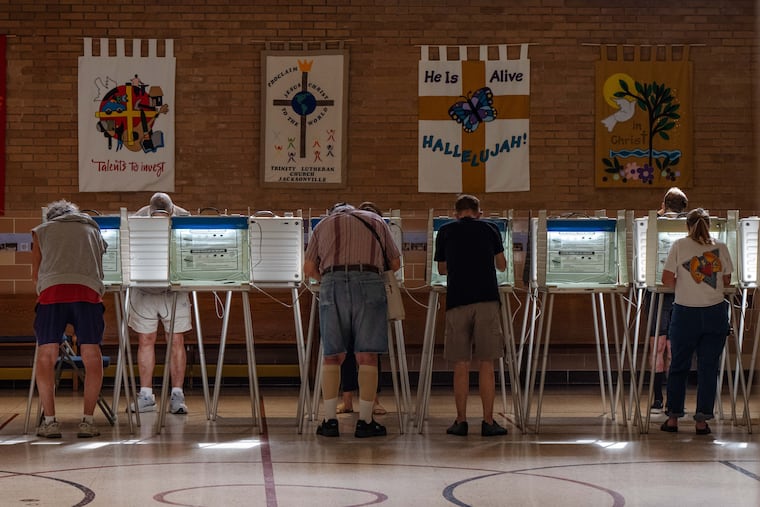
Democrats’ midterm victories may raise the chances that enough states sign onto a mechanism that, in theory, could elect the next president effectively by popular vote instead of through the typical rules of the Electoral College.
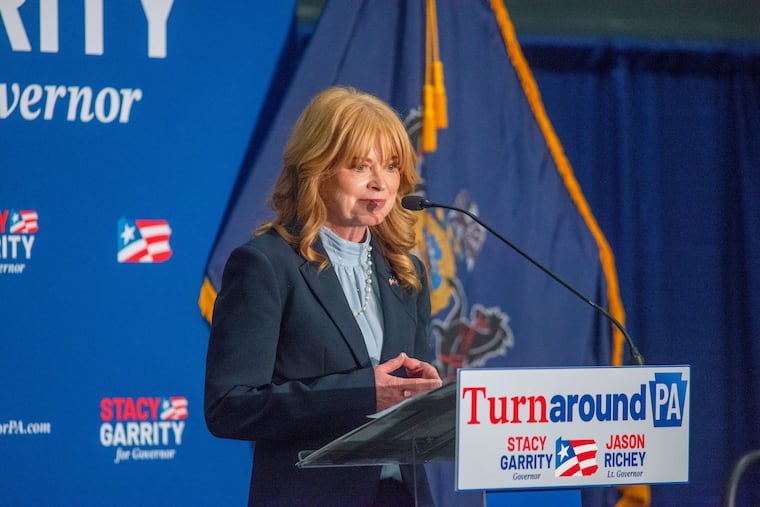
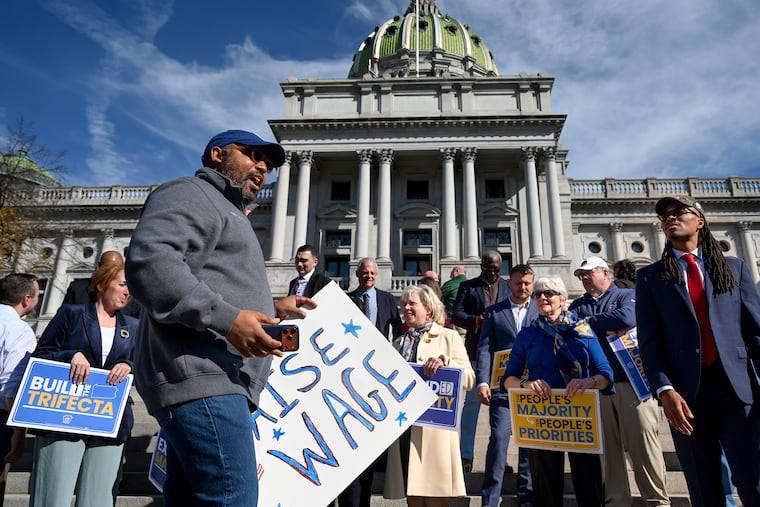
The party’s surge in Tuesday’s elections included gaining a hold on the governor’s office and both statehouse chambers in at least four states, Michigan, Nevada, Pennsylvania and Wisconsin. Those states could join an agreement called the National Popular Vote Interstate Compact, which promises that participants would give all their electoral votes to the presidential ticket that wins the national popular vote.
But the agreement, which has been more popular among Democrats, takes effect only once signed by states representing a majority of the Electoral College, or at least 270 electoral votes, the amount needed to win the presidency. Eighteen states and the District of Columbia have adopted the compact so far, representing 222 electoral votes.
If all four of the states that just won total Democratic control were to join the agreement, it would tip the group over the 270-vote threshold. Arizona, which is allotted 11 electoral votes, was also projected to have a blue trifecta, though not all of its races had been called by Thursday evening.
Lawmakers in key states said on Thursday that they had already begun having conversations this week about introducing legislation to join the agreement in the next session, and were hopeful that they would succeed ahead of 2028. But broadening the compact could present a mighty political lift.
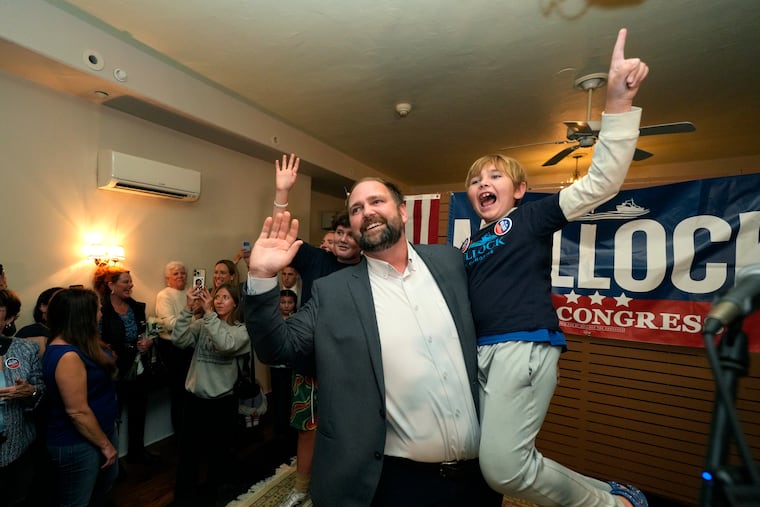
“The time is right,” Carrie Rheingans, a Democrat in the Michigan House of Representatives, said in an interview. “This blue tsunami is really going to help push this forward across the whole nation.”
Still, Democratic lawmakers “can be apprehensive” with a new majority, said Mattie Daughtry, the Democratic president of Maine’s state Senate. She worked on the compact issue for over a decade before her state joined in 2024.
“The biggest roadblock is convincing them to use these majorities to do big things,” Daughtry said.
In 2019, Nevada’s Democratic governor vetoed a bill to join the agreement, saying it could diminish smaller states’ influence in presidential elections.
Now, it is unclear whether lawmakers will prioritize passing the compact after running campaigns dominated by other concerns, like easing high costs and imposing guardrails on the Trump administration.
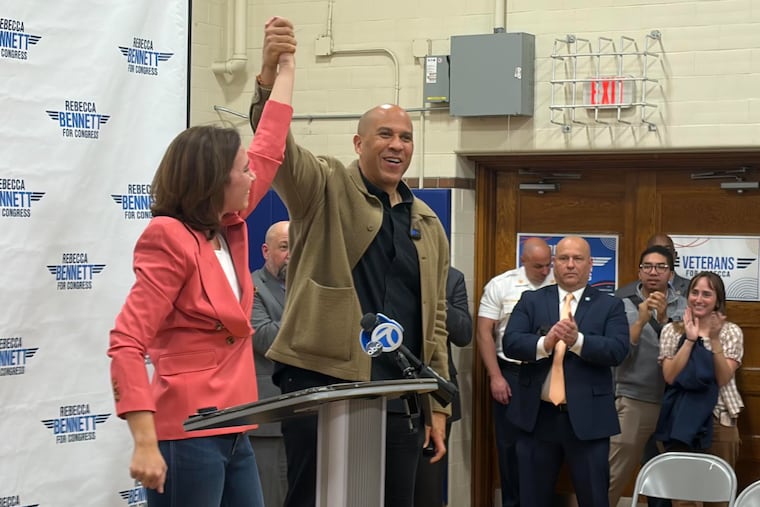
“Time will tell,” said Clinton Anderson, a Democratic state Assembly member in Wisconsin, adding that he planned to reintroduce a compact bill. “I want to make it a priority, but it’s not the thing I heard on the doors I knocked.”
Kelda Roys, another Democratic lawmaker in Wisconsin, said that her initial attempt to get her state to join the compact in 2009 had been met with hesitancy among people who were unsure exactly what it was. Now, she said, there is a broader public understanding of what problems the Electoral College could present.
“National popular vote will be something that we’ll prioritize early in the session,” Roys said.
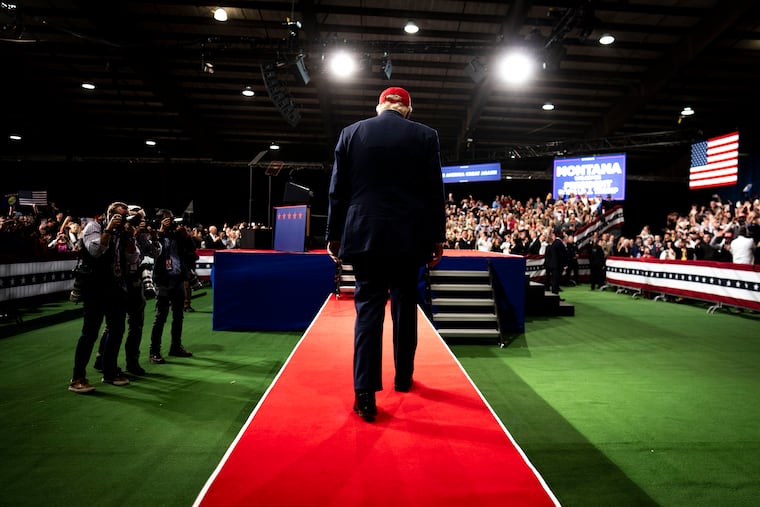
The idea for a compact among states to bypass the Electoral College gained traction among legal scholars and supporters after 2000, when George W. Bush won the presidency while losing the national popular vote. Momentum grew in 2016 after a second Republican candidate, Donald Trump, won despite losing the popular vote.
Supporters of the compact said they view the Electoral College as a less democratic mechanism than the popular vote. A YouGov poll conducted in June showed that 56% of American adults supported choosing the president via popular vote.
The compact is also more practical than amending the Constitution and popular among voters, supporters said.
Opponents and legal experts said the compact would face a slew of court challenges. One obstacle is that compacts traditionally require the approval of Congress and the president, said Derek Muller, an election law expert at Notre Dame Law School who has written about the agreement.
“It’s a very real possibility that enough states join this compact,” he said. “There will be a lot of challenges.”
This article originally appeared in The New York Times.