1 in 4 Philadelphians say preserving historical sites is city’s top ‘responsibility to the nation,’ poll shows
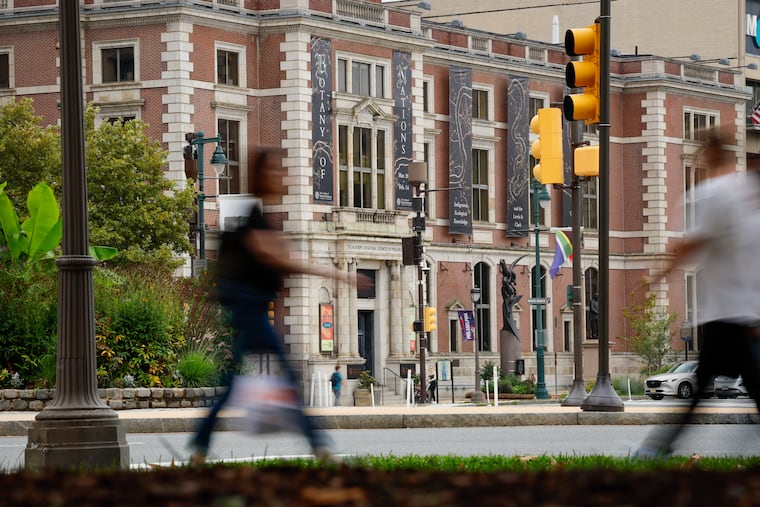
The poll comes amid the latest chapter in a legal battle between the City of Philadelphia and the Trump administration over the President's House Site at Independence National Historical Park.
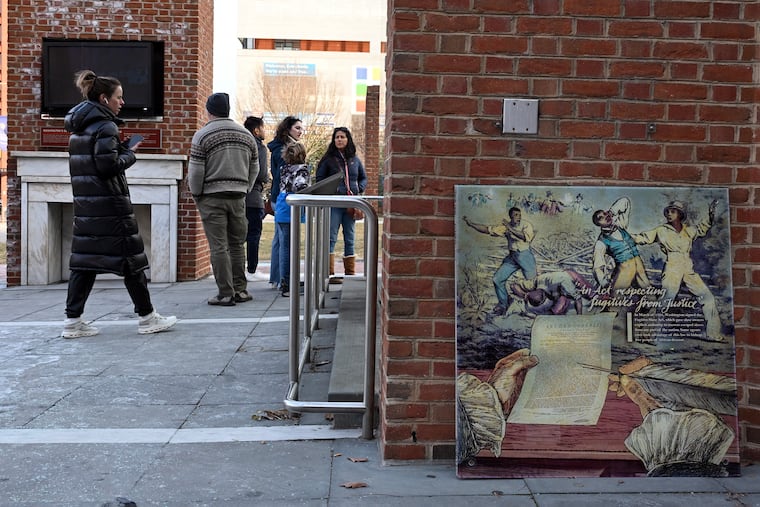
President Donald Trump’s administration got the green light from a federal appeals court last week to install its own version of the historical exhibits at the President’s House Site on Independence Mall after it dismantled panels about slavery there earlier this year.
But that may not jibe with what many Philadelphians want to see.
A new Suffolk University/Philadelphia Inquirer CityView poll of 500 city residents found that a quarter of respondents believe the city’s primary responsibility to the nation is to protect its historical sites for future generations. Nearly 27% said the city’s primary responsibility to the nation is to serve as a model for “diverse, multicultural urban progress.”
The poll, conducted from June 16 to 20 and released this week, comes after a ruling by the U.S. Court of Appeals for the Third Circuit in favor of the Trump administration and just weeks ahead of celebrations in Philadelphia for the nation’s 250th birthday.
The appeals court’s ruling last week was a turning point in a legal battle waged by Mayor Cherelle L. Parker’s administration that questioned the federal government’s authority to interfere in what information is presented at the President’s House. Both the Third Circuit ruling and a recent decision by a Boston-based federal appeals court regarding National Park Service exhibits nationwide have started to pave the way for the Trump administration to make unprecedented changes to displays of U.S. history in the region.
Alacia Maxton, 36, a respondent to the poll, said frustration with the attacks on the President’s House has been at the forefront of her mind as the city prepares to celebrate the Semiquincentennial.
For nearly two decades without opposition, the site — which opened in December 2010 — has memorialized the nine people George Washington enslaved at his Philadelphia residence during the founding of America and detailed the brutality of slavery.
Last month, it was designated as an endangered historic site by a major national historic preservation organization. The new panels proposed by the Trump administration to replace the removed exhibits at the President’s House soften Washington’s role as an enslaver, according to those working to protect the site.
“I don’t like the idea that certain groups of people want to whitewash history and erase what doesn’t make them feel comfortable,” said Maxton, who lives in Overbrook Park.
Carolyn Keys, 61, another resident who responded to the poll, said the absence of the some of the original panels is like “missing pieces to a puzzle.”
“Every piece was specifically put together for a purpose,” said Keys, 61, a veteran who lives in the Tacony neighborhood.
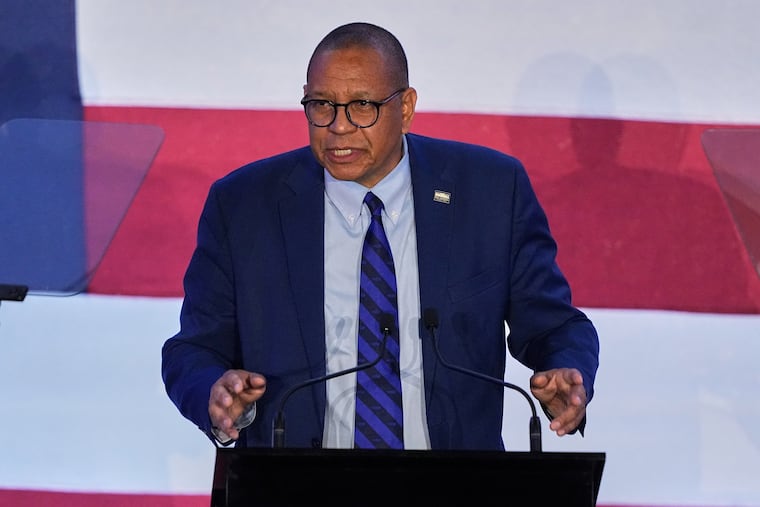
David Paleologos, director of the Suffolk University Political Research Center, said Philadelphians valuing preserving history and being a model for progress is a particularly localized issue.
“Which I think makes this really important information for the nation to see,” Paleologos said.
A bipartisan grassroots group of Philadelphians — called the President’s House/Slavery Memorial Coalition — has been spearheading efforts to protect the historical site, which has been under scrutiny from the Trump administration since last summer.
The group has often discussed a desire for its work in Philadelphia to be a model for preserving history elsewhere in the country.
Michael Coard, an attorney and founder of one of the leading groups in the efforts to protect the President’s House, said in a statement Wednesday that the poll results show that “Philadelphians understand the importance of protecting our shared history.”
“Black history is American history, and we have both an obligation and, based on these results, a clear mandate to ensure that the stories of enslaved Africans and their descendants are preserved, honored, and accurately told,” Coard said.
Other respondents had different ideas for Philadelphia’s primary responsibility as the birthplace of democracy: Roughly 23% said “leading national conversations on civil rights and economic justice” was a top priority, while almost 17% said the city’s duty to the nation is “proving that a large, complex city can govern itself equitably.”
These insights come as Philadelphia is bracing for an influx of tourists, with particular emphasis on its history as the nation’s birthplace, ahead of the Semiquincentennial celebrations.
Almost 28% of the Philadelphia residents polled see the Liberty Bell — in comparison to Independence Hall, the National Constitution Center, and the Rocky Steps — as the city landmark that best embodies American democracy.
But hanging over the impending 250th celebrations is the uncertain fate of the President’s House, said Leeanna Lundy, 34, of West Philly.
“For them to remove where the most impactful part of where history took place, it’s like mind-boggling,” Lundy said.
Staff writer Michelle Baruchman contributed to this article.