What's going on in the Michigan Senate race?
Drama in the Michigan Senate race includes Rep. Haley Stevens' surprise endorsement of Mike Rogers over Abdul El-Sayed.
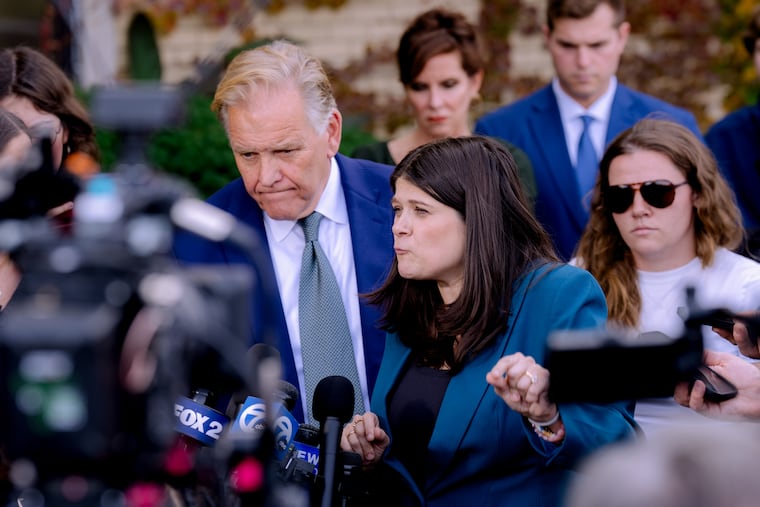
An already high-profile Senate race in Michigan is getting extra attention after a shocking, last-minute, across-the-aisle endorsement came Sunday, just two days before the election.
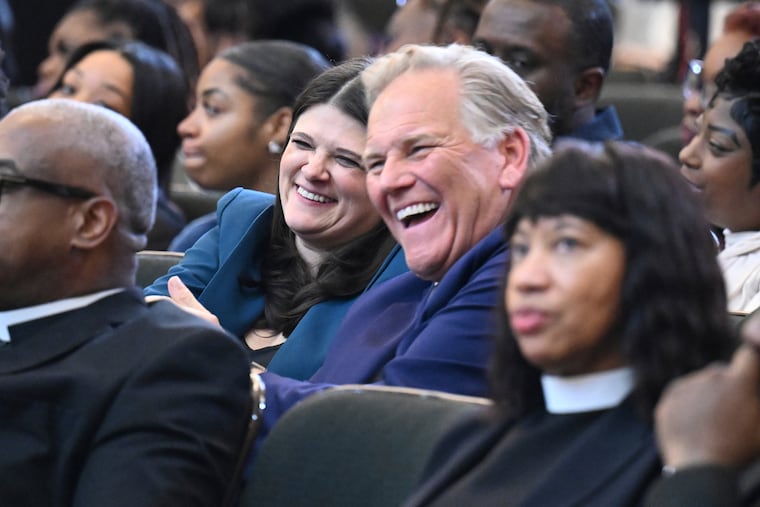
U.S. Rep. Haley Stevens (D., Mich.), flipped her support for Democratic candidate Abdul El-Sayed, attending a church service with his Republican opponent, Mike Rogers, and later posting a selfie video from her car endorsing him.
Stevens, who lost to El-Sayed in the Senate primary, said her change of heart came after she was uninvited to a joint event with El-Sayed intended to promote Democratic unity. It would’ve marked their first public appearance together in months.
Stevens’ and El-Sayed’s clashing views aren’t new, especially when it comes to Israel. It represents a larger form of division between more moderate and progressive Democrats across the party.
Here’s what you need to know.
Who is Haley Stevens?
Stevens, 43, has served in the House since 2019, representing Michigan’s 11th Congressional District in Southeast Michigan. She ran for U.S. Senate this year, losing to El-Sayed and pledging she was proud to support him this November.
She worked on the Barack Obama and Hillary Clinton presidential campaigns and was chief of staff to the U.S. Auto Rescue Task Force, in response to the Great Recession. She has previously criticized President Donald Trump and the GOP, working on congressional assignments focused on education and science.
According to the New York Times, Stevens isn’t Jewish but has been pro-Israel. She attended a Jewish sleep-away camp as a teen, represents a largely Jewish segment of Michigan, and is engaged to Jewish lawyer Jason Turkish. She told the Times she has considered converting to Judaism. Turkish has publicly criticized El-Sayed, accusing him of antisemitism, and endorsed Rogers before Stevens did.
Who is Abdul El-Sayed?
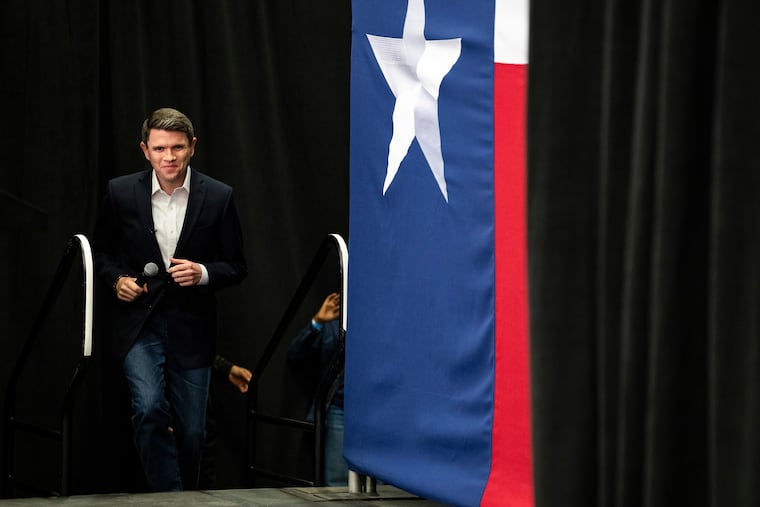
El-Sayed, 42, is a former public health official who harnessed Democratic frustration with the party establishment, narrowly defeating Stevens in Michigan’s Senate primary.
He’s never held elected office and entered the race seven years after having lost Michigan’s Democratic gubernatorial primary by more than 20 percentage points.
In 2018, after losing the Democratic primary for governor to Gov. Gretchen Whitmer, El-Sayed built momentum. He started a podcast, wrote a book and became a regular presence on YouTube and television, slowly building a following until Democratic Sen. Gary Peters announced he wouldn’t seek re-election.
A huge flashpoint across El-Sayed’s campaign has been his Muslim identity and dealing with Islamophobia. At a now-viral moment at a campaign town hall in Caro, Mich., El-Sayed said he clearly disavowed the Muslim Brotherhood and challenged the accusations that his religion was tied to extremist organizations as bad-faith attempts to exploit his religion.
Who is Mike Rogers?
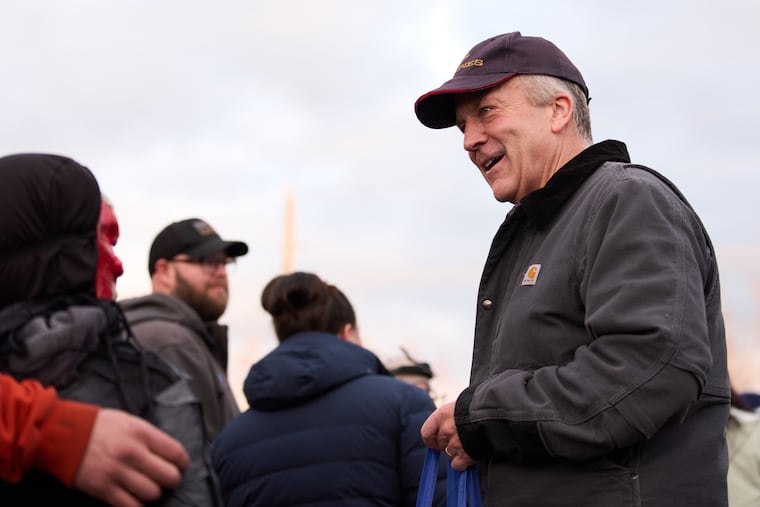
Republican Mike Rogers, 63, served in Congress for 14 years and chaired the House Intelligence Committee. He’s an Army veteran and former FBI agent.
Rogers briefly served on Trump’s transition team as an adviser on national security issues.
His entry into the Senate race was seen as a shakeup for Michigan Republicans, who have struggled to win statewide races. Trump, who won Michigan in the last presidential election, has endorsed Rogers, making Haley’s new endorsement all the more contentious.
What do Stevens and El-Sayed disagree on?
Stevens and El-Sayed have long quarreled, particularly over their stances on Israel.
Stevens is a staunch supporter of Israel who represents a district with a large Jewish community in Detroit’s suburbs.
Meanwhile, El-Sayed is a sharp critic of Israel and has received backlash for his past remarks regarding a Michigan synagogue attack and for appearances with controversial streamer Hasan Piker.
El-Sayed previously apologized for some of those remarks, and has engaged with the Jewish community, visiting synagogues and attending High Holy Days services, emphasizing his commitment to Jewish safety and combatting antisemitism.
Why did Haley Stevens flip her endorsement last-minute?
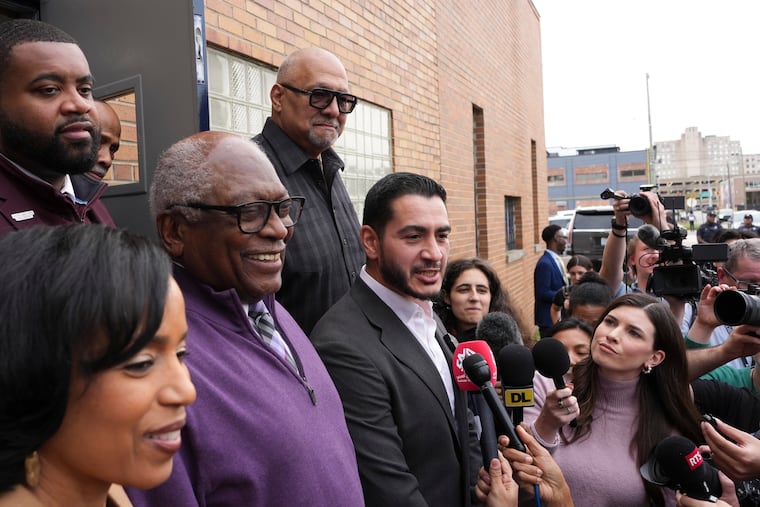
Stevens and El-Sayed were scheduled to make their first public appearance together in months, but Stevens said she was uninvited.
In a video shot inside her car, Stevens said El-Sayed made the call to cut her out of his campaigning. But according to PBS, U.S. Rep. Debbie Dingell, who organized the event, said she was the one who made the call to uninvite Stevens.
Dingell said the public feuding between Stevens and El-Sayed was “too distracting.” Days before the event, Stevens called for El-Sayed to denounce an outside group’s political ad that tied U.S. inflation to Israel’s war in Gaza. El-Sayed said he wasn’t responsible for the ad and there were more important campaign priorities.
After being uninvited from the unity event, Stevens announced her endorsement flip.
What did Stevens say in her endorsement?
Stevens endorsed Rogers after attending a Detroit church service with him. It took place the day as the joint event she was initially invited to.
“Our Democratic nominee for Senate said I was no longer welcome in his campaign and that I should stay away,” Stevens said in a video announcing the endorsement. “And he’s right. And that’s why I am endorsing Mike Rogers for the United States Senate today.”
Rogers said he was “honored” by her support.
How did El-Sayed respond?
El-Sayed dismissed the endorsement when asked about it by reporters later Sunday, saying he was focused on issues voters care about, such as the high cost of living.
“At the end of the day I actually don’t think about Haley Stevens,” he said, adding later: “None of this matters.”
What has the response to Stevens’ endorsement flip been like?
More than half of Stevens’ staff has resigned, according to the Detroit Free Press.
She’s been lambasted by Democratic leaders across the country, including Senate Minority Leader Chuck Schumer, who called it a “despicable betrayal.”
Democratic Party supporters have called Stevens’ endorsement of Rogers hypocritical, criticizing her support for an opponent who, on paper, has jarring ideological divides when it comes to policy.
What next?
With less than 48 hours to go before Election Day, a party that had spent months trying to unite behind its Senate nominee was suddenly grappling with an extraordinary defection in one of this year’s most important races.
If El-Sayed wins, he would be the first Muslim person elected to the U.S. Senate. The Democratic candidate has faced a slew of Islamophobic attacks from Trump and his supporters during the campaign.
The Associated Press contributed to this article.