The DOJ plans to send poll monitors to Philly on Election Day. Here’s what we know
The DOJ’s plan has raised alarms due to President Donald Trump’s track record of disputing election results.

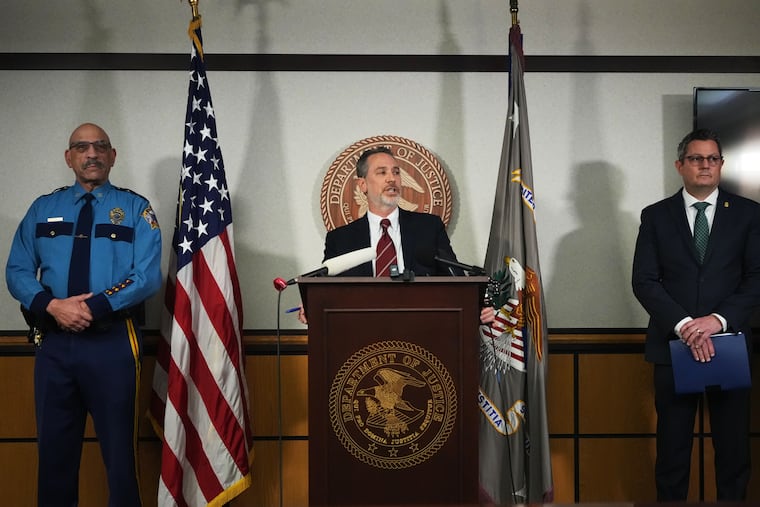
The U.S. Department of Justice plans to send election monitors to polling places in Philadelphia and three other Pennsylvania counties on Election Day. Whether that’s cause for concern or business as usual is up for debate.
It’s not uncommon for the federal government to deploy election monitors. However, the plan has raised alarms due to President Donald Trump’s track record of disputing election results. The DOJ, which is run by Trump’s former personal attorney Todd Blanche, said the goal is to make sure federal law is followed.
The Pennsylvania Department of State, which oversees elections in the commonwealth, shared some of the DOJ’s communications, as well as its plans. Here’s what we know:
What role will election monitors play in Pa.?
The Department of Justice said it will send the observers to Philadelphia, as well as Allegheny, Luzerne, and Lehigh Counties, according to an Oct. 22 letter to the Pa. Department of State shared with The Inquirer. These counties include Pittsburgh, Allentown, and part of Bethlehem — some of Pennsylvania’s largest Democratic strongholds.
The election monitor’s job is to ensure compliance with the Voting Rights Act, the National Voter Registration Act, the Uniformed and Overseas Citizens Absentee Voting Act, and other federal laws, the DOJ said.
“The monitoring by the Civil Rights Division is done in the same way as in the past,” wrote DOJ trial attorney James T. Catania. “Our monitors only observe and take notes. They do not intrude or interfere in any way in the voting process.”
» READ MORE: The lawyer overseeing the Justice Department’s election monitoring in Pa. is part of a national effort
The monitors will identify themselves to each poll manager upon arrival, will be dressed in business casual clothing without DOJ insignia, and will not carry firearms, Catania said.
“If our monitors observe an election issue, they will notify their team lead for the jurisdiction. The team lead or the regional coordinator may then contact the designee for the jurisdiction about the issue,” Catania said.
They don’t have access to voting machines
The Justice Department plans to dispatch a record 1,000 poll monitors across the country, up from 289 during the 2022 midterms and 714 during the 2024 presidential election, per CBS News.
Such DOJ election monitors have traditionally been sent to polling sites to ensure compliance, said state Deputy Secretary for Elections and Commissions Jonathan Marks in a Tuesday email to county election officials.
There is no specific federal or state statute authorizing them to be there, Marks said, and from a legal perspective they don’t have “any greater access to polling places than members of the general public.”
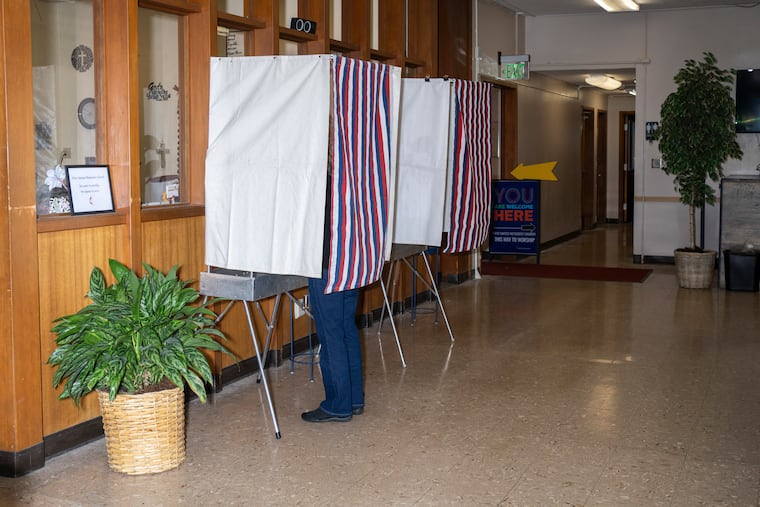
In Pennsylvania, the monitors will be allowed inside polling locations, but must remain at least 10 feet outside the room or area where voting machines are located, a Department of State spokesperson said.
“They may not enter restricted areas, inspect voting equipment, or demand access to any records,” Marks said.
Election Day concerns put spotlight on poll monitors
Vic Walczak, American Civil Liberties Union of Pennsylvania’s legal director, said the poll monitors aren’t a cause for alarm, and the Philadelphia mayor’s office assured people that there is nothing to worry about.
But several states have taken preemptive action to prohibit the election monitors from going inside polling places — a sign that they’re concerned about interference. Officials in Indiana, Kentucky, and one Arkansas county have told the DOJ it must remain outside polling locations, Newsweek reported.
The DOJ has already waded into the Alaska governor’s race — attempting to block the result if the Democrat wins — and has subpoenaed local election officials in California, part of an investigation alleging noncitizen voting.
The NAACP earlier this month sued the federal government over its plan to send the DOJ staffers, saying it could discourage turnout, disrupt voting, and “cause chaos on Election Day.”
Voting rights nonprofit Campaign Legal Center said voters are concerned about whether the poll monitors will “act in a neutral nonpartisan manner.”
During the 2026 primary, election monitors in Wyoming attempted to access voting machines, the voting rights nonprofit noted, while in Arizona and Minnesota, election monitors included people “with documented histories of engaging in election crimes, including a lawyer who previously pleaded guilty to hacking election websites.”
The group put out a fact sheet detailing voters’ rights.
“Even in the face of an administration that has tried time and time again to exert undue control over elections, voters can be assured that we have safeguards and systems in place to ensure their vote is protected,” the group said.
Possibility of congressional observers
In addition, the Pa. Department of State is preparing for congressional election observers.
These observers are U.S. House or Senate employees who have written authorization to gather information and are allowed by federal law “to be present within a polling place,” Marks said.
Congressional observers aren’t allowed to handle ballots or election equipment, Marks said. They also can’t promote an issue or candidate, or do anything that would infringe on voter privacy, ballot secrecy, or otherwise interfere with voting.
Voter intimidation or any other prohibited practices by these observers could lead to their removal, Marks said.
What about poll watchers?
Poll watchers are another type of observer allowed to be inside polling places. Under state law, a poll watcher is a credentialed representative of a candidate or political party. That person must also live in the same county as the polling place they’re observing.
Poll watchers may observe from within the polling place, but may not interfere with voting.
“They can make good-faith challenges to a voter’s identity or continued residence in the election district,” the Pa. Department of State said on its website. “Such challenges must be lodged directly with the Judge of Elections, and poll watchers have no authority to approach voters at the polling place or prevent a voter from voting.”
Who can’t be at the polls?
State and federal laws “strictly limit military and law enforcement presence at polling places,” a Pennsylvania Department of State spokesperson said in an email.
“The Pennsylvania Constitution bars the military from interfering with elections,“ the statement said. And the Pennsylvania Election Code requires that police officers stay 100 feet from polling places “unless they are voting, serving a warrant, or prevent disturbances at the polling place that interfere with voting.”
Similar federal laws ban voter intimidation by police and the military and the presence of military at polling locations, the spokesperson said.