The parties make their final pitches to voters as midterms near
Democrats lean into issues of affordability and corruption, while Republicans emphasize culture war concerns like transgender athletes.
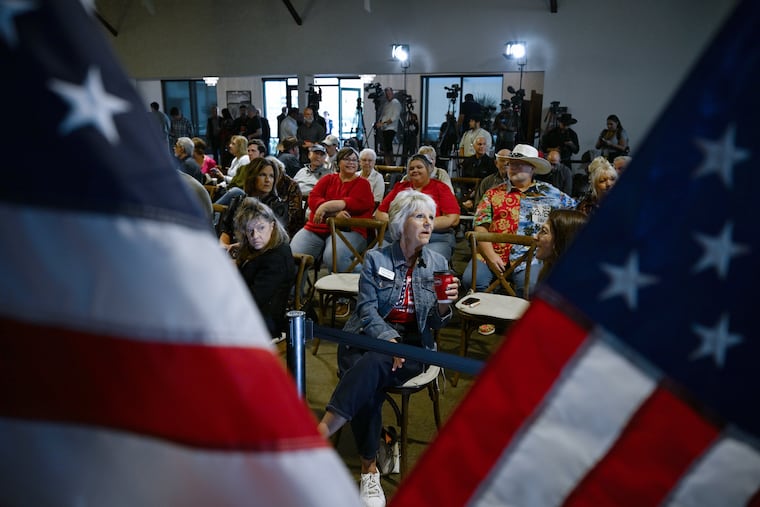
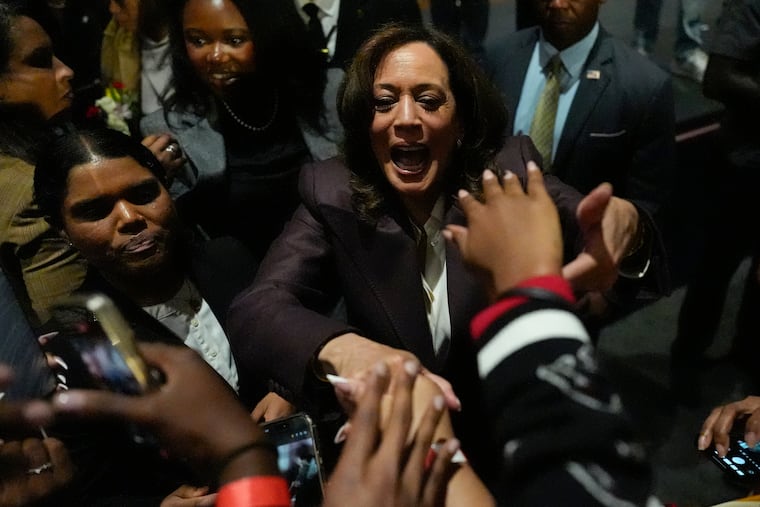
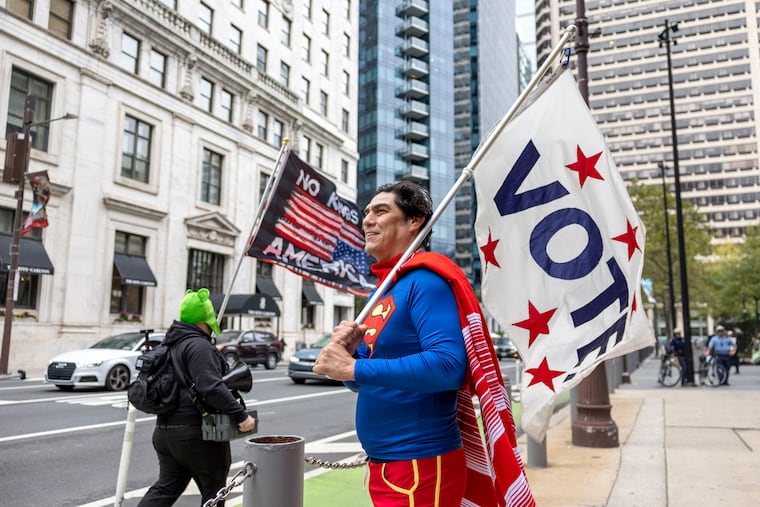
Democrats are sprinting with themes of affordability and corruption right up until the finish line this weekend, sensing a tantalizing chance to take full control of Congress if the rosy polls are accurate.
President Donald Trump and Republicans used their cash advantage to mount a fevered last-minute defense, accusing Democrats of being dangerous and warning of culture-war horrors if GOP support falters at the ballot box.
After a Saturday spent phoning into tele-rallies around the country and hosting a lavish Halloween party at his private Mar-a-Lago Club, Trump was returning to the spotlight later Sunday with rallies in the formerly safe red states of Kansas and Iowa. He had canceled those rallies earlier but rescheduled them after facing criticism.
Trump’s approval ratings are at all-time lows, but Republicans still treat him as their best surrogate. The president has laid out a road map for Republican candidates to win that calls for preaching confidence in the economy, fealty to his agenda, and campaigning as if Trump himself were on the ballot. His fingerprints are all across the political landscape, from urging Southern states to draw new Republican-leaning congressional districts to hand-selecting nominees for House and Senate races.
Democrats welcomed the focus on Trump. At a rally Saturday in Virginia’s 2nd Congressional District, where Rep. Jen Kiggans (R) is locked in one of the most competitive races in the country, the Democratic candidate, former congresswoman Elaine Luria, told volunteer canvassers to start every conversation with “Jen Kiggans voted 100% of the time with Trump.”
House Minority Leader Hakeem Jeffries (D., N.Y.) told voters at the rally that Trump had left a “graveyard of broken promises,” from lowering prices to staying out of wars.
Jeffries pledged that if Democrats win a House majority — which probably would make him speaker — they will work to reverse Trump’s cuts to Medicaid, end the war in Iran, and restore enhanced Affordable Care Act premium subsidies. And he promised to “hold the crooks accountable,” describing the Trump administration as beset by the most “corruption, extremism, lawbreaking, [and] norm-breaking we’ve ever seen.”
House Speaker Mike Johnson (R., La.), rallying in Michigan on Saturday with Senate nominee Mike Rogers and House nominee Michael Bouchard, told supporters that polls are wrong and that the GOP will defy the usual trend of the party holding the White House losing power in Congress.
Johnson depicted the election in dark terms, with dire consequences if Democrats win a majority.
“We are no longer going to be arguing about marginal tax rates; we’re not going to be debating shades of difference in foreign policy and regulation,” Johnson said. “We’re going to be talking about whether we’re going to maintain the republic, the very foundations of America. We’re going to go down this dark, dangerous road to communism.”
He, like other Republicans around the country, tried to shift voter attention away from rising prices to the rising power of the left and democratic socialism in the Democratic Party.
“This is a battle between socialist, Marxist, communist ideology, or believing in the future of America the founders believed in America,” Texas state Sen. Tan Parker (R) said in a rally in Fort Worth for Republican Senate nominee Ken Paxton. “This is the fight of our lives.”
Democrats, in contrast, have broadly embraced corruption and government ethics reform as a winning issue this year, tapping into anti-elite sentiment at a time many voters are struggling financially. On Saturday at a rally in downtown Houston, Democratic Senate nominee James Talarico, whom Paxton frequently calls a “Marxist,” painted his opponent as corrupt and beholden to billionaires.
“This election is about whether you want a politician who puts money in your pocket or his own,” Talarico said to cheers and applause, accusing Elon Musk, who has spent at least $446 million to influence the midterm elections, of trying to buy the Senate seat.
While Democrats have built momentum in polling through the summer and into the fall, they were outspent by Republicans on advertising in competitive races every week since Labor Day.
During the final week before Election Day, total ad spending reached $561 million, with Republicans accounting for $305 million and Democrats for $256 million.
The economy remains the top advertising issue for both parties. Nearly two-thirds of ads aired in competitive races last week mentioned it.
Republicans also unleashed a blitz of ads in the general election focused on transgender-related issues, spending $235 million on ads in competitive Senate, House, and governor’s races this election cycle and $32 million last week alone.
Republicans also hammered on transgender issues on the campaign trail, hoping to replicate the success of Trump and others who used them to cast Democrats as out of touch in the closing stretch of the 2024 election.
“For a long time, there’s been this concerted effort to undermine the institutions of our culture,” Iowa Republican gubernatorial candidate Zach Lahn said Saturday at a campaign event in Greenfield. He cited Democratic resistance to laws banning transgender athletes from competing in women’s sports as well as what he said are threats to law enforcement, fair elections, and secure borders.
“We all want prices to come down,” he said. “But ... if we don’t fight properly to preserve what we love here, then we’re going to have way bigger problems on our hands than affordability.”
Such topics continue to cut across other partisan leanings, appealing to some independents.
In Maine, for instance, Sophie Robbins said she won’t vote again for Republican Sen. Susan Collins because she opposes the senator’s stances on Israel’s war in Gaza and data centers and she believes Collins has been in office for too long.
But Robbins — a 26-year-old stay-at-home mom from Waldoboro who is pro-environment and anti-abortion, and who voted for Joe Biden in 2020 and Trump in 2024 — remains uncertain about Collins’ Democratic opponent, Troy Jackson. She relates to his upbringing in rural northern Maine but said that his social views are too liberal, particularly on transgender athletes in women’s sports.
Jackson, a former logger, greeted voters at a trick-or-treating event in downtown Portland on Saturday afternoon dressed as a cord of wood (referencing an attack ad against him) and pushing his infant granddaughter (wearing a bumblebee costume) in a stroller.
Whatever the arguments against him, Jackson said the reason he’ll defeat Collins this year is because “the economy is crashing people. It’s the tariffs. It’s childcare. It’s the high fuel prices. We haven’t even gotten to the worst of it yet.”
Robbins said she would decide by Tuesday whether to vote for Jackson or skip the race altogether. “Maybe I’ll write in myself,” she said.