A pro-Ala Stanford super PAC has pulled its ads from TV in the final stretch of the Philly congressional race
Sources said that 314’s move to pull its TV advertising came after the organization commissioned a poll that showed Stanford’s voter support declined precipitously in recent weeks.
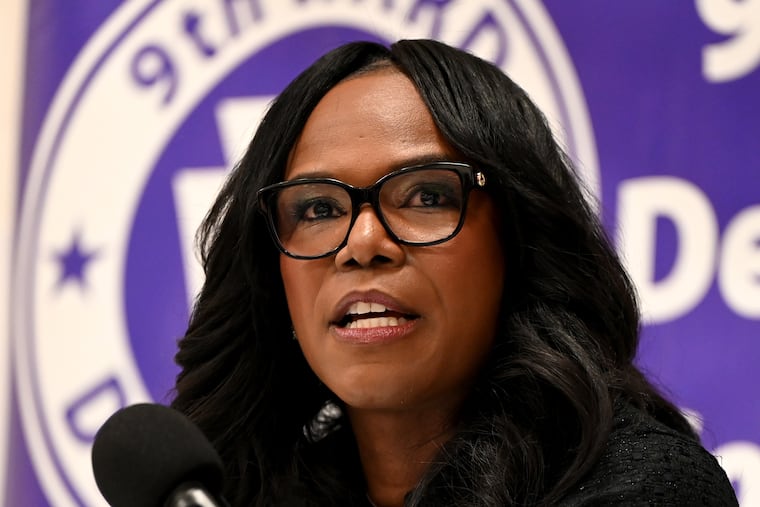
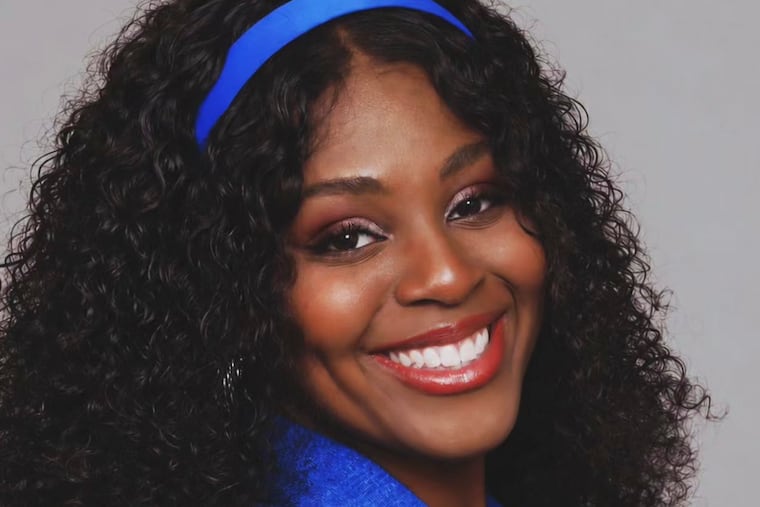
A Washington-based super PAC that has spent a staggering $3.5 million to support physician Ala Stanford for an open Philadelphia congressional seat pulled its television advertising off the air this week with just days left until the election.
That is according to media tracking firm AdImpact, which shows that the “pro-science” political action committee, 314 Action Fund, spent hundreds of thousands of dollars a week to air pro-Stanford TV commercials through much of March and April.
However, that changed last week. The group has spent virtually nothing on television since May 5, according to AdImpact, and has not reserved any television advertising in the final days of the race.
314 is still spending money to support Stanford with advertising in the mail, according to campaign finance paperwork. And Stanford’s campaign — which cannot legally coordinate with 314 — is continuing to run its own television ads, according to AdImpact.
But the campaign is spending far less money on television than what the super PAC had been pouring into the race. Now, with just days until Tuesday’s election, State Rep. Chris Rabb has the most prominent presence on the airwaves, boosted by about $1 million in spending from a coalition of national progressive groups.
Erik Polyak, 314’s executive director, said in a statement that the group “provided an early boost to Dr. Stanford’s campaign and we are running through the tape until Election Day.”
A spokesperson for Stanford’s campaign said in a statement that it “has the resources it needs to communicate Dr. Stanford’s story and her record to voters across PA-03 — and we’re doing exactly that every day until May 19.”
314’s move to pull its TV advertising came after the organization commissioned a poll that showed that Stanford’s voter support had declined precipitously in recent weeks, according to two sources familiar with the polling who spoke on the condition of anonymity because they were not authorized to discuss it publicly.
The super PAC released a poll in mid-April that showed Stanford with an edge over her two top rivals, Rabb and State Sen. Sharif Street. But by early May, shortly after a series of campaign missteps, 314’s polling showed Stanford was in a distant second place behind Rabb, the sources said. Street was in third.
» READ MORE: Philly’s three-way fight to replace Dwight Evans in the U.S. House enters a volatile final stretch
Still, the candidates and other groups supporting them say the race is far from over.
The Democratic City Committee, which has endorsed Street, also commissioned a poll in early May showing that Rabb had only a slight lead over Stanford and that a significant number of voters were undecided, according to a source familiar with the poll who was not authorized to discuss it publicly and spoke on the condition of anonymity.
That poll also showed that Stanford’s support had substantially declined compared with a survey the city committee commissioned in early April.
No independent polling of the race has been made public.
The primary will all but guarantee who will fill the seat representing Pennsylvania’s 3rd Congressional District, which is being vacated by retiring U.S. Rep. Dwight Evans. The district encompasses much of the western side of Philadelphia and is one of the bluest in the nation. No Republican has filed to run.
Evans endorsed Stanford when she announced her campaign in October, and she was long seen as a front-runner. She rose to prominence during the COVID-19 pandemic for her efforts to provide testing and vaccinations in low-income communities, and 314 spent far more money on the race than any other campaign or outside group.
However, Stanford’s campaign suffered a series of setbacks in late April. She stumbled through a question about immigration enforcement in an interview with NBC10, and The Inquirer reported that she had not properly disclosed nearly $1 million worth of income from her nonprofit, the Black Doctors Consortium.
And on April 29, she skipped a high-profile debate.
Amid it all, Stanford faced persistent attacks from Rabb and from critics online who speculated that the American Israel Public Affairs Committee (AIPAC) was financing 314’s pro-Stanford effort. Rabb is a staunch critic of Israel, and the pro-Israel lobby has become increasingly unpopular among Democrats amid the war in Gaza.
But 314 officials have repeatedly said that they did not receive funding from AIPAC or its affiliates for this election cycle. And on Tuesday, AIPAC posted on social media that it “isn’t funding any group’s efforts” in the 3rd Congressional District.
314 is funded largely through contributions from physicians and other science professionals who donate to the group regularly, according to campaign finance reports. It also accepts what is known as “dark money,” contributions from nonprofit entities that are not legally required to disclose their donors.
Polyak, of 314, said in a statement that the group has “not taken a dime from AIPAC in two years” and that Rabb should apologize to Stanford.
“Chris Rabb has spent his entire campaign attacking Dr. Ala Stanford and lying about her support in this race,” Polyak said. “This cannot be the new norm in Democratic politics — screaming that AIPAC is funding your opponent without proof is no way to win and voters should reject this new playbook.”
In a statement, Rabb’s campaign did not apologize and said that “it is deeply troubling that a D.C. political operative with 314 Action is focused on launching petty attacks in the final week of this campaign.”
Stanford, a first-time political candidate, has alluded to her campaign’s struggles and said she has been frustrated with what she sees as lies spread by her opponents. In an interview last week with the Chestnut Hill Local, Stanford was asked: “Can you recall a moment from your career where you wish you did things differently?”
She responded: “The moment from my career that I wish I did things differently is right now. … I would have asked more questions about this space.”
Ultimately, the race’s outcome is likely to come down to turnout, which is expected to be relatively low. Turnout in the city in last year’s primary election was at its lowest point in a decade.
However, the congressional race has generated more advertising than any race last year, and the candidates are planning get-out-the-vote operations to draw voters to the polls.
One such program is being funded by the Philly First Super PAC, a political action committee backing Street. The group has spent more than half a million dollars on pro-Street mail and get-out-the-vote efforts, according to recently filed campaign finance paperwork.
Philly First is financed by Philadelphia building trades unions.
Anthony Campisi, a spokesperson for Street’s campaign, said it is “confident going into the closing stretch.”
“We also think that as Dr. Stanford’s support collapses, many of those voters will be looking at us and our record as they make their decision,” he said. “And we’re competing for those voters.”

- Meet the Democrats vying to replace Dwight Evans in Congress
-
Ala Stanford is banking on a healthcare message to break through crowded Philly primary for Congress
-
Big money is flooding into the Philly congressional race as all three front-runners hit the airwaves
-
How two Philly congressional candidates are quietly guiding super PACs in plain sight