Ala Stanford and Chris Rabb are trading accusations as AIPAC becomes a flashpoint in Philly’s U.S. House race
The tense exchange between Ala Stanford and Chris Rabb on Tuesday was one of the most pointed moments of the campaign, and it centered on AIPAC's role in the race — or lack thereof.
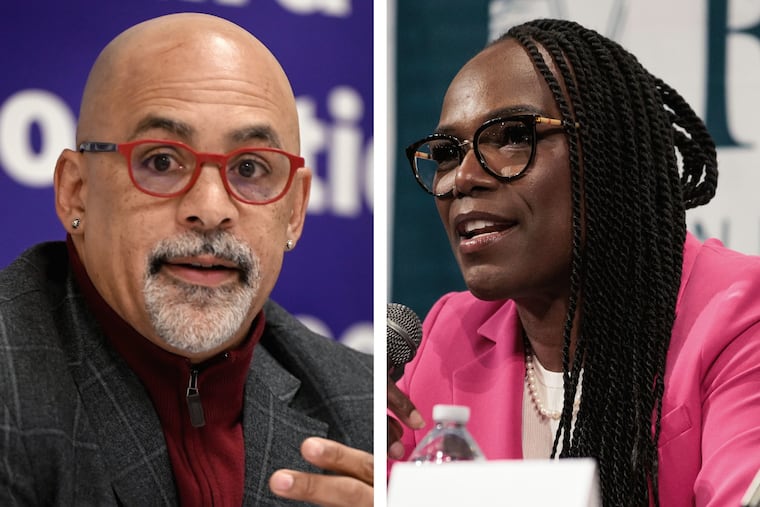
The nation’s most prominent pro-Israel political organization has not endorsed a candidate in Philadelphia’s ultracompetitive primary race for a seat in Congress, but it has still become a major point of contention.
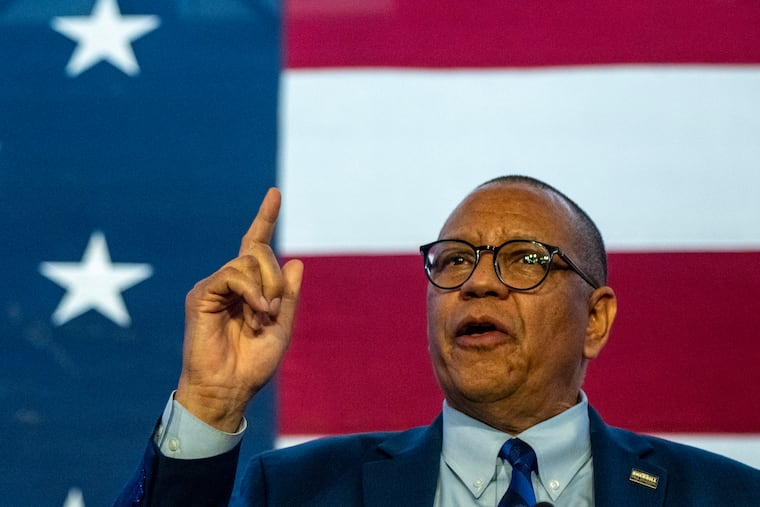
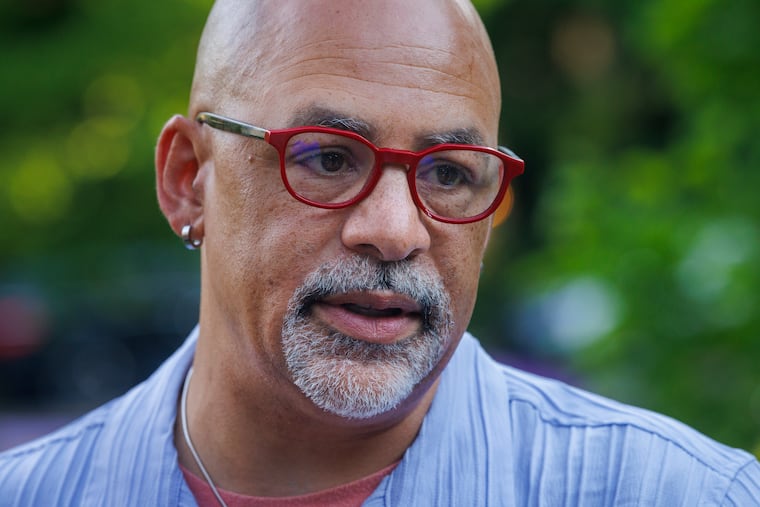
On Tuesday, two of the leading Democratic contenders — State Rep. Chris Rabb and physician Ala Stanford — clashed over the American Israel Public Affairs Committee, better known as AIPAC, and its role in the 3rd Congressional District campaign to succeed retiring U.S. Rep. Dwight Evans.
During the discussion, which took place at the end of a wide-ranging interview with The Inquirer Editorial Board, Rabb criticized Stanford’s position on the war in Gaza and emphasized that a political action committee supporting her has previously taken money from an AIPAC-affiliated group.
That escalated into Stanford accusing Rabb of ginning up opposition to her campaign based on false pretenses and said it has resulted in threats toward her.
“Thanks to you stating about AIPAC and about me taking money from them,” she said, “people physically try to assault me, I’ve gotten hate mail in my inboxes, as well as on social media.”
Even State Sen. Sharif Street, another Democratic candidate in the race who took part in the interview, said the attacks on Stanford by Rabb and his supporters are “over the top” and “pernicious.”
The editorial board, which runs The Inquirer’s opinion pages and decides endorsements, operates independently from the newsroom. Newsroom editors and reporters (including two who attended Tuesday’s meeting) have no role in endorsements, and opinion staffers have no role in news coverage.
The tense exchange between Stanford and Rabb on Tuesday was one of the most pointed moments of the campaign, which has thus far featured generally tame in-person events with minimal direct debate between candidates.
With about six weeks until the May 19 primary election, the three most prominent contenders are beginning to attack their opponents by name as they try to separate themselves from the rest of the field in the race for one of the most Democratic-leaning seats in the nation.
Rabb, an unabashed progressive and a staunch critic of Israel, often refers to the war in Gaza as a “genocide,” and he has called on his opponents to use the same language.
Street and Stanford have each taken more moderate positions on the conflict in the Middle East. And they both have avoided using the word genocide, which Rabb and his campaign have intimated is because of support from pro-Israel donors.
AIPAC has spent millions nationwide to boost candidates on both sides of the aisle who are supportive of Israel, and its connected political groups have invested in Democratic primaries to oppose contenders seen as hostile to the country.
The organization’s political activity has become a flashpoint in Democratic primaries nationwide, and its backing is seen as an indication that a candidate favors U.S. support for Israel. Amid backlash to the war in Gaza, AIPAC has increasingly relied on unrelated super PACs and new outside groups to obscure its contributions.
» READ MORE: Philly’s competitive U.S. House race narrows — but big questions loom
Rabb has suggested that one of those groups is 314 Action Fund, a national super PAC that supports candidates with backgrounds in science. The group has spent more than $2 million to boost Stanford, giving her a significant advertising edge over the other candidates.
In 2024, during a different election cycle, 314 Action Fund accepted a $1 million donation from United Democracy Project (UDP), an AIPAC-aligned super PAC, according to federal campaign finance records.
A spokesperson for 314 said Tuesday that Stanford “has not received money from 314 that 314 received from UDP.”
“Chris Rabb is spiraling,” said Erik Polyak, the group’s executive director. ”He’s spent his entire campaign attacking Dr. Ala Stanford instead of running on his record. This desperate attempt to discredit her is all part of a baseless smear campaign because he has no money and he’s losing.”
314 Action Fund officials have also noted that their PAC has at times been at odds with AIPAC in other races, including in the Democratic primary to represent Illinois’ 9th Congressional District earlier this year. AIPAC spent big to oppose Daniel Biss, the Evanston, Ill., mayor, whom 314 supported. Biss won the nomination.
United Democracy Project and AIPAC did not respond to a request for comment.
On Tuesday, a member of The Inquirer Editorial Board asked Rabb if it was fair to label 314 as aligned with AIPAC, given that the contribution in question was made during a different election cycle.
In response, Rabb said he has “never said that anyone takes AIPAC money … but if some major donors to candidates are also major donors to AIPAC, I think that’s a direct nexus.”
Rabb has attempted to make the connection in forums and campaign materials, but he has generally been careful to not say that Stanford or Street has taken money directly from AIPAC. His website says Stanford “is being bankrolled by a dark money group that AIPAC has secretly funneled millions through,” and he has said during forums that some donors to Street have also given to AIPAC.
Stanford, a first-time candidate for political office, said Tuesday that Rabb has connected her to AIPAC “multiple times” and that she has received threats as a result.
Both Rabb and Street, who have each been in office for nearly a decade, responded by saying that receiving death threats is part of the job.
“That has been my life for 10 years,” Rabb said. “As much new scrutiny as you’re getting as a candidate on this issue, you can only imagine what the death threats and attacks are for someone like me, one of the very few Democratic candidates in the entire nation who is prepared to talk about the genocide in Gaza.”
Street added that he was flooded with threats in the midst of the 2024 presidential election, when he was the head of the state Democratic Party.
“If you choose this career, it is a part of your life forever,” he said. “It is an unfortunate part of your life.”

- Meet the Democrats vying to replace Dwight Evans in Congress
-
Ala Stanford is banking on a healthcare message to break through crowded Philly primary for Congress
-
Big money is flooding into the Philly congressional race as all three front-runners hit the airwaves
-
How two Philly congressional candidates are quietly guiding super PACs in plain sight