Some Republicans reject Trump’s move to import diesel fuel from Russia
“It’s a grave error by the president,” said Rep. Don Bacon, a Nebraska Republican. “People realize that the sanctions on Russia are appropriate when Russia’s invading a country."
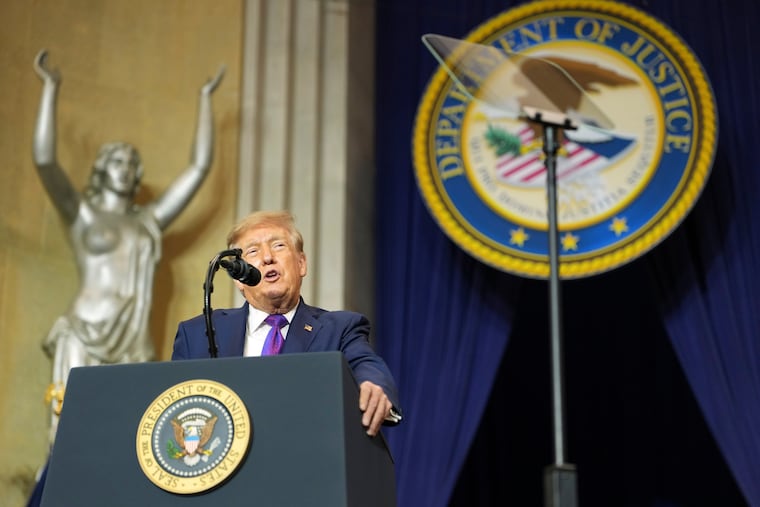
President Donald Trump’s announcement of a deal with President Vladimir Putin of Russia to import Russian diesel has drawn criticism from some Republicans running in the most competitive midterm races, as the party grasps for ways to contain soaring energy prices.
The president announced the arrangement, which undercuts U.S. sanctions on Moscow, under pressure to rein in the surging price of diesel. The product’s cost has climbed because of the war with Iran, which has clogged a vital oil-shipping corridor, and high energy prices have become a severe campaign liability for Republican candidates in the midterms.
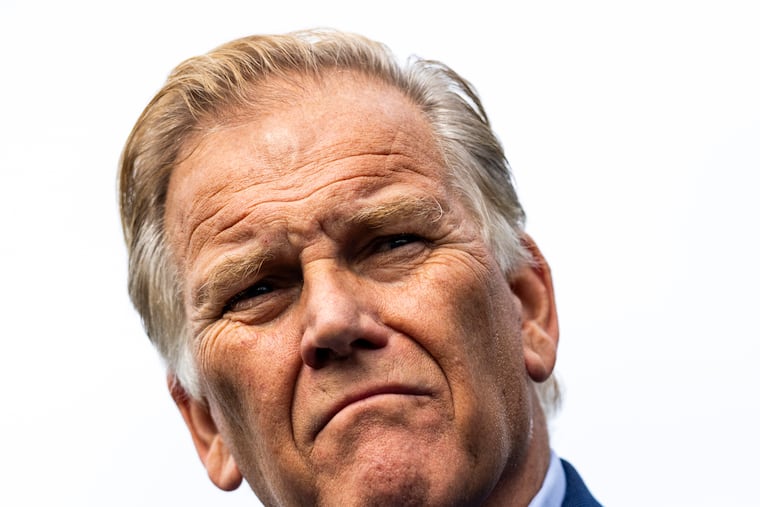
But the campaigns of two Republicans running in pivotal Senate races — former Rep. Mike Rogers of Michigan and Sen. Dan Sullivan of Alaska — expressed disapproval of the deal with Russia. And other Republicans running in competitive Senate and House races had little to say about the agreement, which Trump trumpeted Friday on social media as a “very big and important” deal, claiming it would swiftly bring down energy costs.
“It’s a grave error by the president,” said Rep. Don Bacon, a Nebraska Republican from a battleground district who is not running for reelection. “People realize that the sanctions on Russia are appropriate when Russia’s invading a country and bombing cities at night.”
Bacon predicted the deal would have little effect on soaring diesel prices but would offer a victory for one of America’s adversaries. And the congressman said that the agreement would not help Republican candidates. “It looks desperate,” he said.
The White House did not immediately respond to a request for comment. The deal received some Republican praise. Rep. Anna Paulina Luna, a Florida Republican running in a competitive race, wrote on social media that it would “massively benefit the American people.”
The United States introduced sanctions on energy exports from Russia after the country started its full-scale invasion of Ukraine in 2022. Trump’s deal, and his declaration Saturday that Ukraine should “get a new president,” escalated U.S. tensions with Kyiv. The issue of U.S. support for the country has for years divided Republicans; the two Republican Senate candidates who questioned the deal have long been supporters of Ukraine.
Some Midwestern Republicans have called for a pause on diesel exports to try to lower costs for American consumers, a notion that Trump has ruled out.
Energy experts say the deal is not likely to have a major impact on the cost of diesel, which has spiked to around $6.28 a gallon, according to the AAA motor club, up from $3.67 a year ago. Andrew Lipow, president of Lipow Oil Associates, an energy consulting firm in Houston, said the deal would introduce a “very small” amount of diesel into the market “compared to U.S. demand.”
In Michigan, Rogers, who has recently sought distance from Trump by calling for the president to end both the Iran war and his tariff fight with Canada, told reporters on Friday that he supported an agricultural rebate for diesel, but not the president’s approach.
Rogers, long a foreign policy hawk, cited concern about offering Putin a victory. “You just don’t want to give that guy an inch,” he said.
The Associated Press reported that a bipartisan group of six senators on Sunday called for Trump’s administration to “immediately reverse course” on the diesel purchase.
Four Republican senators and two Democratic senators signed onto the statement released Sunday protesting the deal. They said the administration failed to consult with Congress or submit any explanation to justify its decision as required by statute.
“The United States should not provide Putin with a financial lifeline while Russia continues to kill Ukrainian civilians. The Administration must immediately reverse course,” they wrote.
The Republican senators who signed onto the statement are Sens. Susan Collins of Maine, Lisa Murkowski of Alaska, Thom Tillis of North Carolina, and John Curtis of Utah. The Democratic senators are Sens. Jeanne Shaheen of New Hampshire and Richard Blumenthal of Connecticut.
Tillis, in an interview that aired Sunday on NBC’s Meet the Press, said there’s a legitimate case for saying the president is not following the law if the administration goes through with its diesel purchase plan.
“We were very clear that Russia is the aggressor. Russia is the one who can end this war by backing out of territory that they occupied,” Tillis said.
Democrats pounced on the deal. Sen. Chuck Schumer of New York, the Democratic minority leader, wrote on social media that the president had made a “deal with the devil to try to help his flailing political fortunes.”
Rep. Chris Pappas, the Democratic nominee in the competitive Senate race in New Hampshire, said in a statement that the agreement was a “slap in the face to Ukraine and our allies overseas.” The campaign of his Republican opponent, former Sen. John E. Sununu, did not immediately respond to a request for comment.
The high cost of diesel poses a particular risk for Republicans running in states whose farming-heavy economies are powered by diesel, such as Nebraska, Iowa, and Kansas.
Rogers, Sullivan, and Hinson have all called for the United States to pause diesel exports. Last month, Trump proposed banning or limiting U.S. diesel exports, worrying European countries. But recently, he said, “We are not going to be doing the export ban.”
This article originally appeared in the New York Times.