Philly would have to divert 60% of its trash from landfills and incinerators under new legislation
Council’s move came just days after a different committee voted unanimously to block the city from inking a new contract with a controversial trash incinerator in Chester.
Philadelphia would be required to steer 60% of its trash away from landfills or incinerators over the next 20 years under legislation advanced by City Council on Monday.
The bill, which was advanced out of Council’s Commerce Committee, directs the city to develop a comprehensive “zero waste” strategy over the next three years. Included in that plan, according to the legislation, should be steps that move the city away from its reliance on traditional forms of waste disposal in favor of cleaner methods such as composting.
Council’s move came just days after a different committee voted unanimously to block Mayor Cherelle L. Parker’s administration from entering into a new four-year deal with a controversial incinerator in Chester, where the city has for years sent about a third of its trash to be burned.
That move was championed by City Councilmember Jamie Gauthier, a West Philadelphia progressive Democrat who has for more than a year pushed the city to end its relationship with Reworld. She and a coalition of activists said the incinerator emits harmful byproducts into the air that cause adverse health effects, and they advocated for the city to send all its trash to landfills.
However, Reworld said those characterizations are false and that the incinerator’s emissions meet federal environmental and health standards. The Parker administration sought to renew its existing contract with Reworld for at least another four years, saying that it’s a good deal for taxpayers and that it would be irresponsible to end the contract without a longterm strategy to reduce waste entirely.
The administration partnered with City Councilmember Mark Squilla to author the zero waste legislation that the Council committee unanimously advanced on Monday.
The legislation calls on the administration to develop a “Philadelphia Zero Waste Circular Economy Plan” that includes timelines for the implementation of new techniques for waste disposal, such as composting and “anaerobic digestion,” a process that breaks down organic waste.
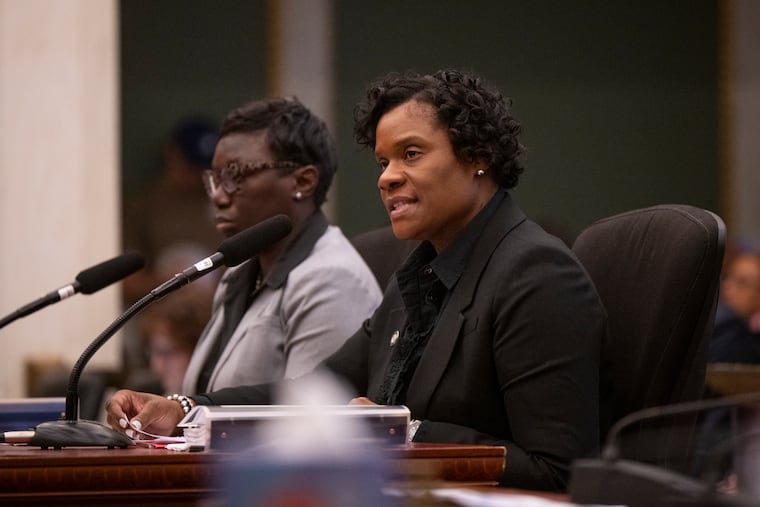
Sanitation Department Commission Crystal Jacobs-Shipman said during the hearing that the legislation essentially codifies work that is already underway to reduce the city’s reliance on landfills and waste-to-energy sites like the Chester incinerator.
“We are poised to reshape how people think of and manage waste,” she said.
» READ MORE: Philadelphia City Council blocks Parker administration from contracting with Chester trash incinerator
Some environmental advocates testified that the legislation lacked accountability measures and was too focused on diverting waste as opposed to reducing it.
Alisa Shargorodsky, executive director of Echo Systems, a Philadelphia-based waste reduction nonprofit, said the city’s forthcoming plan should prioritize reducing single-use packaging and providing support to small businesses that shift toward reusable options.
“Every ton that we do not create is a ton that we do not have to pay for,” Shargorodsky said. “We cannot build a zero waste plan on technology alone. We need prevention at the core.”
The legislation also requires the city to “duly consider” 20-year contracts with firms that process waste and recyclables, as opposed to its current practice of inking deals that can last for a maximum of seven years.
Several officials testified that longer-term contracts could save taxpayers money and provide firms with payment assurances that could allow them to invest in cleaner infrastructure.
“The biggest advantage is allowing a proposer to spread their capital investments out over a long period of time,” said Scott McGrath, the environmental planning director for the city’s Sanitation Department.
Gauthier — who sits on the Commerce Committee but left the chamber before the vote took place — pointed out during the hearing that there is no law stopping the city from entering into a 20-year contract now.
Jacobs-Shipman, of the Parker administration, said that in its most recent procurement process, the city offered potential vendors the opportunity to propose longer-term contracts, but none did.
“Its not something that we are shying away from,” she said.