Mayor Parker wanted a 20-year tax abatement to spark development. Why hasn’t it happened?
Amid a contentious debate over school closures and a bruising budget battle over public education funding, the abatement legislation was never introduced. But that doesn’t mean it’s dead, Parker says.
Whatever happened to Mayor Cherelle L. Parker 20-year property tax abatement for the redevelopment of empty office buildings and long vacant public schools?
The mayor said in November that it would be “one of the first pieces of legislation that we send over to Council President Kenyatta Johnson for consideration” in the current City Council session.
Instead, amid a contentious debate over school closures and a bruising budget battle over public education funding, the abatement legislation was never introduced.
But that doesn’t mean it’s dead, Parker says. She still pitches it as a key part of her Housing Opportunities Made Easy (HOME) to create more housing.
“The 20-year abatement is crucial to our overall efforts to build, restore or repair 30,000 units of housing,” Parker said in a statement Friday. “This legislation will put our H.O.M.E. plan on steroids, and it’s critical that we take the time to get it right.”
Philadelphia’s building trades unions and the real estate industry say they are ready to make the argument for the 20-year abatement in the fall.
“Right now the financials don’t work, or developers would already be converting all of those empty buildings to housing, so government incentives are needed,” said John Hawkins, a City Hall lobbyist who works for real estate and development interest groups.
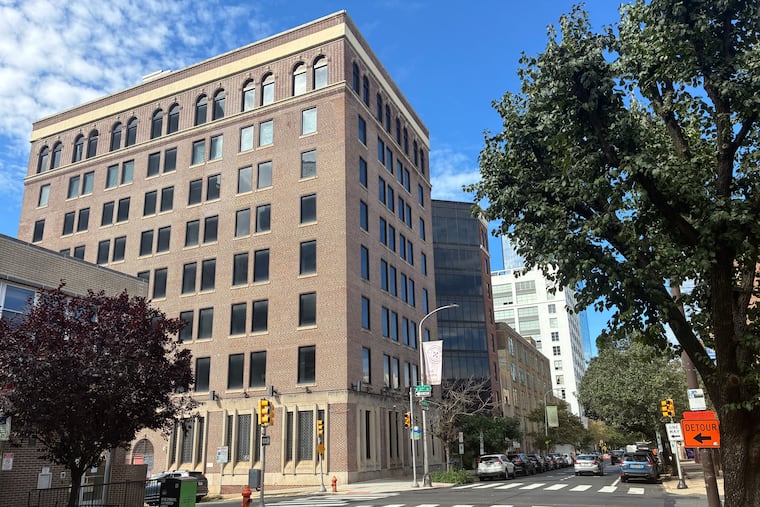
Hawkins noted that Philadelphia still has up to 15 million square feet of underused office and industrial space, despite a burst of redevelopment in Center City.
“It will take time to work through those numbers with City Council, so the administration and the development community intend to work over the summer to build a consensus,” Hawkins said.
Council President Johnson said he is open to the idea, although he hasn’t seen proposed legislation from the mayor yet.
Like progressives in City Council, he wants to ensure that a 20-year abatement for redevelopment brings some below-market-rate housing to the city.
“I do support the idea generally but also want to make sure when you talk about the issue of abatements, you want to make sure that we address the issue of affordability,” Johnson said.
School closures dominate the debate
Last year, Parker worked with the Philadelphia delegation in Harrisburg to change state law to allow for the creation of a 20-year tax abatement for renovations.
Currently, a 10-year version exists for rehabilitating existing buildings, and a half-strength version is available for new construction.
The idea of doubling the abatement for redevelopment came into vogue after office building vacancy spiked following the rise of hybrid and remote work during the COVID-19 pandemic.
Last year Parker argued that a 20-year abatement could boost redevelopment opportunities outside Center City, too, especially in cases where public sector buildings have long been vacant.
“We’re not thinking about the school district facilities plan that they’re working on now,” Parker told The Inquirer in November, long before the district announced it planned school closures.
“[I am talking about] what to do with this current inventory of persistently vacant school buildings,” Parker said. “It’s shameful. There are school buildings that have been vacant for 15 to 20 years [and there are other] government buildings vacant as well.”
But the district’s plan to close 17 schools ended up dominating this Council session, as angry members protested and threatened to sue.
Council members also looked askance at the mayor’s proposed $1 tax on rideshare trips, which she wants to stave off some cuts to public education.
The plan grew increasingly contentious, and the school district backed away from a proposal to quickly turn closed schools over to the city government for redevelopment into affordable housing.
Even without the introduction of the abatement, no one wanted it to look like the district was closing schools so that the properties could be redeveloped.
Nonetheless, several City Council members changed the zoning on public schools slated for closure in their districts to make future redevelopment harder. Councilmember Cindy Bass introduced legislation that would remap the long vacant Ada H.H. Lewis Middle School.
Councilmember Jamie Gauthier has said she would consider a 20-year abatement only if there was a strong affordability component. The debate around school closures made the policy an awkward fit for this Council session, she said.
“We may be taking on items that disadvantage people more — whether we’re talking about the various taxes on the table right now or closing 17 schools," Gauthier said. “All of it that added together to me feels like we shouldn’t just be running forward with tax benefits for developers.”
What would a 20-year abatement look like?
There are still a lot of questions about what Parker’s abatement proposal would include.
Last year she talked about extending it to buildings that cannot be redeveloped, such as the Roundhouse on Race Street. In theory, new construction could get the incentive post-demolition in those cases. But it is unclear how the law could be written to allow that.
Parker also said the law department was exploring whether an affordability clause would be legal under state law, or whether a sunset provision could be enacted to push developers to build faster.
“Is there going to be a sunset, how much affordable, all of that is what we are very specifically crafting right now,” Parker said in November. “Maybe the more units that would be affordable, maybe the longer you get access to the abatement tool.”
Some experts have cast doubt on the legality of an affordability provision, while others have simply argued that the incentive would not be powerful enough to spur much development if it came with a requirement to provide below-market-rate homes.
Parker, for one, still frames the policy as one that can deliver housing for lower-income Philadelphians.
“Developing more workforce and affordable housing is the centerpiece of my plan for a 20-year tax abatement for converting commercial, industrial and government buildings to residential use,” the mayor said in her May statement.
For boosters of the 20-year abatement, reactivating vacant buildings is advantage enough. More homes and more people in the city could broaden the tax base and invigorate street life.
“We’ll get more residents into the city that helps us with our city wage tax, and maybe we can recruit people from the suburbs,” said Ryan Boyer, head of the Philadelphia Building and Construction Trades Council, a coalition of trade unions.
“Then what about the vibrancy that you bring to the city and other ancillary businesses?” he said. “You get nothing at all now because most of these buildings are vacant buildings that you get nothing out of but blight.”