One additional Philly school is off the closing list, and the school board will vote on facilities plan Thursday
The school board is scheduled to vote on Superintendent Tony B. Watlington Sr.'s sweeping facilities plan Thursday. One of 18 schools, Ludlow Elementary, has come off the closure list.
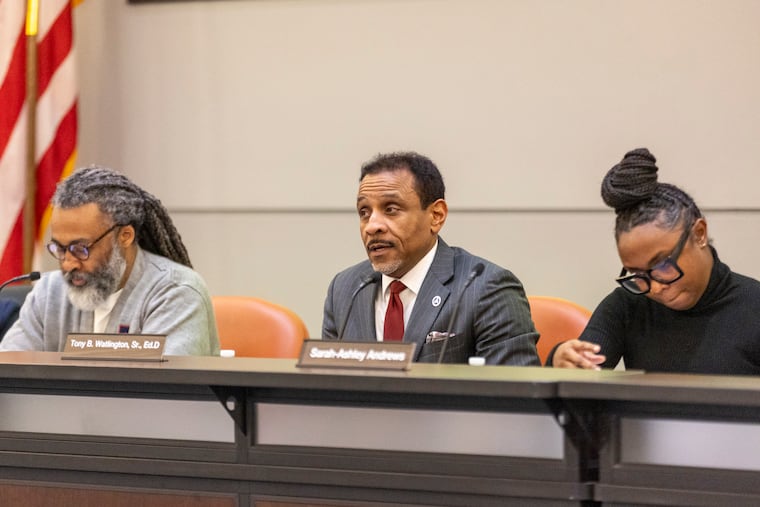
Philadelphia’s school board will vote Thursday on the future of its 200 school buildings — including a proposal to close 17 schools.
Superintendent Tony B. Watlington Sr. announced what he said was the final version of his sweeping facilities plan Monday — a blueprint that will touch schools across the city and reshape the district over the next decade.
The proposal, which continued to attract criticism Monday from lawmakers, community members, and the teachers union, will move forward if it gains approval from the school board Thursday in what’s sure to be a lengthy and contentious meeting.
New to this version of the plan is the removal of one school — Ludlow Elementary in North Philadelphia — from the closure list. And 169, not 159 schools, will be modernized, with a number of additional projects in Southwest and North Philadelphia included because those neighborhoods were hit hard in the district’s last round of mass closures, in 2012 and 2013.
There’s also a new price tag for the plan: $3 billion, instead of $2.8 billion, over a decade. The district still plans on funding $1 billion of the bill itself, with capital funds, but is now asking for $2 billion to help upgrade school buildings from state and philanthropic sources that have not been identified and are not assured.
Other revisions include transitioning Moffet Elementary to a K-4 — the school is now a K-5, and was set to become a 5-8 school — and sending its students to Ludlow for middle school.
The district plans on retaining the Lankenau High building for use for environmental education for students across the district. Lankenau, whose community has mounted a fierce fight to remain open, is still slated for closure, as is Robeson High. The Robeson building in University City will also stay in district control, with its future use determined after conversations with the community, Watlington said.
Several other small, high-achieving high schools like Lankenau and Robeson will close, with their programs absorbed into larger schools, despite records of success.
“The reason is we cannot drive faster improvement and at the same time support really small high schools,” Watlington said. “It is just, inevitable that we’ve got to reallocate some of our resources.”
Despite those changes, the proposal still has strong critics.

Wholesale changes are coming to the Philadelphia School District, with the school board passing a $3 billion facilties plan that aims to close 17 schools permanently, and renovate 169.
Superintendent Tony B. Watlington Sr. presented the plan to the school board Feb. 26 and it immediately faced strong opposition. After some amendments, the board passed the plan April 30. Here's what we do and don't know about it.
And to see the proposed list school closures and check how your school could be impacted, use our interactive charts.
Each of the schools proposed for closure has its own story. Find them all here.
Councilmember Jamie Gauthier, who had developed a counterproposal that would keep open Robeson and Blankenburg Elementary, another West Philadelphia school in her district, appeared with Watlington and School board president Reginald Streater at the news conference.
She said she was grateful for “aspects” of the revisions, including new investments in her district and a willingness to work with the community.
But Gauthier said she was caught off guard by Robeson still being on the closure list. After conversations with the district, she expected it to remain open.
The revised plan “falls short of what we were fighting for,” Gauthier said in an interview. Keeping the Robeson site for district use “is much more appropriate than the site being parceled out to developers for housing,” Gauthier said. ”I am surprised and confused that they didn’t go the full way in taking Robeson off the closure list,” she said.
Watlington said all plans to give school buildings to the city are also on hold “in order to provide the board with more time to consider legal and policy considerations.” The district had initially proposed giving eight closed school buildings to the city to use for affordable housing and workforce development, which are top priorities for Mayor Cherelle L. Parker. Watlington didn’t rule out still conveying the buildings to the city in the future.
An end to months of speculation
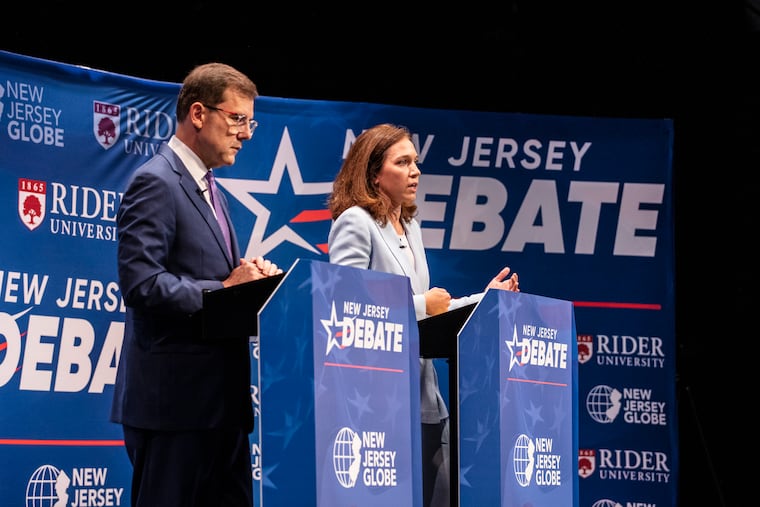
Streater, the board president, told reporters Monday that he would call for a vote on the facilities plan at this week’s long-scheduled action meeting, capping months of speculation over when decisions will be made about which city schools will close, which will co-locate, and which will be get updates.
Watlington presented the first iteration of his sweeping facilities blueprint in January, including 20 closures. Two schools — Conwell Middle School and Motivation High — were removed from the list in February.
City Councilmember Isaiah Thomas, chair of Council’s education committee, called on the board to delay the planned vote, saying there are a number of outstanding concerns among Council members.
“We’re not ready for this yet,” Thomas said, adding the school board shouldn’t take a vote until we have all the information.”
Council has no official vote on the matter; however, members have made clear they want a say. Council President Kenyatta Johnson has threatened to hold up city funding to the district over the plan, and he endorsed another member’s legislation to grant Council power to remove school board members at will.
And several members have signaled that they want to see additional changes to the facilities plan in order to support Parker’s plan to tax rideshare services at $1-per-ride to generate more revenue for the district as it confronts a $300 million budget deficit. (The budget cuts are separate from the facilities planning process; school closures are expected to move forward beginning in 2027 even if Parker’s tax plan saves the district from making cuts next school year.)
‘The best thinking’
Philadelphia Federation of Teachers president Arthur Steinberg also expressed frustration about the timing of the plan, saying it would be tougher to sell the rideshare tax now that closings are on the horizon.
Steinberg also said the lack of commitment to pay for the whole plan worried him.
“Since it’s obvious now that there’s not enough money to complete all the renovations and additions they want to build on, my great fear is the closures will go ahead because they’re in place and they’re scheduled. Then we get three or four years down the road and they’ll say, ‘Oh well, we don’t have the money, we’re going to have to stop here,’” said Steinberg, who said neither Watlington nor Streater notified him about the changes to the plan before they were announced.
Streater made clear that any plan the board adopts will be just that — a plan — and may shift as conditions change. And Thursday’s vote does not actually trigger closures, which are governed by state education code and require separate closing hearings with specific legal language.
No schools would close until 2027 if the plan passes.
“Things can come up, enrollment trends, changes in resources and things like that,” Streater said. “But this plan right now is the best thinking that it appears the superintendent has, based upon the data and information that he has.”
The school board president said he could not comment on how he expects the board to vote Thursday, but said he was excited by the outcomes he expects from the plan: increased academic and extracurricular opportunities for students, including access to Algebra 1 for all eighth graders, more pre-K seats, and more higher-level classes for high schoolers.
The district now has about 70,000 empty seats in buildings across the city — it once enrolled about 200,000 students and now has roughly 114,000.
That’s just not sustainable, Streater said.
“We can’t expect a different result doing the same thing, understanding our budget realities, a $300 million budget shortfall, a $7 [billion] to $8 billion price tag if we were to keep the same footprint and replace and fix the things that need to be fixed.
“We have to reorganize and go through this reform of how we do things in Philadelphia if we expect to provide our babies the resources they need to be who they want to be and who they can be when they grow up.”