Inside Collingswood’s chaotic debate over who should be paying for its historic theater, the Scottish Rite
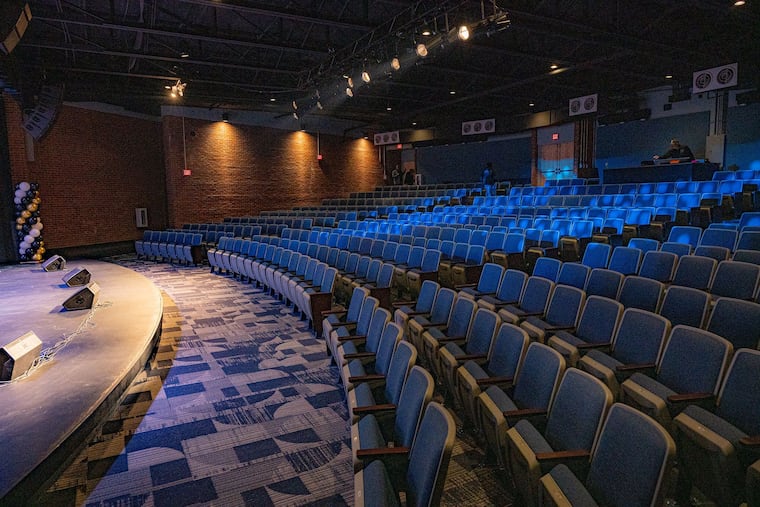
The Collingswood Foundation for the Arts has long operated the Scottish Rite Auditorium. Residents are trying to figure out how the nonprofit works, after spending millions on it since 2003.
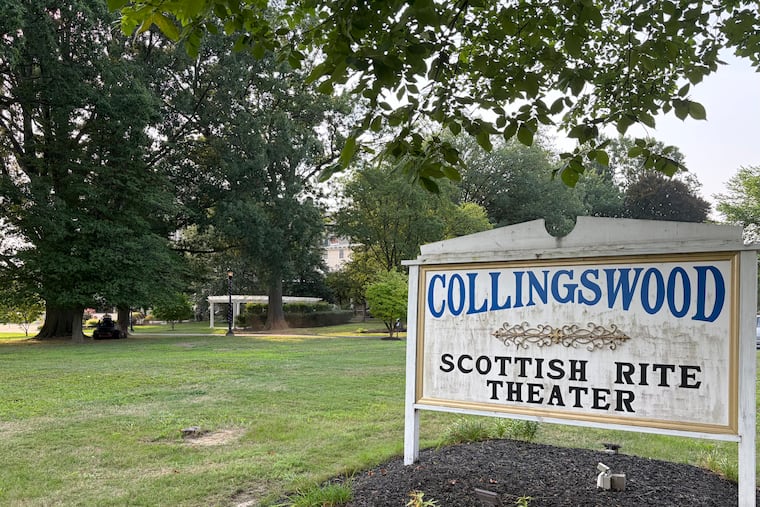
The financial struggles of a once-popular theater in Collingswood have spiraled into debate over who runs it in the first place and whether taxpayers should have paid millions of dollars to keep it afloat.
Collingswood Borough has rented the property housing the Scottish Rite Auditorium, which seats 1,050, for $1 annually from the Scottish Rite Freemasons for 23 years.
But Collingswood officials say they are looking to transfer management of the Scottish Rite — one of the largest theaters in South Jersey and once host to major touring acts like Kansas, David Crosby, and America — to Camden County after declining ticket sales left the onus on Collingswood to pay for expenses in recent years.
Commissioner Jim Maley, a former mayor and a Democratic member of borough government for the last 37 years, said post-pandemic theater losses have cost the borough $505,000 since 2020.
Maley helped found the nonprofit that manages the Scottish Rite property, Collingswood Foundation for the Arts, with the help of two former officials back in 1999. The foundation, which Maley said was created to secure arts grants for Collingswood, has long received the borough’s financial support without question.
That changed recently.
At a heated meeting of Collingswood’s three-person board of commissioners on Aug. 3, the public demanded to know who runs the Scottish Rite, whether it is really part of the borough, and, if not, why taxpayers are paying for it, especially when Collingwood schools are struggling.
Now, residents and at least one commissioner are scrambling to find answers, while Maley says the new round of questioning is just another effort by naysayers to undermine him.
What changed?
On July 31, a website by an anonymous user went live: “The Scottish Rite. Who actually runs it?”
The site, with a corresponding Google Drive of public documents, alleges that Maley and other officials created a conflict of interest by authorizing millions in payments and loans to Collingswood Foundation for the Arts, Maley’s brainchild, since 2003.
The conflict-of-interest accusation is not the first in Collingswood.
In December, Maley sued Collingswood after Democratic Mayor Daniela Solano-Ward voted for a contract with Virtua Health, a system her husband works for. (That conflict was settled when Collingswood voided the Virtua contract and required Solano-Ward to recuse herself from matters related to emergency medical services.)
And earlier this month, two residents asked Maley to recuse himself during a vote to ban data centers, since Maley currently represents a developer looking to build one in Gloucester County. Collingswood’s solicitor determined Maley could vote, but he chose to step back anyway.
Maley said the theater issue is another example of meaningless attacks against him. The foundation managing the Scottish Rite is part of the borough, he said, and thus deserves its dollars.
Who runs the Scottish Rite?
Maley begins his account of the theater in 2003, when the Collingswood Foundation for the Arts gained control of the Scottish Rite. That is also when the borough secured a lease for the property and entered into a management agreement for the theater with the nonprofit.
Maley and his fellow commissioners passed an ordinance at that point to borrow $5 million in bonds to fund a loan to the foundation for renovations to the Scottish Rite. The loan was never paid back, Maley said, since there was no expectation the nonprofit would do so.
At first, Maley said, borough employees ran the theater.
But when the nonprofit made more money, its staff — one full-time employee and four regular part-timers, with 20 or more brought in specifically for events — switched to the foundation’s payroll, a change confirmed by Elizabeth Pigliacelli, Collingswood’s chief financial officer.
The borough allocated hundreds of thousands of dollars in its annual budgets for the theater’s operating expenses, insurance, and utilities, and the nonprofit repaid Collingswood at the end of each year.
That is, until the pandemic hit.
Deficits at the theater left the borough paying $250,000 and $55,000 in 2020 and 2021, respectively. The theater managed to power through for the next three years, but the borough had to pay the theater $200,000 in 2025 to keep it afloat, along with $100,000 to apply for a state grant for renovations to the property. That grant has not been awarded.
A 2007 management agreement on the borough website, the most recent available, says the foundation should pay for its own operations. Still, Maley said, the borough “has always been ultimately responsible.”
A duty to understand
Some residents say public records muddy Maley’s picture.
Unlike other borough entities, the foundation has not hosted regular board meetings for two years, according to Maley. Those meetings have never been public.
And while the borough rents the Scottish Rite property, the municipality’s public works department does not maintain it. On an Aug. 14 visit to the theater, Jimni Kricket, a South Jersey landscaping business, was doing outdoor work. The company is owned by Paula Lara, the executive director of Collingswood Foundation for the Arts.
“Public works does all municipal properties,” Commissioner Amy Henderson Riley said in a text, “except you’re correct that her company has the contract for that property. why? I don’t know.”
When the commissioners were asked on Aug. 3 who sits on the board, no one could answer.
Maley later told The Inquirer the board is made up of Collingwood’s current elected officials, but Mayor Solano-Ward and Henderson Riley, both Democrats elected last year, said they were not aware of that arrangement.
“If I don’t understand the relationship, how the heck is the public supposed to understand what this is?” Henderson Riley said.
Enjoyed this story?
Get more South Jersey news on your homepage with one click.
Henderson Riley said she started questioning the nonprofit when she spotted a bill in the treasurer’s July report for the foundation’s “legal fees,” more than $2,300. The meeting minutes are not yet public, but Henderson Riley said she voted against the payment, and the bill was not paid.
The nonprofit was sued in January by Chammings Electric, a Vineland-based company, for thousands in unpaid bills for work at the Scottish Rite. The lawsuit, the second against the foundation since 2024, is ongoing.
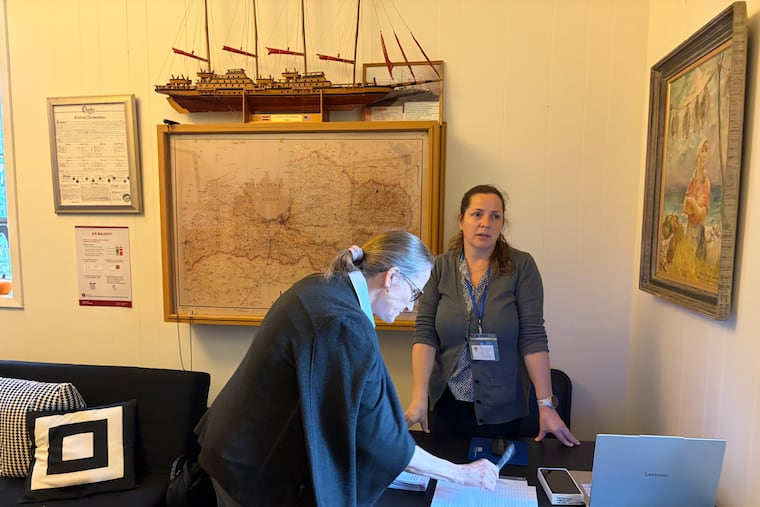
Henderson Riley said she sought legal advice from the borough solicitor, Caitlin Harney Norcia, but Harney Norcia told her she could not answer because the nonprofit has paid her for attorney services.
“I just want to understand,” Henderson Riley said. “If it’s part of the Borough, I have a fiduciary duty to protect our assets, to understand what this is.”
In the meantime, Henderson Riley said, she has sought special counsel to help resolve the problem, which she said will likely take weeks.
The foundation’s nonprofit status also complicates the puzzle.
The foundation’s tax-exempt status was revoked by the IRS in 2024, since the nonprofit had failed to file its annual reports since 2020. Maley said that the missed deadlines were mistakes and that he has since filed them to hopefully re-up the foundation’s tax exemption.
“If I don’t understand the relationship, how the heck is the public supposed to understand what this is?”
New Jersey law confirming whether a municipality can create and run a nonprofit is hard to find.
But in a 2017 notice, the New Jersey Division of Local Government Services published its view, after some officials raised questions about whether a government can establish a charity. Municipalities are not allowed to create or operate nonprofits, and while local officials can facilitate the creation of a local nonprofit, the notice states they cannot “control its operations” by using taxpayer dollars.
The notice also said local officials cannot appoint government officials or staff as the majority of the nonprofit’s board.
Still, Maley said the nonprofit’s creation was facilitated by municipal lawyers. Several South Jersey attorneys specializing in municipal government declined to comment or said they could not due to their work with Collingswood Borough.
Lara did not return requests for comment.
‘Pass the buck’
Kate Delany, president of South Jersey Progressive Democrats and a Collingswood resident since 2007, was one of several people to demand answers at the Aug. 3 commissioners meeting.
“There are better ways to spend that money if we could get some of that back in our community,” Delany said.
Schools are one clear area in need of money, Delany said.
But officials contend school funding is a separate issue, since the structural deficit for the Collingswood school district first arose more than a decade after Collingswood obtained the Scottish Rite property.
Maley said Collingswood has started conversations with Camden County to shift ownership “because they have a greater ability to handle the expense.”
Dan Keashen, a Camden County spokesperson, said nothing has been decided yet, since preliminary conversations have not begun. But some Collingswood residents do not want the theater to trade hands, since they worry about losing their chance at answers.
Delany, whose polling place is at the Scottish Rite, said Collingswood should not “pass the buck” to the county.
“That’s something we want to stop,” Delany said. “It’s a Collingswood issue, and we want it to stay in Collingswood.”