Monroe Township has requested the dismissal of a $300 million lawsuit against its data center ban
The request comes as Hexa Builders, the real estate developer that filed the lawsuit, pushes for the case to move back to state court. Meanwhile, Collingswood is also taking steps to ban data centers.
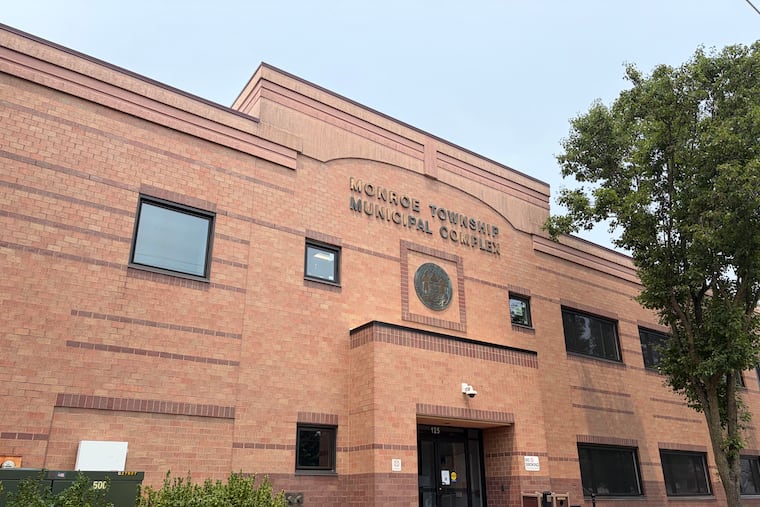
Monroe Township officials requested in late July to dismiss a $300 million lawsuit by Princeton-based real estate developer Hexa Builders challenging the municipality’s data center ban.
The Gloucester County case continues as other South Jersey municipalities consider and pass data center bans, including Cherry Hill, Millville, Medford, and, as of this week, Collingswood.
The request for dismissal came less than a month after Monroe pushed Hexa Builders’ complaint from state to federal court under the claim that some of Hexa’s allegations fell under the U.S. Constitution and should be addressed federally.
Some of the 20 counts alleged by Hexa include violations of the equal protection clause of the 14th Amendment and freedom of speech under the First Amendment.
On July 28, Todd Gelfand, the attorney representing Monroe’s mayor and council, filed a four-page letter listing reasons that he said Hexa’s lawsuit against the data center ban is not valid.
Gelfand rejected Hexa’s constitutional arguments, cited a lack of a physical contract promising data centers to Hexa, and argued Monroe had a right to amend a zoning ordinance based on public objections.
“[The data center ban] does not regulate the content of speech, a speaker, a message, or Plaintiffs’ ability to engage in expressive activity. The fact that data centers support electronic communications does not transform a land-use regulation into a speech restriction,” Gelfand wrote.
In response, Jim Maley, the attorney representing Hexa Builders, requested on Monday to push the majority of Hexa’s complaint — the parts that are not based on the Constitution — back to New Jersey state court. The next day, he asked the federal judge currently overseeing the case to reject Monroe’s request for dismissal.
Maley said state courts have more expertise to consider the local land-use laws that affect Hexa Builders most, and Hexa’s federal claims should be considered second.
“To further the federal claims, the constitutional claims, there has to first be determination of whether there was a violation of the land-use laws,” Maley said. “If land use wasn’t violated, that will hurt [our] federal claims.”
U.S. District Judge Edward Kiel has not yet made official moves in reaction to the letters, which Maley said could take a while.
Sandra Graise, Monroe Township’s solicitor, declined to comment and said the township does not speak about pending litigation.
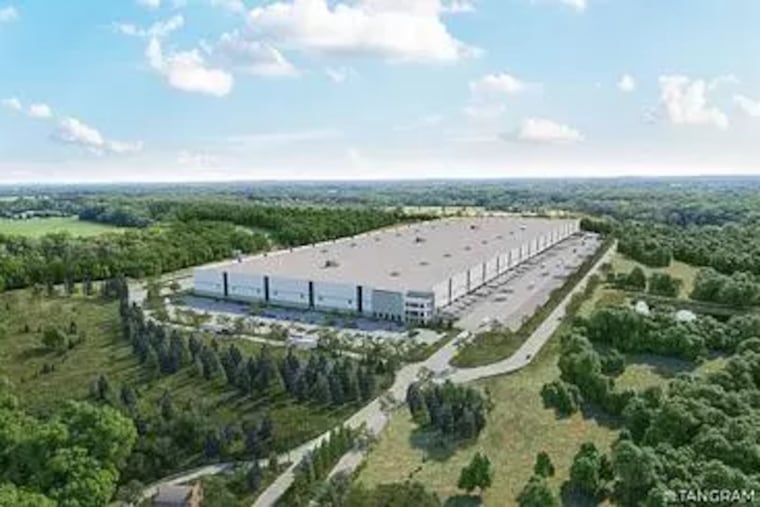
Hexa filed the original lawsuit on June 5 in New Jersey Superior Court shortly after Monroe officials denied its application to build a 1 million-square-foot data center and a warehouse at 3043 Black Horse Pike, a property the company has sought to develop since 2022.
The denial followed months of public outcry at local government meetings after residents discovered that a change to Hexa’s redevelopment plan in early 2025 allowed the developer to propose a data center.
Collingswood considers ordinance on data centers
As the parties go back and forth, nearby municipalities have taken initiative to ban data centers before a proposal ever arrives.
Enjoyed this story?
Get more South Jersey news on your homepage with one click.
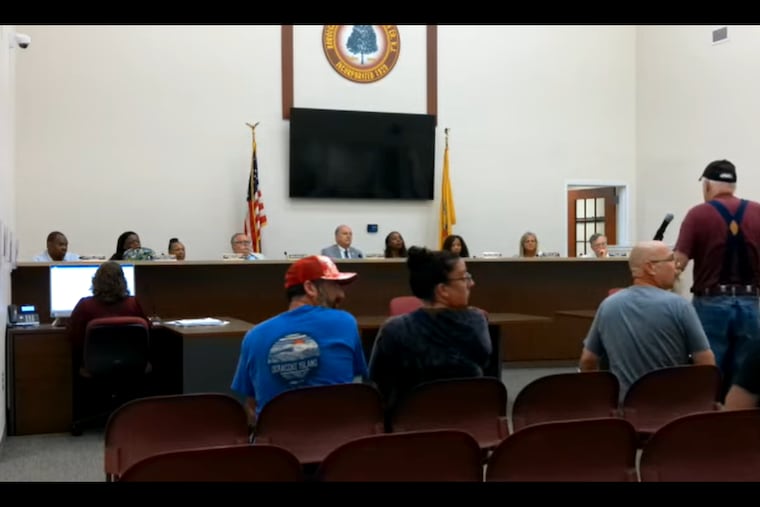
At a Monday night meeting in Collingswood, the Camden County borough’s three commissioners considered an ordinance amending Collingswood’s code to ban data centers and “computing nodes,” which the borough defines as modular units installed at residential or small commercial properties that supply computing capacity to third parties in exchange for payment or credits to the property owner.
Maley, who represents Hexa in Monroe, is also a member of Collingswood’s board of commissioners.
Two residents who attended the borough meeting brought up Maley’s connection to the Hexa case and asked whether Maley would recuse himself from the vote based on his employment as a private attorney supporting a potential data center nearby.
In response, Collingswood solicitor Caitlin Harney Norcia said she could not find evidence that would disqualify Maley from voting under New Jersey’s Local Government Ethics Law, since Maley’s job as an attorney does not directly affect his work in Collingswood.
While Maley decided to abstain from the vote, he said the borough should have a six-month waiting period to allow the borough planner time to consider standards for data centers, called the move “a ban of reaction,” and said the borough does not have room for a data center anyway.
“We don’t prohibit airports. OK, that’s a permitted use. We don’t do that because there’s no place you can put an airport. There’s no place in this town you can put a data center,” Maley said in a live recording of the meeting on Facebook. “But the nodes are another issue.”
When reached for comment Wednesday, Maley said he did not have to abstain from the vote, but he still chose to for nonlegal reasons.
“Folks in the crowd, they’re working really hard to beat me up on a lot of different things. It’s a group that’s been against me for years. … Whatever my vote would have been, they would have been yelling and screaming about it and impacting my work,” Maley said.
Collingswood’s two other commissioners voted to approve the data center and computing node ban on its second reading. The ordinance took effect immediately.