Collingswood wants you to license your pets to help other animals in the borough
Collingswood officials are asking residents to officially license their pets and in doing so, help care for other animals across the borough.
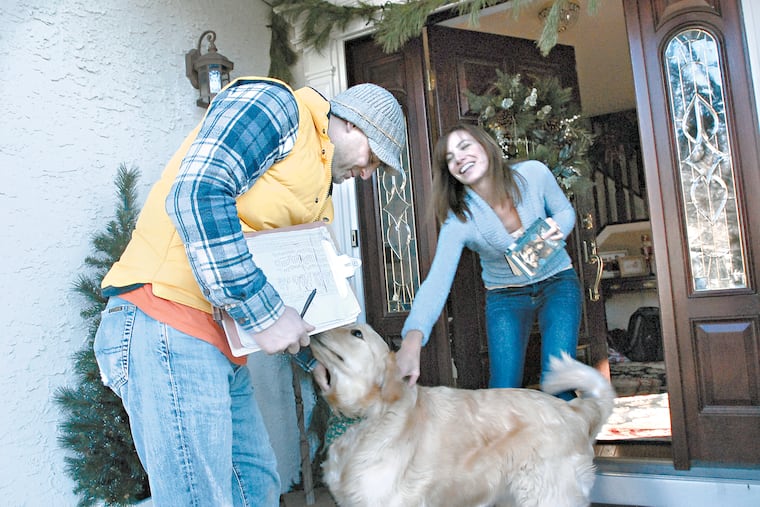
Collingswood is hoping to get more pets on the books as a way to help fund the borough’s animal control services.
Per New Jersey law, all cats and dogs 5 months of age and older are required to be licensed with their local municipality, but borough officials say registration is lagging.
Without the fees collected through licensing, Collingswood has to find the funding for animal control services from elsewhere in the budget, Deputy Mayor Amy Henderson Riley said.
In 2025, the borough spent $33,305 on an animal control officer and other services, she said. But as of the June 17 commissioners meeting, Collingswood had collected only $5,740 this year through residential pet licenses, which cost between $5 and $20 each annually.
Assuming animal control services will cost the same for 2026, that leaves a more than $27,000 gap to fill.
“This isn’t meant to be, you know, a ‘nanny state,’” Henderson Riley said of pet licensing. “This is meant to help have a balanced budget in town. We can find the money elsewhere, but I’d much rather have that $27,000 for all the rest of the required and amazing things that we do in town.”
The cost for a license in Collingswood varies by type of animal and whether it is spayed or neutered:
Spayed/neutered dog: $17.
Non-spayed/neutered dog: $20.
Spayed/neutered cat: $5.
Non-spayed/neutered cat: $8.
Since 2020, Collingswood has struggled to collect even close to half the amount needed to pay for annual animal control services, averaging around $7,680 in fees paid each year, according to borough records.
As of July 21, registrations were further behind than they were at this time last year, when the borough had already collected around 20% more in fees, totaling over $7,000.
In response to the drop, the borough is planning a small informational campaign on social media and in town bulletins to spread the word and get licensing rates up, Henderson Riley said.
She said she wants to better inform the public on how this money is used, including for euthanasia of critically injured animals and reunification services for lost pets.
If the funding gap continues, she said, the borough will consider conducting a pet census, hiring staff members to go door-to-door counting the animals in town.
And while Henderson Riley said she understands that many household budgets are already tight, she argues that a relatively small fee can go a long way in helping animals across the borough.
“Affordability is the word of the year,” she said. “People are paying a ton in taxes, and I think sometimes they think, ‘Why should I be paying for a pet license for my 14-year-old dog?’”
The money residents spend on licensing may not go directly to their pet, she said, “but it might help care for an animal who’s hurt or injured or who got loose from their house.”
“That’s money well spent,” she said.