College sports are changing. This Penn professor wrote the guide for university leaders.
From college sports betting to student-athlete well-being, Karen Weaver emphasizes in her new book some of the biggest issues surrounding college athletics.
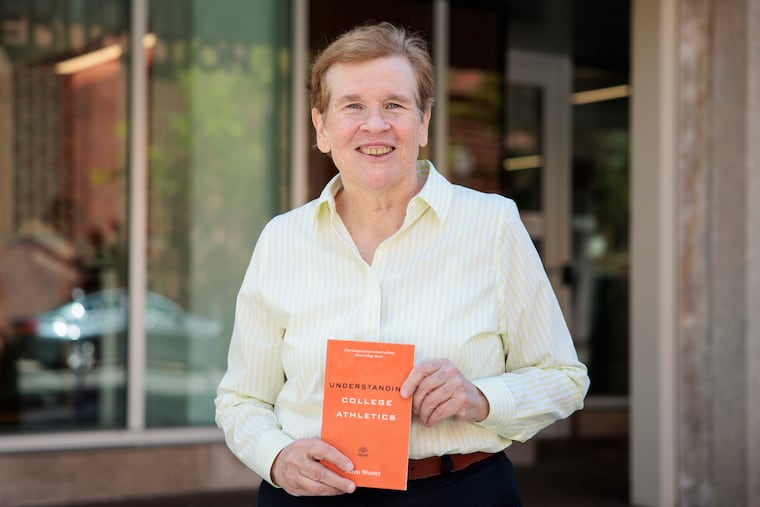
When Karen Weaver began her executive doctorate in higher education management at Penn in 2007, she noticed many of her classmates didn’t know much about college athletics.
“We would have fascinating conversations about college athletics and they had a lot of questions,” she said. “And I thought to myself, ‘Where else would they learn this?’”
Weaver, a Hall of Fame field hockey player at Lock Haven with a coaching background, realized the program didn’t have a class about athletics, so she began teaching as an adjunct assistant professor and academic director of Penn’s new athletics enterprise certificate program in 2012.
» READ MORE: What to know about the proposed Protect College Sports Act and its impact on NCAA athletics
As college athletics continues to evolve with name, image and likeness, the transfer portal, and legislation like the Protect College Sports Act, Weaver believes university presidents need a better understanding of the landscape.
“As a student-athlete, you do feel very siloed sometimes away from the rest of the campus,” she said. “That separation doesn’t enhance the president’s understanding. So they really don’t get to be exposed to it until they sit in the chair on Day 1.”
Weaver’s book, Understanding College Athletics: What Campus Leaders Need to Know About College Sports, draws on four years of work to help university presidents navigate the changing landscape of college athletics and make decisions that best reflect the needs of their universities.
The Inquirer sat down with her to discuss her new book, which published in August.
Q: Who is the book written for, and what are the main questions you aim to answer?
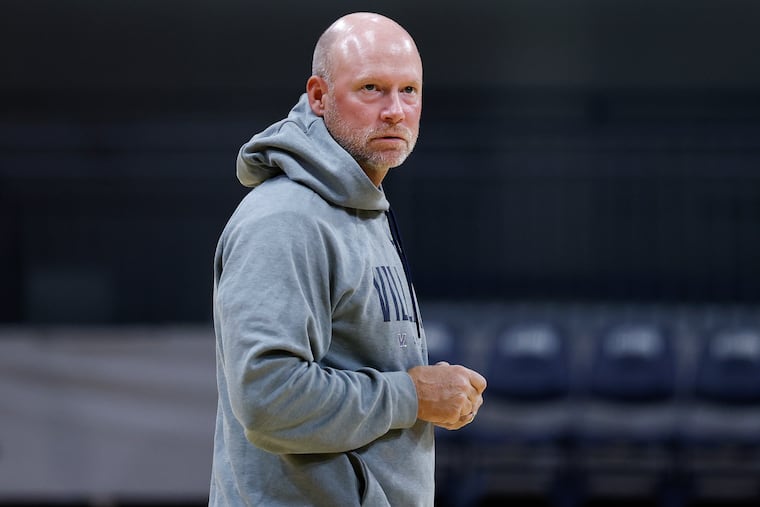
A: It’s meant for presidents and board of trustees, and really anybody else who wants to ascend to a senior leadership role. Generally the president has a cabinet of maybe 13-14 people who serve different parts of the institution. And I’m hopeful that this will encourage those folks to have discussions when athletics come up. Villanova is D1 but it is FCS D1. That creates an entirely different set of conversations than what’s happening right now at Florida State who just fired their AD. So how do we have the right discussion for our level and where we are? That’s the first question.
The second question is, how do we align athletics with our mission today? Not as it was 20 years ago because things have changed. And same thing with a lot of colleges. They know that their role has changed. The interests of parents and students have changed. So, there’s this whole reinvention thing going on and athletics should be a part of that.
And No. 3, what if we can’t afford it? Then what are we doing? And so that’s another part of the book too.
Q: You discuss how important it is for universities to develop an athletic model that fits their institution. With schools like Spelman College eliminating varsity sports and Saint Francis University moving from Division I to Division III, will more universities begin to rethink the role athletics play on their campuses as college sports continue to change?
A: I hope so. We’re doing a lot of complaining now about D1 schools. Mostly the group of six like James Madison just moved up the FBS and some of the others in the Sun Belt Conference. They’re trying to figure out how we can make sure that we get in. But then the next question is once you’re in, how did you get to pay for it? And we haven’t solved that problem yet. So, what are some other alternatives?
I admire St. Francis’ president immensely. They had more discussions for two and a half years about this because their enrollment and their branding was directly tied to D1. So, to give that up and go from D1 to D3 is huge. This is the university’s first full year in Division III. I talked to him [Malachi Van Tassell] last weekend and he said “weekends are quieter here,” which I thought was interesting.
Q: According to a 2018 Forbes article, Villanova saw a 21% increase in applicants after Villanova basketball won the 2016 national championship. How much does athletic success vs. the school’s identity contribute to student enrollment?
A: There’s a certain audience that Villanova is very attractive to. Obviously there’s a religious component and there’s a size component. They’re good at what they’re good at. I honestly can’t tell you what other teams do really well other than track and field perhaps, but basketball does make a difference. Now if they don’t play at the level that they did in the Jay Wright era then I don’t know what happens.
» READ MORE: Temple enrolled a record number of first-year students in 2025. But it lost nearly a quarter of them
You look at the other Jesuit schools, Loyola, Boston College, all of them have unique challenges because of demographic shifts. Villanova has managed to catch lightning in a bottle at this moment where people who are outside of Pennsylvania and maybe in Ohio, New York, and New Jersey start to think about “Where could I go that’s got a real mission that I can identify with?” That’s who they are. That’s the thing that more colleges have to understand is, who are we? How do we differentiate ourselves? That’s what Villanova has done.
Q: What is changing the most from student-athletes that people may not think about?
A: The biggest change is the fact that athletes are thinking about the immediacy of what they can get vs. the long-term benefit. All of us chose schools in the past for that long-term benefit. I don’t know that we’re thinking about that right now as athletes. We’re thinking about where we can get the best deal next semester. And we don’t have enough research yet on the athletes who transferred more than twice and what that has done to their academic progress.
Here’s a question I hear nobody asking. If [a student-athlete gets] injured, who’s responsible for their lifetime medical care? Because the NCAA has assigned that to an institution so they could say, we’re providing lifetime medical care. But our school says he got injured at the past school. So, who makes those decisions? I really don’t think we’re thinking enough about medical care and the transfer of medical information from school to school.
Q: In your book, you refer to “Cinderella trap” on how we haven’t seen an underdog team make a run in the NCAA Tournament. Why do you think those Cinderella stories have become less common?
A: We’ve had two years now of no Cinderellas making it beyond the second round, which is sort of the definition of Cinderella. I think Cinderellas are going to be few and far between, and what they’re trying to do with March Madness, at least on the men’s side, is expand it to 74 teams. And you can see why because they want to attract those Cinderellas to get those stories. But again, are they going to go past the second round? Even if they create more rounds. Once you get to that round of 16, that’s when the numbers, the viewers go up. The stories are more interesting. The amount of gambling that goes on in these kinds of situations is frightening. So all this is about trying to extend the media contracts, extend the discussions, the stories, and hopefully catch a moment of glory. That’s what really made March Madness special.
Q: You discuss the growth of sports gambling among college students. What concerns you most about the rise of betting on college campuses?
A: It’s scary. You watch a sporting event and every other commercial is gambling. Every ticker line is on there. ... you can’t avoid it. I really wanted to try to hit at least that in the book because presidents have got to have a better understanding of what’s going on not with their athletes, but with their students.
There is betting going on Division III games. There’s betting going on on women’s games. They’re not as high profile. But still, if somebody gambles what to them is a lot of money, and there’s some people who believe that student loans are being used to promote this gambling, which is really scary, and they lose and they know that kid or a friend knows that kid and they’re going to get mad at that kid who doesn’t hit 20 points. Those kinds of things are scary. We know that has happened because three years ago at Dayton in the first round of March Madness on the men’s side at the press conference where that particular team lost. The players and the coaches were nearly in tears because of the abuse that they took from the fans sitting right behind them on the bench. The coach was like please these are 19- and 20-year-olds, please stop yelling at them because they’re not hitting the shot you thought they should hit or the first free throw or second free throw.
Q: What do you hope will be the biggest takeaway from your book?
A: The No. 1 thing is that I want as many schools as possible in this new era to go back to what their mission is. And just to have that basic conversation of who are we today? Not who we were 20 years ago when we decided to move into this division or that division. And who are we in our peer group today? Every school has an institution that they compare themselves to. And does that still work for us? I think that’s the most important question in the book.