We still tap MAC and go to concerts at Spaghetti Warehouse. Philly doesn’t accept new names.
Our defiance builds community. Don’t like it? Go pound sand up Delaware Avenue.
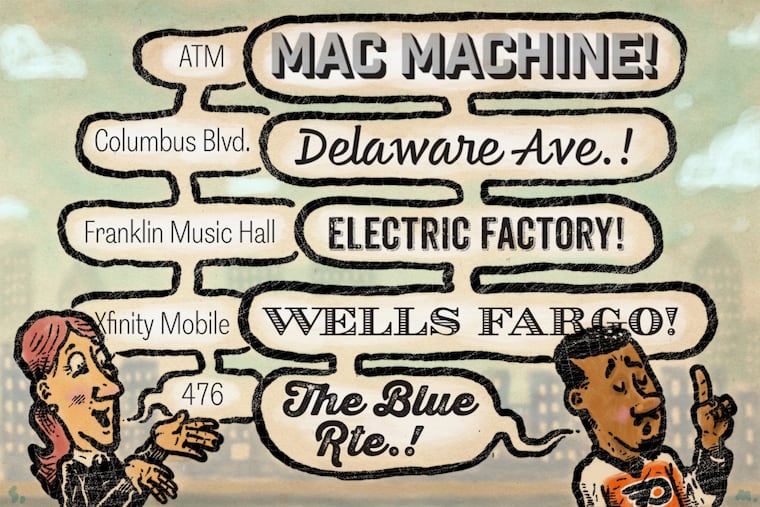
In Philadelphia we embrace change like we embrace the Dallas Cowboys, only when it’s forced upon us and even then, we fight like hell against it.
Sure, it’s a Sisyphean way of life in a 344-year-old city, where change is inevitable, but being petty and sentimental is part of Philly’s charm.
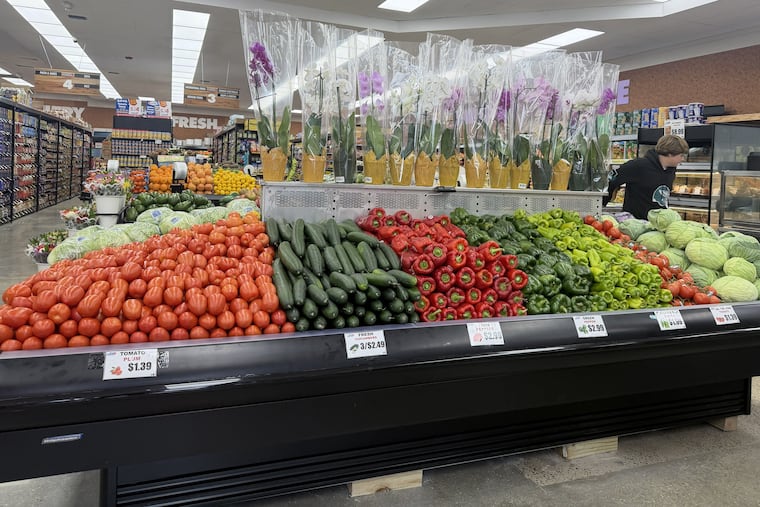
When a beloved business like P&F Giordano Fruit & Produce in the Italian Market closes, it alters the landscape of Philly and breaks our hearts, but there’s little we can do about it. But when the name of a place or thing is changed, we do have some agency, which is why many Philadelphians choose to completely ignore the new name and call it whatever they want, which is usually whatever they’ve always called it.
This runs so deep here that when I put out requests for examples on social media I received more than 800 responses, my favorite of which were from people who read through all of the other responses and said things like “wait, they renamed that?” and "So what they changed the name of everything?"
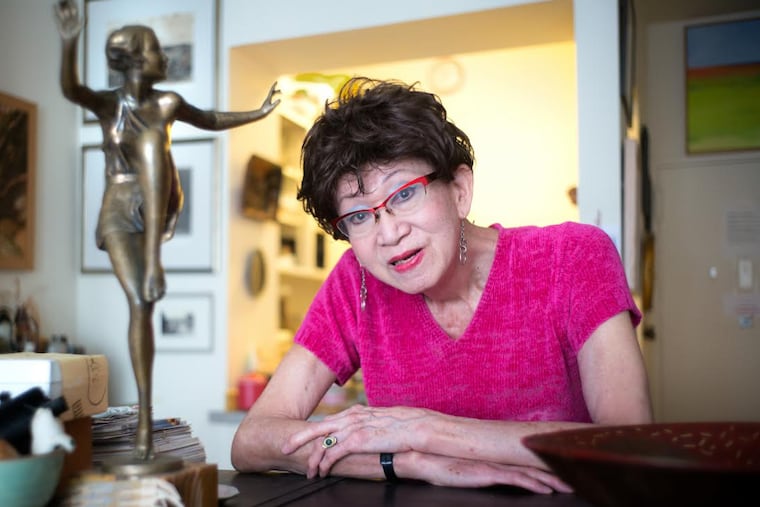
Names are more than a label, they can illustrate a shared history, identity, and community, said Andrea Beltrama, an assistant professor of linguistics and cognitive science at the University of Delaware.
When something’s name is changed, people who see that as a threat to their shared identity may continue to use the old name.
“At the core of it there is this act of evoking that shared history, it makes a lot of sense, you want to keep doing that because if you stop doing that you’re basically giving up a piece of that,” Beltrama said.
Here are some pieces of our shared history that we’re not ready to give up — and may never be ready to.
The Gallery
Since the day Fashion District Philadelphia opened its doors in 2019, not a single Philadelphian has called it that. They either call it “the old Gallery,” “the new Gallery,” or “whatever the Gallery is called now.”
The Gallery — a 38-year-old strange, wondrous, and partially underground mall on Market Street that closed in 2015 — is so engrained in our collective psyche that if the 76ers would have gone forward with their plans to build a new arena on the site, we would have called that the Gallery too.
MAC machines
In Philly, you can bank on the fact that we still “tap MAC” instead of go to the ATM. MAC (Money Access Center) was first introduced in the city in the 1970s by Philadelphia National Bank. It reigned supreme in the area (and across eight states) until the early 2000s, when the blue machines with rainbow logos were rebranded as a result of bank consolidations and mergers.
While Philadelphians are oddly sentimental about MACs, those machines actually weren’t the first ATMs in the city. That honor goes to “George” — a less-popular system debuted by Girard Bank in 1976 — which some locals still remember fondly today.
The Disney hole
Where out-of-towners see a 2.7-acre parking lot at Eighth and Market Streets in Center City, Philadelphians see the “Disney hole,” one of the least magical places on earth.
In 1998, the Walt Disney Co. announced it was going to build a virtual reality theme park on the site called DisneyQuest. They got as far as digging a big ol’ hole in the ground before things went goofy. The project was delayed and in 2001 Disney announced it was backing out altogether, leaving just the hole behind. It was eventually filled in to create an eyesore of a parking lot that residents still call the “Disney hole” today.
I'm still writing Disney Hole on all my checks.
— Ryan Godfrey (@ryangodfrey.com) February 2, 2026 at 4:51 PM
Delaware Avenue
Built in the late 1830s, Delaware Avenue’s name flowed freely alongside its eponymous river for more than 150 years until the late 1980s, when Philly’s Italian American community lobbied to have the road renamed Christopher Columbus Boulevard in advance of the 500th anniversary of Columbus’ arrival in the Americas.
Despite significant protests by Indigenous people and others who decried Columbus as an enslaver and colonizer, City Council approved the change in 1989. But protests continued, and by the time street signs went up in 1992, Council offered a compromise, renaming only the section of Delaware Avenue south of Spring Garden Street.
Philadelphians rejected that “compromise,” vandalized the new street signs, continued to call the whole thing Delaware Avenue, and still do today.
Other area roads some people still refer to by their old names include East River Drive (now Kelly Drive), West River Drive (now Martin Luther King Jr. Drive), and Columbia Avenue (now Cecil B. Moore Avenue).
The Electric Factory
Many Philadelphians have strong opinions about the acoustics in the concert venue at 421 N. Seventh St. in North Philly, but if there’s one thing they agree on, it’s that the place is called the Electric Factory, even though the plug was pulled on that name years ago.
What’s it called now (many of you asked)? For the last eight years, it’s been Franklin Music Hall.
Opened in 1995, the Electric Factory brought in acts from Cage the Elephant to Kamasi Washington. When the venue sold in 2018, Live Nation didn’t license the name, and the new owners, Bowery Presents, were forced to change it. A naming contest was held and Franklin Music Hall was chosen as the winner.
It’s a shame lightning doesn’t strike twice because while the new name is fine, it doesn’t amp us up like its predecessor.
Franklin Mills
With its layout designed to resemble a modified train wreck (I couldn’t make this stuff up if I tried), Franklin Mills mall opened in the Far Northeast in 1989 and operated under that name for a quarter century.
The mall was twice renamed as a result of ownership changes, first to Philadelphia Mills in 2014 and then to Franklin Mall in 2024. I’m not sure why anyone went through the trouble though because people around here never stopped calling it Franklin Mills.
While the mall remains open, many stores today are vacant and the building was listed for sale in December. Real estate developer Dean Adler is under contract to buy the property and plans to turn it into a mixed-use space with a waterpark and sports venue, according to the Philadelphia Business Journal.
SEPTA’s Broad Street Line and Market East and Pattison stations
While it’s clear from the responses I received that people don’t want SEPTA changing the name of anything ever, (many of you are still riding the R5, the C bus, and the El) folks particularly cried foul on the recent renaming of the Broad Street Line to “the B.”
Answering a question famously posed by Hamlet, Philadelphians have loudly declared that the new name is not to B and have continued calling it the Broad Street Line (to thine own self be true, Philly).
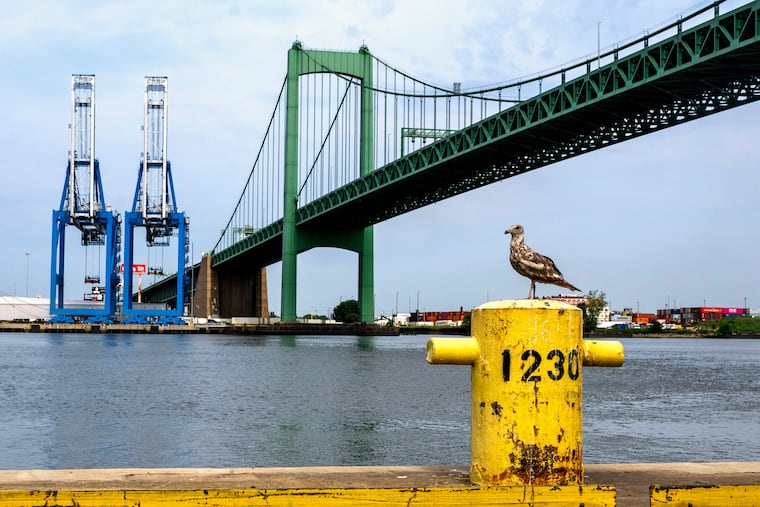
When it comes to SEPTA’s stations, the transit agency can sell the naming rights to them all they want, but Philadelphians don’t sell out and they’ll continue to refer to Jefferson Station as Market East and NRG Station by its one and true rightful name, Pattison Station.
Wells Fargo Center
In the 30 years since it opened, the stadium at the South Philly sports complex currently known as Xfinity Mobile Arena has had five names. That’s more than the number of championships the two teams who play there — the Flyers and 76ers — have in their combined 122 years in Philly.
The current name was bestowed upon the arena last year, but many people are still calling it the Wells Fargo Center, a name it held for the prior 15 years. There are some, however, who still refer to the stadium by one of its other names, like the Wachovia Center, the CoreStates Center, or the First Union Center, which locals lovingly called the “FU Center,” because of course they did.
Adding to the confusion of the most recent name change is the fact that the bar and entertainment center at the stadium complex that was known as Xfinity Live! also changed names last year to Stateside Live!
While the arena’s name could change again, it’s unlikely. Last year, it was announced a new stadium is expected to replace it by 2030 and the existing one will be demolished. Which name will appear on its tombstone remains to be seen.
The Blue Route and the Schuylkill
While local drivers call I-476 and I-76 by many names that I can’t print, they’re most often referred to as the Blue Route and the Schuylkill. Nobody calls them by their government names except for tourists, Google Maps, and G. Love and Special Sauce.
The Blue Route’s nickname dates to before the stretch of I-476 between the mid-county tolls and I-95 opened in 1992. When ideas for the highway were being developed, planners considered three routes and drew them in colored pencils on a map — one each in blue, red, and green. The middle path, or “the Blue Route,” won out and the nickname stuck, despite the fact 476 has two other official government names nobody ever uses: the Mid-County Expressway and Veterans Memorial Highway.
The Schuylkill, also referred to as the “Surekill” by locals, takes its nickname from the river it runs beside. On the day it opened in 1954, there was a traffic jam on it, according to the Daily News, one that’s apparently persisted for the last 72 years. Some of those people are probably very late for dinner.
Spaghetti Warehouse
Several people told me they still refer to Union Transfer, the concert venue at 1026 Spring Garden St., by its former name and incarnation: the Spaghetti Warehouse. While I haven’t personally heard this, I think it’s saucy and pre-pasta-rous and I’m absolutely here for it.
Philly’s Spaghetti Warehouse closed its doors in late 2010 and Union Transfer’s owners, R5 Productions and Bowery Presents, spent a pretty penne revamping the space into a music venue where acts like Tame Impala and Japanese Breakfast have performed (the latter’s Michelle Zauner once worked the coat check there, which is now named after her).
The building first opened in the late 1800s as the Spring Garden Farmers Market (a name which is still visible on the exterior) and it was once a luggage depot for the Reading Railroad called … Union Transfer. In the 1980s, the venue was even a roller rink and rap club called After Midnight, where artists like LL Cool J performed.
Wanamakers
TF Cornerstone, the New York-based developer that purchased the Center City building Macy’s moved out of last year, hasn’t announced a name for its new mixed-use space at the site, but they should just call it Wanamakers because that’s what we’re all going to call it anyway.
That’s what people called it when it was Macy’s and when it was Hecht’s, and when it was Strawbridge’s and Lord & Taylor, too. Wanamakers may have gone out of business in 1995, but the name lives on in our hearts forever (and may its beloved Christmas light show and Dickens Village live on forever too).
Gayborhood
Developers love renaming Philly neighborhoods and the Philadelphians who live and work in these neighborhoods love ignoring that marketing hogwash because ew. What’s Newbold? Does anybody even know? No, because it’s Point Breeze.
People feel particularly strong about the rebranding of the Gayborhood as Midtown Village in the mid-aughts. Some think it was an attempt to downplay the LGBTQ+ history and presence in the community while others believe it was a sorry attempt to try and sound like New York City.
The Gayborhood vs. Midtown Village debate has been the subject of several discussions in the Philadelphia subreddit, with many people saying they’ll never call it by the latter name.
“Refuse to use it,” one person wrote. “If you’re not comfortable with Gayborhood, live somewhere else.”
The music venue in Camden
Nobody knows what the big concert venue across the river in Camden is called now because that thing has had more identities than Jason Bourne.
Some people still call it the Tweeter Center, others the E-Centre (which itself was a nickname for the Blockbuster-Sony Music Entertainment Centre), and a few people call it by one of its other previous aliases — the BB&T Pavilion, the Susquehanna Bank Center, or the Waterfront Music Pavilion.
I tend to go with “whatever the music venue in Camden is these days.” I admit I had to look up what it’s actually called now: Freedom Mortgage Pavilion.
Philadelphia Museum of Art
When the Philadelphia Museum of Art announced in October that it was changing its name to the Philadelphia Art Museum and using PhAM as a new acronym, Philadelphians responded to that hot air in kind, with PhArt jokes.
It doesn’t matter that some people already called the institution the Philadelphia Art Museum from time to time in casual conversation, we didn’t tell anybody to change the name and we certainly didn’t want the excellent PMA acronym to be replaced by another pandering use of “Ph.”
Pushback to the rebranding under former director and CEO Sasha Suda was so pervasive that the museum reversed course in February under its new director and CEO, Daniel H. Weiss. The name was changed back to the Philadelphia Museum of Art, proving that being petty and sentimental is truly an art form here in Philly.
Refusing OG names
While we really don’t like our stuff being renamed around here, sometimes we don’t accept the original names of things either (we are large, we contain multitudes).
I’m mildly embarrassed to say that I didn’t realize LOVE Park isn’t actually named LOVE Park until I started working on this story. Its official government name is John F. Kennedy Plaza, but few have called it that since Robert Indiana’s LOVE statue was erected there in 1976.
And you know City Line Avenue? No you don’t, because it’s real name is City Avenue, always has been. Somewhere along the way, some rando (or many) inserted Line in the middle — because the road creates the border between Philadelphia and Montgomery Counties — and it just stuck.
‘It touches a nerve’
I’m certainly guilty of refusing to call things their new names. I still have philly.com bookmarked on my computer out of sentimentality, even though our old url has redirected to Inquirer.com for seven years.
Beltrama, the linguistics and cognitive science professor, said given Philly’s strong sense of cultural pride and identity, it’s not surprising that “whenever someone tries to mess with that, it touches a nerve.”
“There are definitely situations in Philly where there’s just a lot of consensus and unity behind what term we should use for something, and so we can disregard the official term and just use that,” he said.
But people aren’t always adverse to name changes, sometimes, they’re welcomed. Take Philly’s Taney Street, which was named in 1858 for Supreme Court Chief Justice Roger B. Taney, who passed the Dred Scott Decision denying citizenship to Black people. When it was changed to LeCount Street in 2024 to honor Philly civil rights leader Caroline LeCount, the move was universally lauded.
“Sometimes names can carry political implications … and depending on what name you use it signifies your political stance,” Beltrama said.
One upcoming name change that Philadelphians are certain to ignore will be when Lincoln Financial Field’s name is temporarily changed to Philadelphia Stadium for the World Cup games this summer to comply with FIFA’s advertising policy. Nobody calls the stadium its full legal name now — it’s just “the Linc”— and nobody is going to call it some generic name just because FIFA wants us to.
Rebellion is another of our many charms here in Philadelphia, going way back. Some may say we’re haters, but the real ones know we’re petty sentimentalists keeping the things that mattered to us and Philly alive, long after they’re gone.

- The woman who took down Jeffrey Epstein was forged in Philly
- How to have a Perfect Day in Philly, according to culinary power couple Phila and Rachel Lorn
- After getting burned by an HOA, a four-bedroom in Cherry Hill fit this homeowner perfectly | How I Bought This House
- The best things we ate this week
- Citywide Quest: Where were these outdoor photos taken?
- A stylish Hudson Valley weekend in Hudson, N.Y., with antiques, food, and design | Field Trip
- My roommate's girlfriend is basically living with us. At what point can I ask her to pay rent?
- A man spent eight nights chasing a Wawa hot dog. Philly had a week | Weekly Report Card
- The water is back on at LOVE park
- They’ve been happily married for nearly 20 years. They just live 3,000 miles apart.
- See it, hear it, feel it: All the Philly art we loved this week