Third-generation owner ushers in a new era for Philly’s Ba Le Bakery
The iconic bakery may share its roots with Ba Les all over the U.S., but its new, third-generation owner is pulling it into the future.
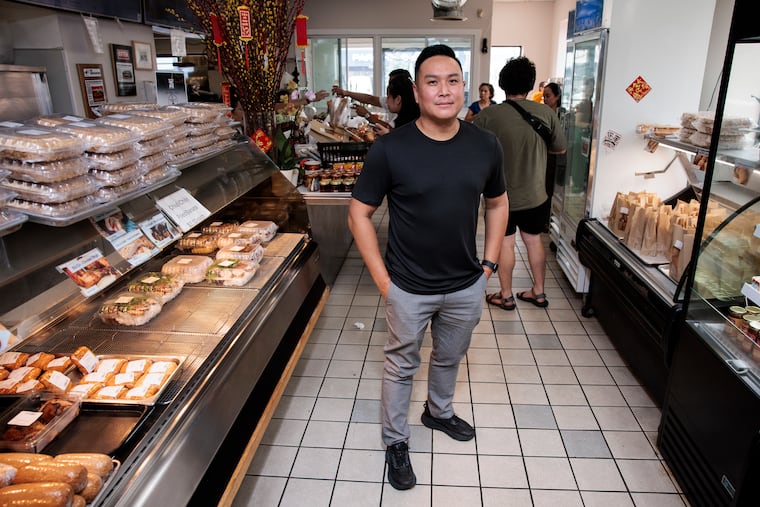
For decades, Washington Avenue’s Ba Le Bakery has been practically synonymous with bánh mì in Philadelphia, and not only for the beautifully composed Vietnamese sandwiches sold on-site. Ba Le has set the standard for bánh mìs elsewhere. The bakery supplies rolls, crisp with fluffy interiors, to dozens of wholesale customers as far away as upstate New York, and is also our area’s primary producer of Vietnamese bologna, which comes in many variations, from fried pork with pepper to steamed pork wrapped in banana leaves.
But this Philadelphia institution has siblings all over the United States, all operating independently of each other. There are Ba Les in Hawai’i, Illinois, Virginia, Maryland, and California. Each bakes its own bread and has the same core menu of bánh mìs, summer rolls, house-made pates, and girthy tubes of Vietnamese bologna and fried pork rolls. They all share the same origin story and founder, Le Vo, who went by the nickname “Ba Le.”
Growing up in southern Vietnam, Le was the third of several siblings (“ba” means “three”). He launched the business that would become Ba Le as a Saigon sandwich cart in the 1950s, selling his bánh mìs prototypes. He grew the business to several carts before departing the country with his family in 1972 for San Jose, California, where he started the first stateside Ba Le in 1982. Le helped three of his daughters open Ba Le locations in different American cities over the next couple decades.
There are just a few regional differences among Ba Le menus across the country, a reflection of their geographic locations. The shrimp chips at the Ba Le in Falls Church, Virginia, are BBQ-flavored. In Alhambra, California, Ba Le Sandwich Shop sells smoothies and yogurt along with head cheese and vermicelli. The 20 or so Ba Le outposts in Hawai’i serve Spam, locally caught fish like opakapaka, and saimin, the islands’ beloved noodle soup.
In Philadelphia, where Le and daughter Thi Nguyen opened Ba Le in 1998, grandson Victor Nguyen, 40, has just unleashed a veritable library of Vietnamese pantry items not found in any other branch of the family business. It’s not the only change the third-generation owner has made.
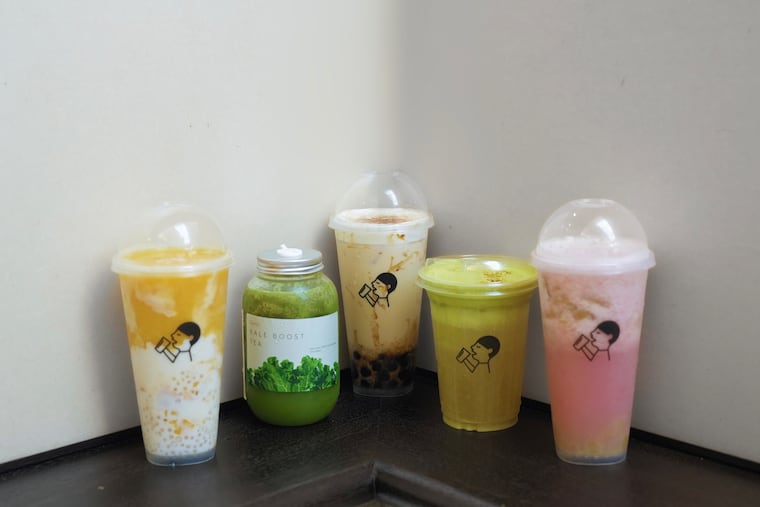
Victor Nguyen officially took the reins of Washington Avenue’s Ba Le in 2024. Perhaps you’ve seen the storefront’s brand-new caramel-colored signage — sporting an Eiffel Tower logo, as all Ba Le bakeries do — which can now be spotted from many blocks away. Or maybe you’ve noticed that, after years of resisting an online presence beyond a Facebook profile, Ba Le Bakery has a website. You might even be surprised to find a slew of new, hip matcha-based drinks joining the traditional Vietnamese coffees on the beverage menu, as well as gourmet snacks and “shoppy shop” products you’d expect at Biederman’s or Rittenhouse’s Cork.
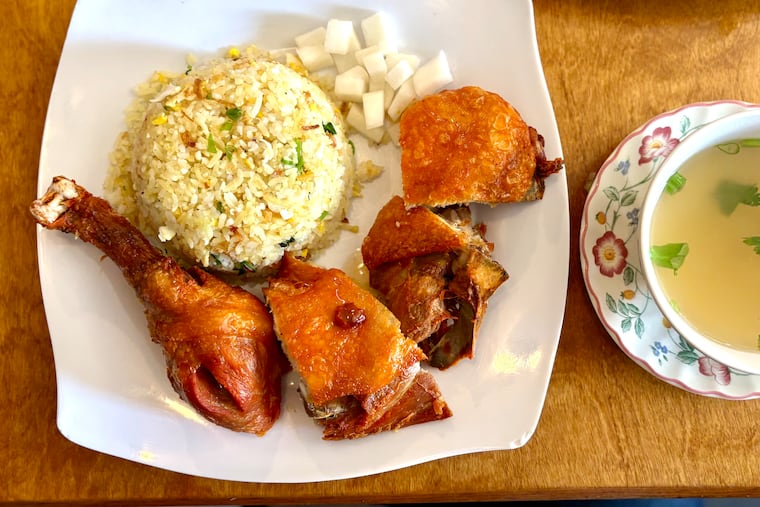
Today’s Ba Le Bakery stocks truffle- and brie-flavored potato chips imported from France and upmarket tinned fish alongside takeout containers of house-made bánh cuốn (rice rolls stuffed with pork). The selection appeals to a post-pandemic pantry-obsessed demographic, but it still has a firm hold on its old customer base. Before the lunch rush, you’ll still see Cantonese-speaking ladies clutching designer handbags stocking up on Vietnamese lunch platters that feature Chinese-style barbecue pork.
Nguyen trained for more than half his life to take over Ba Le. From the age of 17, “I have filled every single position in the bakery, from serving customers, all areas of the kitchen, facility maintenance, and office management,” he said. His first job was making and wrapping many different types of bolognas (fried, steamed, mixed with sea snails on the weekend, and more), which he did for five years.
He has big plans to continue to pull Ba Le into the future, renovating the 6,000-square-foot store in stages over the next four years; moving some operations off-site, to another family-owned space on Columbus Boulevard; and expanding the bakery’s online business, which is currently run out of Ba Le’s former restaurant in the back of the building.
In a great departure from the family tradition of naming everything after its patriarch, Nguyen named his new line of sauces Sieu Xot (pronounced “see-yoo sot”), which means “super sauce.” The 20-sauce line includes sweet and savory dressings for salads, marinades for chicken, spicy garlic and chili-spiked fish sauces, zesty kaffir lime leaf-speckled sauces, and some funky fermented sauces that Nguyen’s Vietnamese customers have long had to make for themselves. “Making some of our traditional sauces can stink up your house,” Nguyen said with a laugh. “I think people are relieved to not make them at home now.”
“This has always been a dream of my mom’s,” he said. “Creating this sauce line makes introducing Vietnamese flavors into households more accessible and easy.” Nguyen also hopes that the sauces will encourage home cooks to experiment.
The sauce line might be Nguyen’s mother’s dream, but the execution is all Nguyen’s, from the flavors to the branding, which evokes art deco Saigon (with zero Eiffel Towers), created by Tyler School of Art and Architecture student Zoe Nguyen (no relation). While many of the sauces are based on traditional Vietnamese recipes, about a third of the line is Nguyen’s own invention — his signature is kumquat-cilantro dipping sauce. Taken as a whole, the new line is part of Nguyen’s agenda to put his own stamp on the family legacy.
“All of my efforts, whether it’s within our store or through our online channels, is to usher in my own perspective of Vietnamese food,” he said.