Hummus isn’t only one thing — it’s a range. The recipes shift with each chef's homeland, from the Middle East to Mediterranean, some including spiced lamb or whole chickpeas, some playing up garlic and lemon, others featuring a deeper hit of tahini. Hummus’ constants are its building blocks: chickpeas, tahini, acid, salt. Whipping those ingredients smooth transforms them into a sum greater than its parts. The result can be a standalone dip, a vehicle for toppings, or a sesame-spiked ingredient that boosts sandwiches, salads, and platters. Philadelphia’s culinary landscape showcases many iterations. We tried out dozens, from quick street snack to table anchor, and here are 14 versions we crave.
Apricot Stone
The hummus at this Armenian gem in Northern Liberties is just one example of the Syrian influences that show up in Apricot Stone’s menu, informed by chef-owner Fimy Ishkhanian’s childhood in Aleppo. Each bite brings forth a burst of lemony flavor that brightens the chickpea base. The texture is smooth and not too thick, a tangy, satisfying hummus that complements warm pita. — Hira Qureshi
Bishos
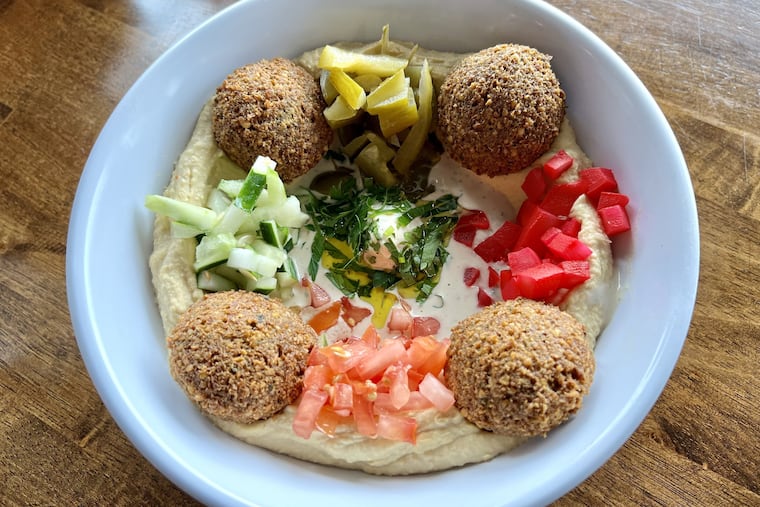
Bishara Kuttab calls his cuisine “Levantine, Palestinian style,” and the native of Jerusalem puts his classic, creamy, tahini-forward hummus front and center at his modest restaurant in Fox Chase. You will debate over how it’s best eaten: scooped up in a rolled-up piece of saj — a thin, pliable flatbread baked to order on a domed griddle — or in a bowl beneath chicken shawarma, kifta kebab, falafel, foul (fava beans), or extra chickpeas. In those builds, the hummus is less a side and more a meal, as it catches juices from carved meats and absorbs garlicky sauces. It’s a straightforward presentation — no novelty flavors — but flexible enough to serve as an appetizer, vegetarian plate, or protein-heavy entrée. — Michael Klein
Café La Maude
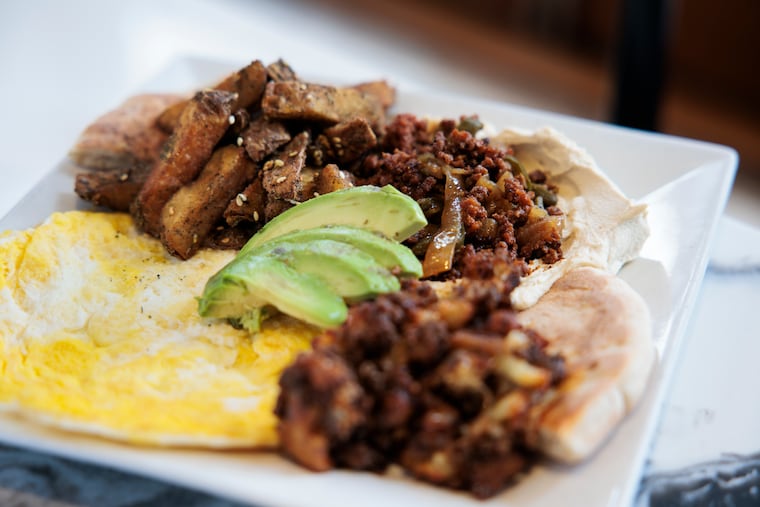
Hummus isn’t relegated to the appetizer column at Nathalie and Gabi Richan’s lovely French-Lebanese BYOB bruncherie in Northern Liberties. It’s woven into composed brunch plates, most prominently the N-Liberties, where hummus forms the base for a winning combo of jalapeño, Lebanese sausage, avocado, tomatoes, caramelized onions, and fried eggs, with house fries and fried cauliflower. Foul moudamas — a hummus cousin made with marinated fava beans — comes with scrambled eggs, chopped tomatoes, and parsley, with za’atar pita. The effect is hearty and layered: hummus as a warm, savory canvas for eggs and spice rather than a cold dip. These dishes read less as meze and more as center-of-the-plate comfort. Want the hummus plain? Order a 16-ounce container to go with pita. — M.K.
Casablanca Mediterranean Grill
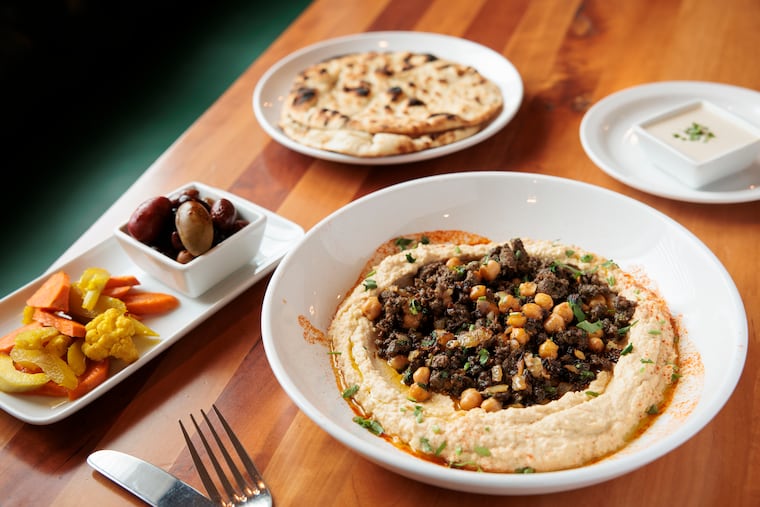
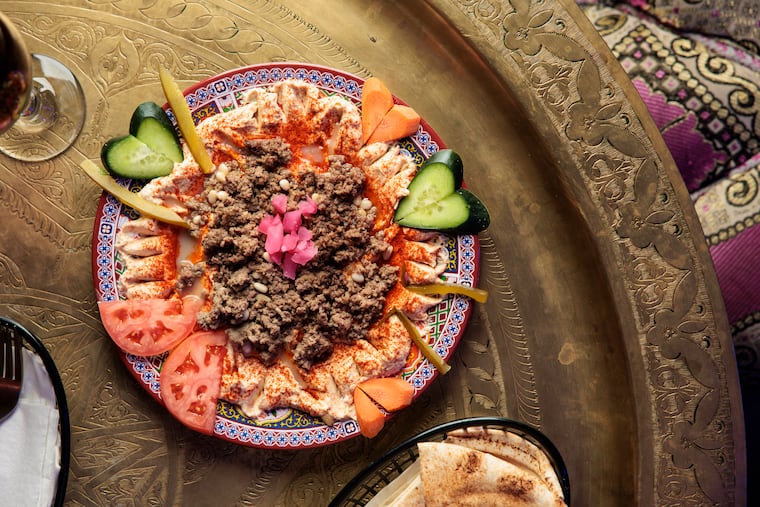
The hummus at this pan-Mediterranean South Philly grill descends from a 50-year-old Baruki family recipe, a combination of Syrian and Lebanese heritages that eschews shortcuts for only the freshest building blocks — fresh garlic, just-squeezed lemon juice, and good Lebanese olive oil and tahini — all of which get blended daily, then set aside in the fridge just long enough to set its texture. The result is a hummus that is particularly silky and balanced. But the restaurant’s more elaborate special hummus is where things get most interesting. A deep well inside the purée cradles a mound of ground beef and toasted pine nuts seasoned with Lebanese seven spice, a fragrant blend including allspice, cinnamon, and ginger. “It’s powerful, so just a bit!” said co-owner Walid Baruki. — Craig LaBan
Dizengoff
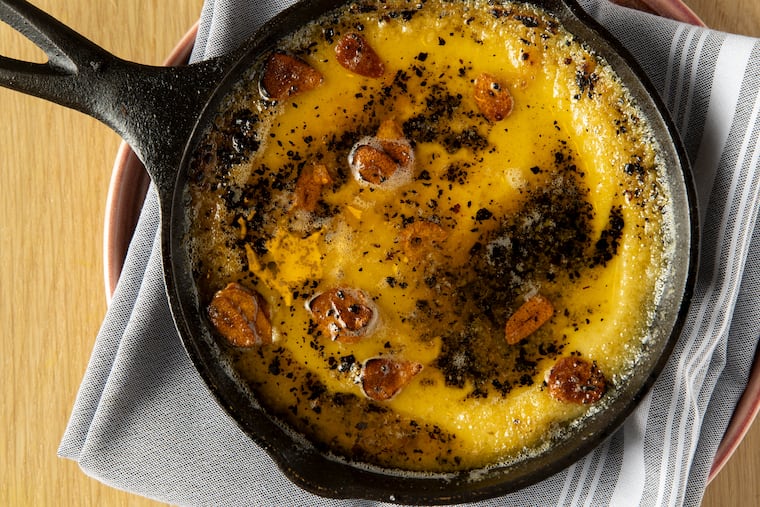
Say the word “hummus” to a Philadelphian and many will immediately think of Zahav, the crown jewel of Steve Cook and Michael Solomonov’s restaurant empire. After all, Zahav’s hummus recipe is well-known to home cooks who have burnt out many a blender making lemony, garlicky tehina sauce. You can also buy a container of Zahav-branded hummus in food retailers large and small nationwide. But I’d argue it’s really Dizengoff that epitomizes hummus in the CookNSolo group. When it debuted in 2014 as Philly’s first hummusiya — serving puffy, leopard-spotted pita rounds and daily-rotating toppings on the velvety, sesame-suffused chickpea dip — it became an immediate fixture in the Center City lunch scene. Twelve years on, Dizengoff has expanded, having taken over former next-door neighbor Abe Fisher and adding a full bar plus an all-day menu, but that impossibly airy hummus is still an anchor. There are always six options, including the classic “green” hummus (so dubbed for its parsley-spiked puddle of tehina), the resek (grated tomato, spicy-herbaceous schug, and a split soft-centered haminado egg), and the Yerushalmi, topped with savory baharat-spiced ground beef and pine nuts. There’s not as much topping variation as there was in the hummusiya days, but a few options rotate on and off; according to Cook, a crispy artichoke offering will hit the menu this spring. Perhaps surprisingly, the can’t-miss hummus is the Turkish hummus, which sports a completely different build than any other CookNSolo hummus. Whipped with brown butter, garlic, and olive oil and served piping hot, it’s closer to chickpea mashed potatoes — complete with a pool of fragrant butter and crispy shaved garlic — and it’s an absolute showstopper. — Jenn Ladd
Kanella
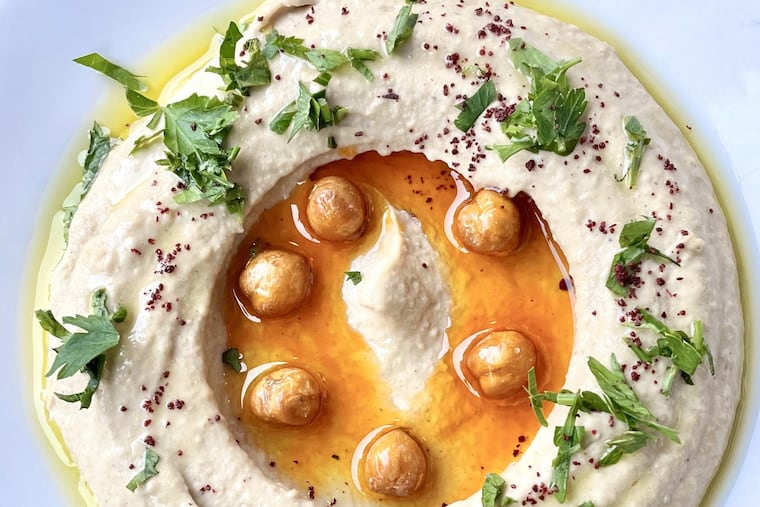
When Kanella was sold a few years ago, its menu transitioned from Cypriot cuisine to the distinctive Turkish flavors native to its current owners, the Yazici brothers. Ömer Yazici is the chef, while Okan may be familiar to those who know him as a longtime manager at Zahav (whose parent company, CookNSolo, he now serves as finance director). For reference, Okan says the hummus at Kanella is deliberately thicker than Zahav’s. What distinguishes it clearly, however, is the pool of rich Turkish olive oil drizzled over top that gets infused with sun-dried chilies from the city of Hatay in Southern Turkey, on the Syrian border. Along with a garnish of crunchy fried chickpeas scattered over top, the blooming warmth of hot spice takes this creamy chickpea purée to a place in Philly’s hummusphere that is all its own. — C.L.
Li Beirut
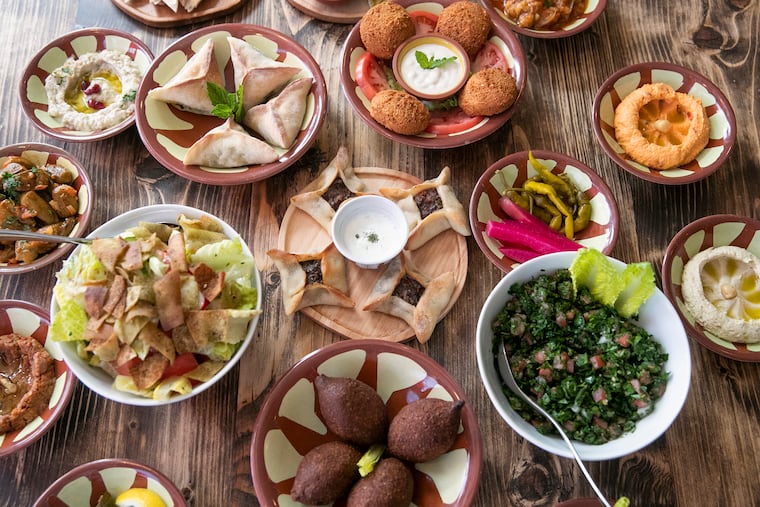
Chef Patricia Massoud’s hummus, as is the case with everything at her charming Collingswood BYOB, is a tribute to Lebanon. In particular, her creamy hummus is a showcase for superb Lebanese tahini from a producer called Al Wadi Al Akhdar, which stone-grinds its paste from roasted hulled sesame seeds, resulting in a clean, creamy, nutty flavor that lacks any bitterness. At first swipe, Li Beirut’s hummus is extremely subtle, with very measured doses of garlic, cumin, and lemon. As it begins to coat your tongue, however, the silky purée reveals a buttery richness I find absolutely irresistible — providing a perfect foil for the bigger, zestier flavors (mezze salads, spiced kebabs, and herb-roasted fish) that fill the table. — C.L.
Mama's Falafel
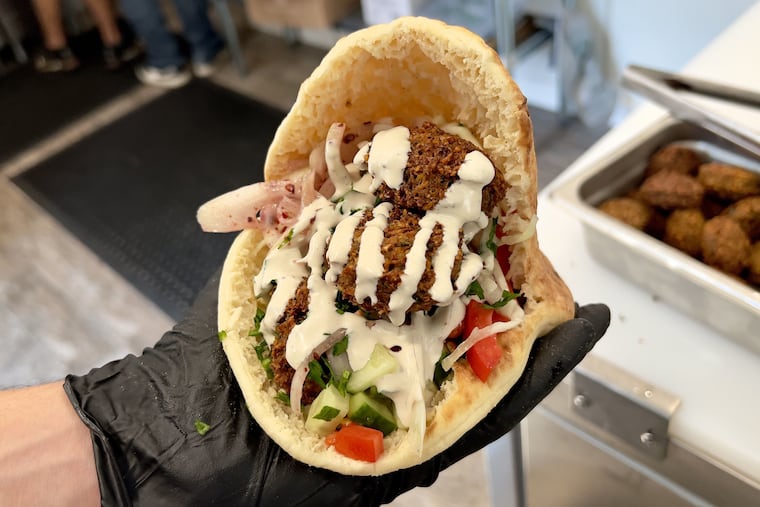
Israeli-born Yariv Noyman’s shop, which he opened on the site of the original Mama’s nearly two years ago, treats its thick but smooth hummus as essential infrastructure. Listed simply as a side with olive oil and tahina sauce, it also appears in topped variations — sometimes crowned with chickpeas or fava beans — and in multiple container sizes for takeout regulars. More notably, hummus is integral to sandwich builds. In the sabich pita, it spreads beneath fried eggplant, hard-boiled egg, cabbage, tomatoes, pickles, and herbs, acting as creamy ballast for the sharp and crunchy components. On platters, hummus shares space with falafel, latkes, salads, and pickles in generous spreads that echo street-food counters. The flavor profile is traditional — sesame-forward, lemony, lightly garlicked — and the portion substantial. — M.K.
Manna Bakery
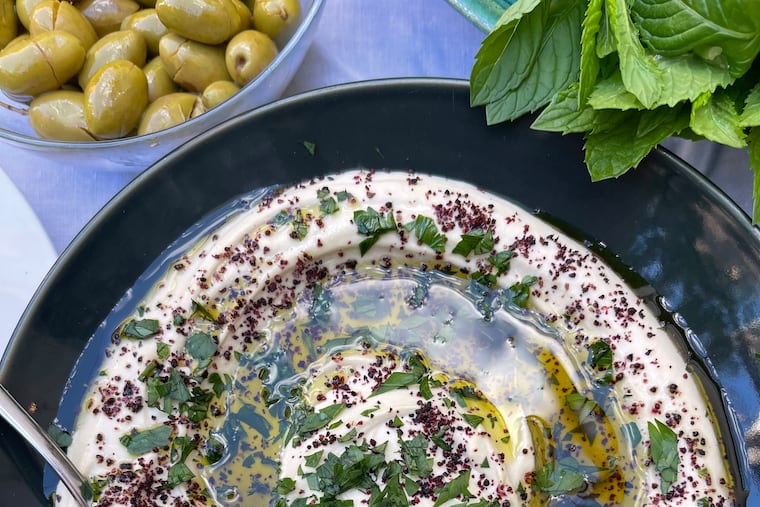
Saif Manna’s hummus is a lesson in balancing the rich earthiness of sesame in tahini with the subtle nuttiness of chickpeas. That’s because the creamy, fluffy hummus from this roving bakery is simply dried chickpeas (individually peeled), tahini, lemon, olive oil, and salt. No extras, no garlic. The perfect ratio of each ingredient comes through with each swipe. “For me, hummus serves as a beautiful vessel that can be enhanced by putting things on it, not in it,” Manna explained. Pick up an 8-ounce container of hummus, topped with olive oil and sumac, at regular pop-ups at the Rittenhouse Square, Clark Park, and Headhouse farmers markets. — H.Q.

Pera Turkish Cuisine
When a Turkish restaurant offers acclaimed döner kebab, iskender, manti, and ezme — to name a few — it’s easy to miss the hummus. You might be forgiven for skipping this particular cold meze anywhere else, but it’s an essential at Pera, chef Mehmet Ergin’s grill-driven BYOB in Northern Liberties (and one of The Inquirer’s picks for the inaugural edition of The 76). It’s a simple dish, but one swipe of a warm pita through this thick, ultra-creamy hummus, topped with a generous glug of olive oil and crispy chickpeas, and I was immediately transported to my grandmother’s dinner table. — Esra Erol
Philly Hummus Girl
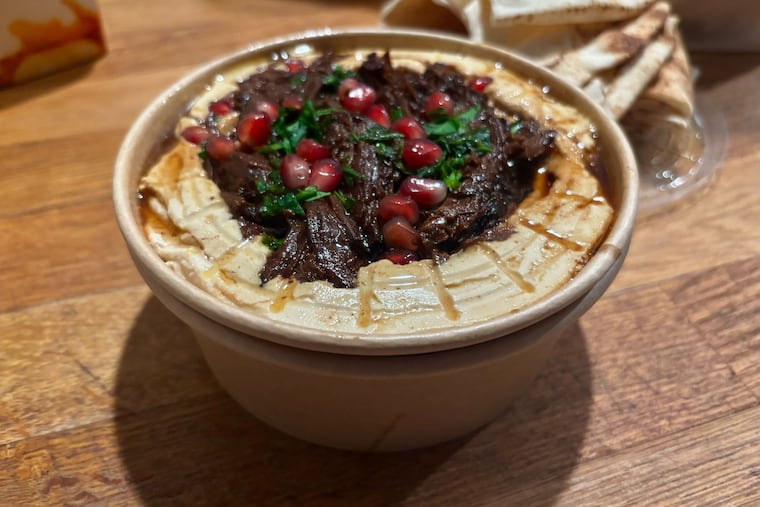
After one bite of this Philly Hummus Girl’s brisket hummus, you’ll wonder why more versions don’t include date syrup-braised beef. Juices from the slow-cooked brisket swim in the crevices of the thick, pomegranate seed-topped hummus, resulting in a hefty bite that bursts with sweet-savory flavors. It’s clear why this is the most popular of chef-owner Miranda Stephen’s five hummus options. But the other flavors are equally tempting: There’s zesty Lebanese-style for purists, or try Stephen’s hummus blended with either house-made za’atar or dukkah, or topped with garlic-onion-tomato confit. As you scoop fresh pita for bite after bite, it doesn’t take long to finish the 16-ounce container. Available every other Tuesday and Thursday for pickup or delivery within the Philadelphia area, order online from Stephen, who operates her business out of Culinary Collective commercial kitchens. — H.Q.
Renata’s Kitchen
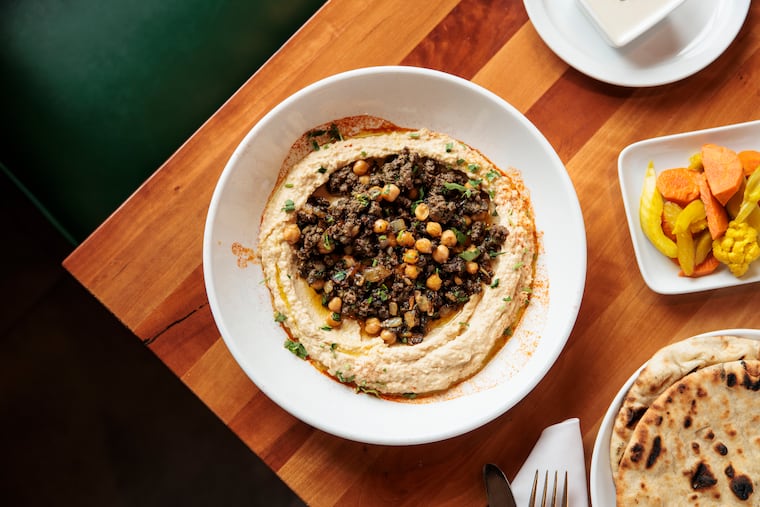
At this neighborhood favorite in West Philly, Palestinian hummus with its tahini-forward flavor is perfect for sharing. But it’s the incredibly smooth, silky olive oil that makes the hummus stand out here. You can order the dish as an appetizer or opt for its meatier counterpart, the Turkish hummus entree, which adds a heaping serving of caramelized onion, chickpeas, and beef on top. Both plates come with hot grilled pita for scooping. — H.Q.
Stina
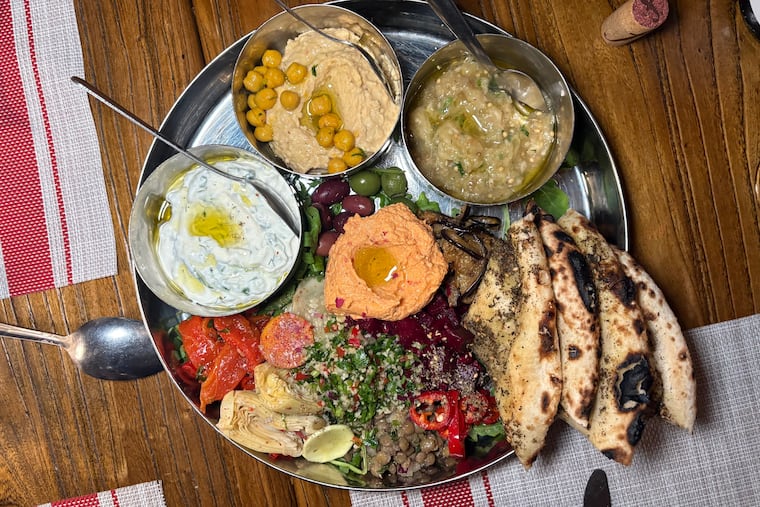
As with the rest of the menu at Stina, one of South Philly’s neighborhood dining gems, chef-owner Bobby Saritsoglou proudly gives his hummus Greek flair, a style he says is generally characterized by a bold tang of lemon and garlic and a thicker-textured chickpea purée. But Saritsoglou also lends his rendition some extra cheffy tweaks — a confit for the garlic to give it more sweetness; some additional spices, like coriander, that lend it unique aromatics; and also excellent Greek extra-virgin olive oil from Iliada in Kalamata, a cold-pressed oil that brings a grassy green, artichoke-like brightness to the mix. Ultimately, though, the ringer at Stina is the soft, pliant warmth of the fresh pitas baked in the wood-fired hearth. It makes scooping Stina’s hummus (and really all its meze dips) completely irresistible. — C.L.
Toomi’s Shawarma
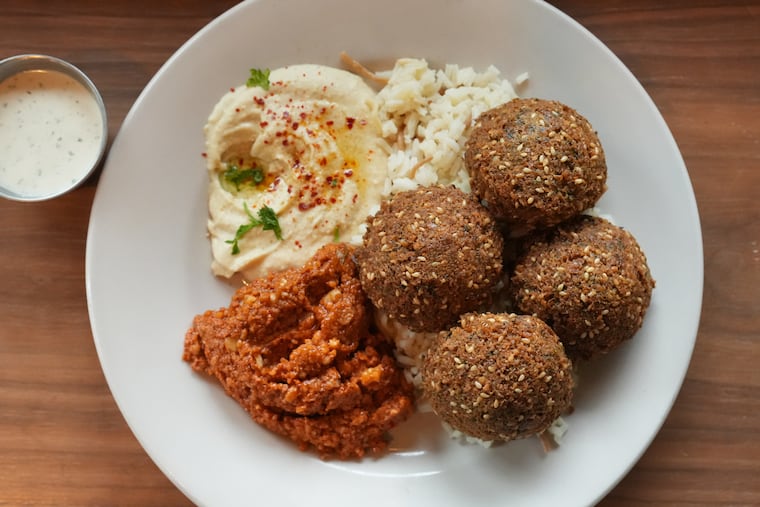
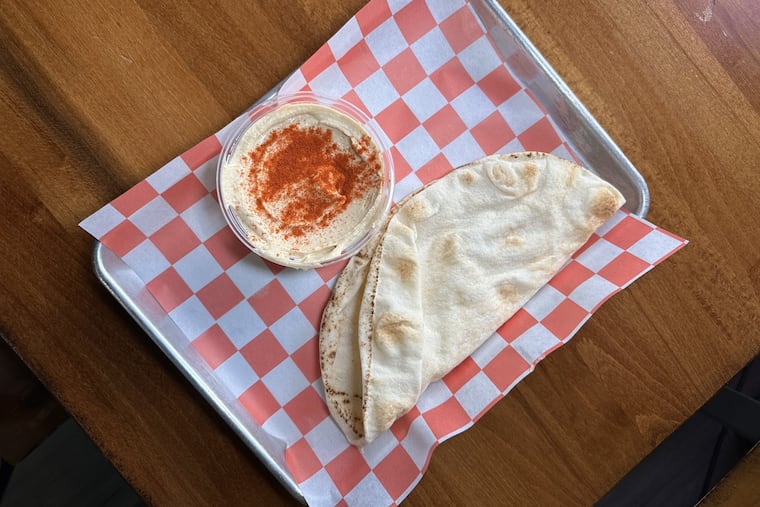
Classic sesame-infused hummus is one of the calling cards at this Lebanese-run counter-service storefront in Upper Darby, from the founders of the recently closed Manakeesh in West Philadelphia. There are no rotating flavors or novelty riffs — just one house style that leans smooth and garlicky, finished with olive oil. The hummus’ secondary role may be even more important. In shawarma wraps, particularly the lamb and beef gyros, it’s spread generously before the addition of carved meat, pickles, and sauces, providing richness. On platters, it sits beside rice, salad, and protein as a cooling counterpoint to spice. The approach is straightforward and traditional. — M.K.
Apricot Stone
The hummus at this Armenian gem in Northern Liberties is just one example of the Syrian influences that show up in Apricot Stone’s menu, informed by chef-owner Fimy Ishkhanian’s childhood in Aleppo. Each bite brings forth a burst of lemony flavor that brightens the chickpea base. The texture is smooth and not too thick, a tangy, satisfying hummus that complements warm pita. — Hira Qureshi
Bishos
Bishara Kuttab calls his cuisine “Levantine, Palestinian style,” and the native of Jerusalem puts his classic, creamy, tahini-forward hummus front and center at his modest restaurant in Fox Chase. You will debate over how it’s best eaten: scooped up in a rolled-up piece of saj — a thin, pliable flatbread baked to order on a domed griddle — or in a bowl beneath chicken shawarma, kifta kebab, falafel, foul (fava beans), or extra chickpeas. In those builds, the hummus is less a side and more a meal, as it catches juices from carved meats and absorbs garlicky sauces. It’s a straightforward presentation — no novelty flavors — but flexible enough to serve as an appetizer, vegetarian plate, or protein-heavy entrée. — Michael Klein
Also appears in
Café La Maude
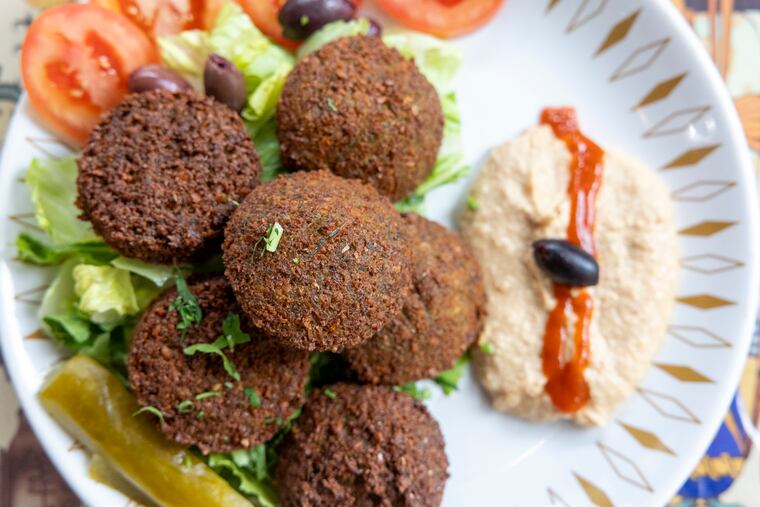
Hummus isn’t relegated to the appetizer column at Nathalie and Gabi Richan’s lovely French-Lebanese BYOB bruncherie in Northern Liberties. It’s woven into composed brunch plates, most prominently the N-Liberties, where hummus forms the base for a winning combo of jalapeño, Lebanese sausage, avocado, tomatoes, caramelized onions, and fried eggs, with house fries and fried cauliflower. Foul moudamas — a hummus cousin made with marinated fava beans — comes with scrambled eggs, chopped tomatoes, and parsley, with za’atar pita. The effect is hearty and layered: hummus as a warm, savory canvas for eggs and spice rather than a cold dip. These dishes read less as meze and more as center-of-the-plate comfort. Want the hummus plain? Order a 16-ounce container to go with pita. — M.K.
Also appears in

Casablanca Mediterranean Grill
The hummus at this pan-Mediterranean South Philly grill descends from a 50-year-old Baruki family recipe, a combination of Syrian and Lebanese heritages that eschews shortcuts for only the freshest building blocks — fresh garlic, just-squeezed lemon juice, and good Lebanese olive oil and tahini — all of which get blended daily, then set aside in the fridge just long enough to set its texture. The result is a hummus that is particularly silky and balanced. But the restaurant’s more elaborate special hummus is where things get most interesting. A deep well inside the purée cradles a mound of ground beef and toasted pine nuts seasoned with Lebanese seven spice, a fragrant blend including allspice, cinnamon, and ginger. “It’s powerful, so just a bit!” said co-owner Walid Baruki. — Craig LaBan
Dizengoff
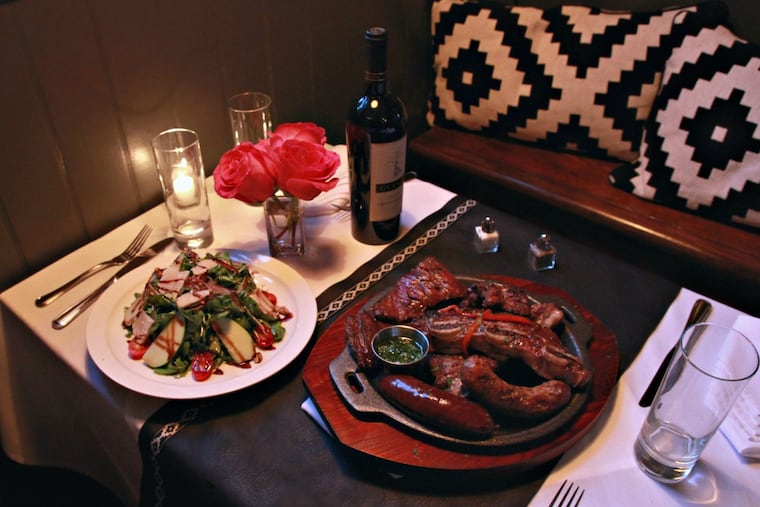
Say the word “hummus” to a Philadelphian and many will immediately think of Zahav, the crown jewel of Steve Cook and Michael Solomonov’s restaurant empire. After all, Zahav’s hummus recipe is well-known to home cooks who have burnt out many a blender making lemony, garlicky tehina sauce. You can also buy a container of Zahav-branded hummus in food retailers large and small nationwide. But I’d argue it’s really Dizengoff that epitomizes hummus in the CookNSolo group. When it debuted in 2014 as Philly’s first hummusiya — serving puffy, leopard-spotted pita rounds and daily-rotating toppings on the velvety, sesame-suffused chickpea dip — it became an immediate fixture in the Center City lunch scene. Twelve years on, Dizengoff has expanded, having taken over former next-door neighbor Abe Fisher and adding a full bar plus an all-day menu, but that impossibly airy hummus is still an anchor. There are always six options, including the classic “green” hummus (so dubbed for its parsley-spiked puddle of tehina), the resek (grated tomato, spicy-herbaceous schug, and a split soft-centered haminado egg), and the Yerushalmi, topped with savory baharat-spiced ground beef and pine nuts. There’s not as much topping variation as there was in the hummusiya days, but a few options rotate on and off; according to Cook, a crispy artichoke offering will hit the menu this spring. Perhaps surprisingly, the can’t-miss hummus is the Turkish hummus, which sports a completely different build than any other CookNSolo hummus. Whipped with brown butter, garlic, and olive oil and served piping hot, it’s closer to chickpea mashed potatoes — complete with a pool of fragrant butter and crispy shaved garlic — and it’s an absolute showstopper. — Jenn Ladd
Kanella
When Kanella was sold a few years ago, its menu transitioned from Cypriot cuisine to the distinctive Turkish flavors native to its current owners, the Yazici brothers. Ömer Yazici is the chef, while Okan may be familiar to those who know him as a longtime manager at Zahav (whose parent company, CookNSolo, he now serves as finance director). For reference, Okan says the hummus at Kanella is deliberately thicker than Zahav’s. What distinguishes it clearly, however, is the pool of rich Turkish olive oil drizzled over top that gets infused with sun-dried chilies from the city of Hatay in Southern Turkey, on the Syrian border. Along with a garnish of crunchy fried chickpeas scattered over top, the blooming warmth of hot spice takes this creamy chickpea purée to a place in Philly’s hummusphere that is all its own. — C.L.
Li Beirut
Chef Patricia Massoud’s hummus, as is the case with everything at her charming Collingswood BYOB, is a tribute to Lebanon. In particular, her creamy hummus is a showcase for superb Lebanese tahini from a producer called Al Wadi Al Akhdar, which stone-grinds its paste from roasted hulled sesame seeds, resulting in a clean, creamy, nutty flavor that lacks any bitterness. At first swipe, Li Beirut’s hummus is extremely subtle, with very measured doses of garlic, cumin, and lemon. As it begins to coat your tongue, however, the silky purée reveals a buttery richness I find absolutely irresistible — providing a perfect foil for the bigger, zestier flavors (mezze salads, spiced kebabs, and herb-roasted fish) that fill the table. — C.L.
Mama's Falafel
Israeli-born Yariv Noyman’s shop, which he opened on the site of the original Mama’s nearly two years ago, treats its thick but smooth hummus as essential infrastructure. Listed simply as a side with olive oil and tahina sauce, it also appears in topped variations — sometimes crowned with chickpeas or fava beans — and in multiple container sizes for takeout regulars. More notably, hummus is integral to sandwich builds. In the sabich pita, it spreads beneath fried eggplant, hard-boiled egg, cabbage, tomatoes, pickles, and herbs, acting as creamy ballast for the sharp and crunchy components. On platters, hummus shares space with falafel, latkes, salads, and pickles in generous spreads that echo street-food counters. The flavor profile is traditional — sesame-forward, lemony, lightly garlicked — and the portion substantial. — M.K.
Manna Bakery
Saif Manna’s hummus is a lesson in balancing the rich earthiness of sesame in tahini with the subtle nuttiness of chickpeas. That’s because the creamy, fluffy hummus from this roving bakery is simply dried chickpeas (individually peeled), tahini, lemon, olive oil, and salt. No extras, no garlic. The perfect ratio of each ingredient comes through with each swipe. “For me, hummus serves as a beautiful vessel that can be enhanced by putting things on it, not in it,” Manna explained. Pick up an 8-ounce container of hummus, topped with olive oil and sumac, at regular pop-ups at the Rittenhouse Square, Clark Park, and Headhouse farmers markets. — H.Q.
Pera Turkish Cuisine
When a Turkish restaurant offers acclaimed döner kebab, iskender, manti, and ezme — to name a few — it’s easy to miss the hummus. You might be forgiven for skipping this particular cold meze anywhere else, but it’s an essential at Pera, chef Mehmet Ergin’s grill-driven BYOB in Northern Liberties (and one of The Inquirer’s picks for the inaugural edition of The 76). It’s a simple dish, but one swipe of a warm pita through this thick, ultra-creamy hummus, topped with a generous glug of olive oil and crispy chickpeas, and I was immediately transported to my grandmother’s dinner table. — Esra Erol
Also appears in

Philly Hummus Girl
After one bite of this Philly Hummus Girl’s brisket hummus, you’ll wonder why more versions don’t include date syrup-braised beef. Juices from the slow-cooked brisket swim in the crevices of the thick, pomegranate seed-topped hummus, resulting in a hefty bite that bursts with sweet-savory flavors. It’s clear why this is the most popular of chef-owner Miranda Stephen’s five hummus options. But the other flavors are equally tempting: There’s zesty Lebanese-style for purists, or try Stephen’s hummus blended with either house-made za’atar or dukkah, or topped with garlic-onion-tomato confit. As you scoop fresh pita for bite after bite, it doesn’t take long to finish the 16-ounce container. Available every other Tuesday and Thursday for pickup or delivery within the Philadelphia area, order online from Stephen, who operates her business out of Culinary Collective commercial kitchens. — H.Q.
Renata’s Kitchen
At this neighborhood favorite in West Philly, Palestinian hummus with its tahini-forward flavor is perfect for sharing. But it’s the incredibly smooth, silky olive oil that makes the hummus stand out here. You can order the dish as an appetizer or opt for its meatier counterpart, the Turkish hummus entree, which adds a heaping serving of caramelized onion, chickpeas, and beef on top. Both plates come with hot grilled pita for scooping. — H.Q.
Stina
As with the rest of the menu at Stina, one of South Philly’s neighborhood dining gems, chef-owner Bobby Saritsoglou proudly gives his hummus Greek flair, a style he says is generally characterized by a bold tang of lemon and garlic and a thicker-textured chickpea purée. But Saritsoglou also lends his rendition some extra cheffy tweaks — a confit for the garlic to give it more sweetness; some additional spices, like coriander, that lend it unique aromatics; and also excellent Greek extra-virgin olive oil from Iliada in Kalamata, a cold-pressed oil that brings a grassy green, artichoke-like brightness to the mix. Ultimately, though, the ringer at Stina is the soft, pliant warmth of the fresh pitas baked in the wood-fired hearth. It makes scooping Stina’s hummus (and really all its meze dips) completely irresistible. — C.L.
Toomi’s Shawarma
Classic sesame-infused hummus is one of the calling cards at this Lebanese-run counter-service storefront in Upper Darby, from the founders of the recently closed Manakeesh in West Philadelphia. There are no rotating flavors or novelty riffs — just one house style that leans smooth and garlicky, finished with olive oil. The hummus’ secondary role may be even more important. In shawarma wraps, particularly the lamb and beef gyros, it’s spread generously before the addition of carved meat, pickles, and sauces, providing richness. On platters, it sits beside rice, salad, and protein as a cooling counterpoint to spice. The approach is straightforward and traditional. — M.K.