Editorial: Best of the Blogs
Fighting predators Among the guests invited to watch President Obama sign the historic financial regulation bill into law Wednesday was Philadelphia City Council Majority Leader Marian B. Tasco. The new law includes safeguards against the types of predatory lending practices that Tasco has fought against for years.
Fighting predators
Among the guests invited to watch President Obama sign the historic financial regulation bill into law Wednesday was Philadelphia City Council Majority Leader Marian B. Tasco. The new law includes safeguards against the types of predatory lending practices that Tasco has fought against for years.
Obama was first briefed on the subject by Tasco in 2004, when he was an Illinois state senator running for the U.S. Senate. As far back as 1994, Tasco had worked with community organizations to educate city residents about the dangers of easy money offered by loan sharks.
In 2001, Tasco worked hard to get her Council colleagues to pass one of the country's toughest predatory lending bills by a unanimous vote. The next year, she was awarded the Good Housekeeping Magazine Award for Women in Government for her work on this issue.
Just last week, Tasco joined Mayor Nutter, Common Pleas Court Judge Annette M. Rizzo, the U.S. Attorney's Office, and other local agencies to kick off a Loan Modification Scam Campaign to fight foreclosures in Philadelphia's communities.
She says she shares "Obama's commitment to protect Americans from the unscrupulous dealings of financial institutions, whether they are on Broad Street or Wall Street." Good for her, and good for Philadelphia.
Standing up to bullies
Marvin Nash, a rodeo performer and anti-bullying activist, says that bullying causes 160,000 students to miss school each day. That's a lot of absences. Fortunately, a number of recent efforts aim at stopping this pervasive problem in the schools.
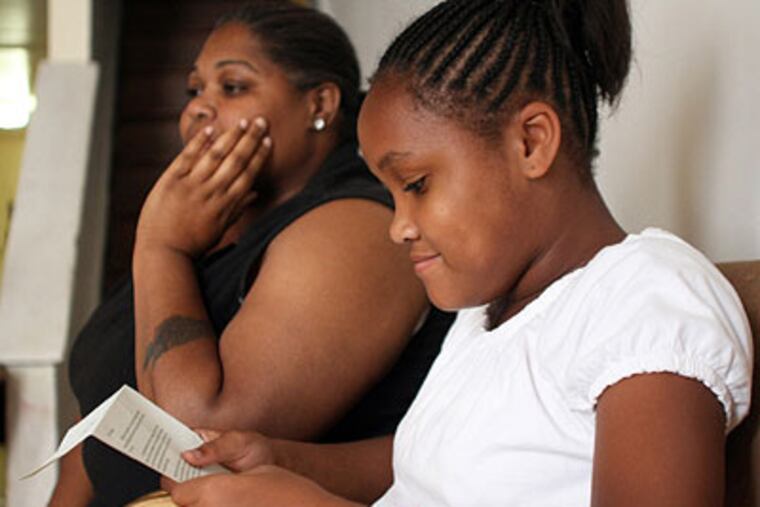
One activist involved in such efforts is Ziainey Stokes, a precocious 11-year-old West Philadelphia student who wrote a letter to President Obama about the bullying she had encountered at school. A victim of bullying who had to switch schools because of the taunting she endured, Ziainey decided to take action. Aside from her letter to the president, which merited a response in March, she has been recruiting friends to join her anti-bullying campaign. The preteen crusader also plans to speak at other schools about the dangers posed by teasing in schools.
Another anti-bullying activist making his way through the area is Nash, a rodeo clown who is pushing a barrel from Capitol Hill all the way to South Jersey, where he will attend the Cowtown Rodeo on Saturday. The impetus for this stunt? He, too, is trying to make a difference in schools with his Bullying Hurts Program. This program equips high school youth groups with workbooks and videos to share with elementary school students they mentor. He started his barreling trip in the U.S. Senate, speaking out against bullying. He has continued to pass out brochures on his journey to Jersey.
Academic experts are taking a stab at ending the bullying crisis in the schools as well. This week, the Center for the Prevention of School-Aged Violence at Drexel University hosted a forum on violence and bullying.
Philadelphia schools should be paying attention. Bullying was behind much of the violence against 50 Asian students in South Philadelphia High School this year, which led to 10 arrests. Anti-bullying programs, especially those that start in elementary school and involve parents, would help create a healthier and safer learning environment.
On a national scale, bullying has led to catastrophes perpetrated by the bullied. Many blame the tragic Columbine and Virginia Tech shootings partly on bullying the gunmen had experienced. Policymakers and school districts across the country should be joining the fifth grader and the rodeo clown in their efforts for change.
News from the homeless
For the suggested donation of $1, One Step Away, a new monthly newspaper in town, offers a unique perspective - that of the homeless, who write and distribute it.
Philadelphians should check out the publication, which has increased circulation each month it's been in business. It has also helped some of the city's homeless patch up their lives.
While there are 31 so-called homeless newspapers in North America, the others are written by a professional staff and are distributed only by the homeless. Philadelphia appears to be the sole city in which there is no professional staff producing its homeless newspaper.
People living in homeless shelters provide the content. It is then edited and produced by the communications and marketing staff at the nonprofit Resources for Human Development. RHD representative Kevin Roberts says between 7,000 and 10,000 papers are now sold each month.
Homeless men, women, and children write about issues largely neglected by other news sources. They develop creative skills, writing journalistic and creative pieces, and contributing artwork and photography.
Contributors, who can also distribute the papers and earn 75 cents per paper, may hone other marketable skills. They gain computer knowledge and learn how to become successful entrepreneurs. Distributors decide where and how to sell their goods, and so far have been quite effective.
This experience has helped a number of homeless people gain income that allows them to afford housing and be offered contacts that can lead to job interviews and employment.
This worthy cause is an important outlet for folks who don't usually have a voice in the media, and it's a way for the homeless to earn money for what they produce. That's a lot from something that costs just a dollar a month.
Magical mural tour
Sightseeing in Philadelphia doesn't just have to be about the Liberty Bell. One new tour offers a refreshing departure from the norm with its emphasis on the cultural history of the city's various neighborhoods.
Last month, the Mural Arts Program - which was started in 1984 and has made Philadelphia the mural capital of the world - raised the curtain on its newest project, the Mural Mile. This tour exposes people to 17 of Center City's murals and explores the neighborhood stories the works of art represent. To kick the Mural Mile off, the public arts initiative organized a month of special talks by muralists and "celebrate the story" events.
What's really exciting about the new tour is the range of ways one can access it, due to cutting-edge technology. Guided tours include MP3 players with audio segments by muralists and community leaders. There are even options for those who don't want to shell out the 17 bucks for a guide; a free podcast is available online, and the audio tour can also be accessed via cell phone.
The Mural Arts Program is an extraordinary social and civic campaign that educates prison inmates and at-risk children about the arts. Now, more tourists will be able to appreciate the good it does for Philadelphia and perhaps even use the tour as a model for change in their own cities.