Lots of cash, less electricity
Oil money has Iraq's coffers overflowing. A report to Congress sees both successes and struggles.
WASHINGTON - Iraq's coffers are bulging with oil money, yet some Baghdad residents go without electricity for much of the day and others get drinking water tainted with sewage.
"They don't need more money," said Stuart Bowen, special inspector general for Iraq reconstruction. "But they are having a difficult time, apparently, spending the money that they have."
Bowen is releasing his quarterly report today to Congress on efforts to rebuild the shattered nation.
Aided by money from a postwar record in oil production, Baghdad itself is set to spend an amount almost equal to the U.S. share, the report says.
According to the report, as of the end of the quarter on June 30 the United States had appropriated $50.46 billion, the Iraqis were contributing $50.33 billion, and international donors had pledged $17 billion.
Bowen said that on a number of fronts, Iraq made progress in the last quarter toward standing on its own - a key to bringing home U.S. troops.
Amid improved security, the Iraq economy has continued to expand and essential services to residents have improved.
"But they remain uneven and are not adequate to meet current demand," the 270-page report says.
"Emblematic of this struggle is the fact that two-thirds of the raw sewage produced in Baghdad flows untreated into rivers and waterways," it says.
The Iraqi government also is far from its goal of achieving political reconciliation, it adds.
"They obviously have made enormous economic progress by virtue of improving their oil sector and they've made significant security progress," Bowen said in an interview.
"However, on the governance and political front, there are still hurdles," he said, naming the need to pass a law on sharing oil revenues and to hold provincial elections.
There was no figure available for how much of the money allocated to Iraq had been spent. Of the $17 billion pledged internationally, only $2.5 billion has been disbursed. At of the end of the quarter, the United States had spent $33.28 billion of the more than $50 billion Congress appropriated, Bowen said.
He said American taxpayers did not always get their money's worth.
But one success story was a $34 million project to build a system of ditches, berms, fences and other security to protect pipelines from attacks.
"The success of the program is evident in the fact that there have been no successful attacks on northern oil lines this year," the report says, noting that the program contributed to the increased oil production.
Other details in the report:
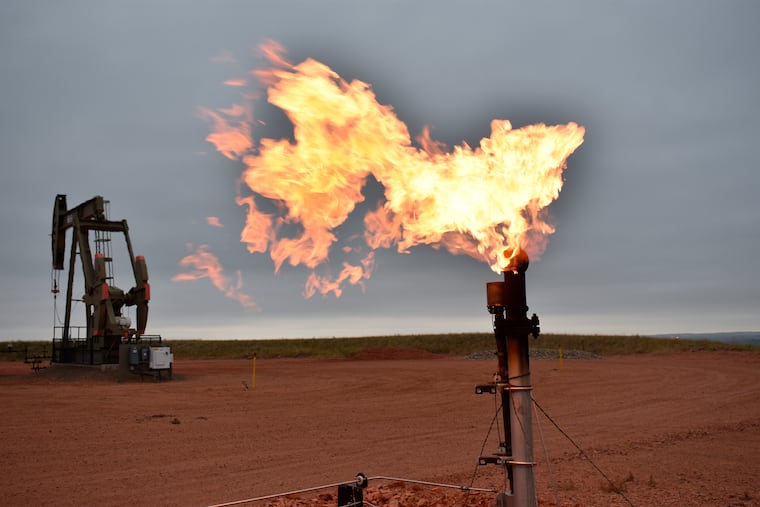
The quarter's oil production averaged 2.43 million barrels a day, the highest reported since the reconstruction program began five years ago, but below prewar levels of 2.58 million.
Average daily electricity production for the quarter was 12 percent higher than the same time last year and the second-highest quarterly average since the start of the war. Still, publicly available power, which is provided virtually without fees, only meets about 55 percent of increasing demand, forcing people to buy power from private generators run by neighbors or small businesspeople.
Only 47 percent of people in rural areas use drinking water supplied via pipes to their homes. Only 20 percent of families outside of Baghdad province have access to working sewage facilities.
Despite better security, "violence continues to pose a deadly threat to personnel involved in reconstruction activities." The State Department reported that 15 U.S. civilians died in Iraq during the quarter.