Iraqi: U.S. may move up pullout
Maliki was speaking to an election rally. Also, two helicopter crashes killed four U.S. troops.
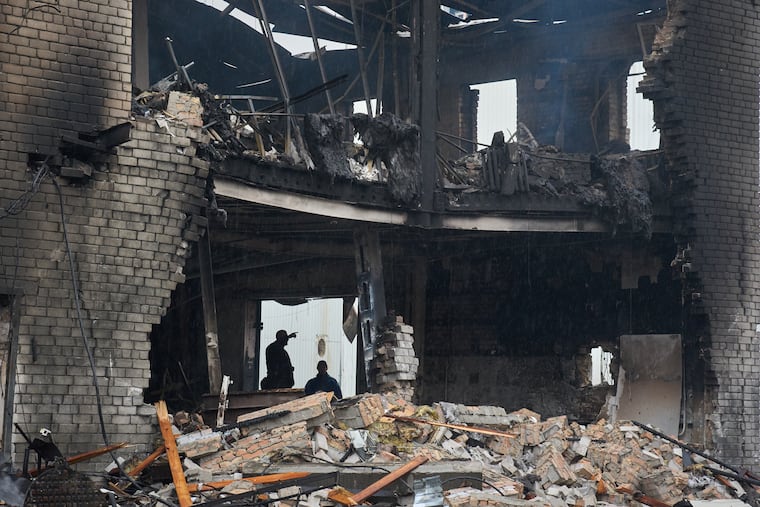
BAGHDAD - Iraq's prime minister said yesterday that he believed the United States would withdraw its troops more quickly than the three-year timeline set down in a U.S.-Iraq security agreement. The United States, meanwhile, suffered its biggest single loss of life in months when two helicopters crashed, killing four service members.
An agreement negotiated under President George W. Bush's administration called for U.S. combat troops to withdraw from Baghdad and other cities by the end of June, with all American forces out of the country by the end of 2011.
President Obama campaigned on a promise to remove all combat troops within 16 months and has asked the Pentagon to plan for "a responsible military drawdown from Iraq."
With planning under way, Prime Minister Nouri al-Maliki told a political rally south of Baghdad that he believed the end of the U.S. mission "will be brought forward" and that Iraq must bolster its own forces to meet the challenge after the Americans leave.
The Shiite-led government pushed for a faster U.S. pullout during last year's negotiations on the security agreement, overcoming longtime Bush administration opposition to a fixed withdrawal schedule.
Maliki has been campaigning actively on behalf of his allies for this weekend's provincial elections, promoting his image as the leader who restored stability and ended what many Iraqis see as a U.S. military occupation.
At the same time, however, U.S. officials in Iraq have cautioned that a hasty departure of the 142,000 U.S. troops could reverse the decline in violence and undermine Iraq's efforts to establish a stable government.
"I think the spirit of compromise, of accommodation, of focus on institutional development, all of that would run the risk of getting set aside" with a hasty withdrawal, departing U.S. Ambassador Ryan Crocker warned last week.
U.S. commanders are carefully watching Saturday's elections for members of provincial councils as an indicator of whether Iraqi factions are willing to resolve their differences politically instead of on the battlefield.
Violence is down sharply since last year after a U.S.-Iraqi offensive broke the power of Shiite militias and after many Sunni gunmen abandoned the insurgency. U.S. military death tolls have fallen to a fraction of levels seen at the height of the war.
A U.S. military statement said the two helicopters crashed about 2:15 a.m. in northern Iraq, but it did not specify where or say whether they collided. The statement said the crash did not appear to be a result of hostile fire.
It was the single deadliest incident for U.S. troops since Sept. 18, when seven American soldiers were killed in a helicopter crash in the southern desert west of Basra.
Iraqi officials said the helicopters went down about 20 miles west of Kirkuk, which is about 180 miles north of Baghdad. Maj. Derrick Cheng, a spokesman for U.S. forces in northern Iraq, said all the dead were Americans, but he gave no further details.