Trump promotes data centers and praises his Asia trip
The president restated his unwavering support for what he calls “super intelligence.”
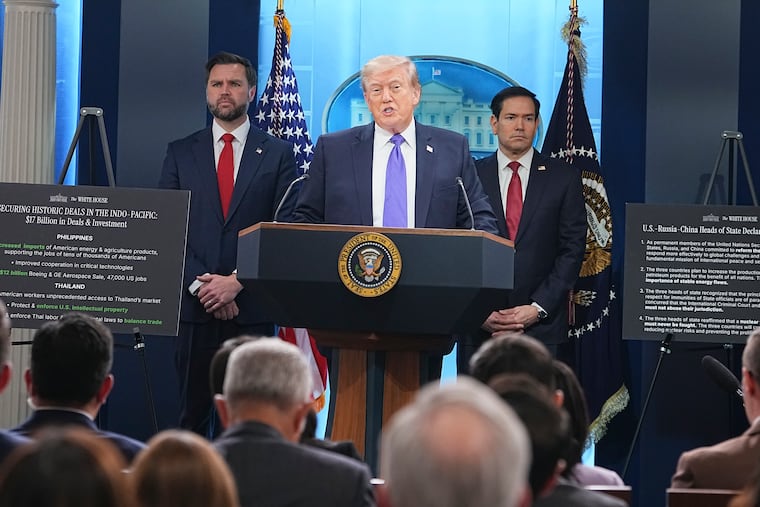
President Donald Trump mounted a spirited defense of his administration’s economic policies, vowed to redouble efforts to build data centers in the United States, and threatened to impose punitive taxes on companies that build them abroad during a news conference at the White House on Friday.
The president also promoted what he sees as his diplomatic accomplishments during his whirlwind trip to Asia this week, which included a first-ever trilateral meeting with the leaders of Russia and China. He called it a “great and highly consequential trip,” though it did not produce concrete plans to address global concerns, including the wars in Iran and Ukraine, the dangers of artificial intelligence, or nuclear proliferation.
Asked about domestic politics following heavy Republican defeats in the midterm elections, the president also said he was optimistic about working with the Democrats who will soon control Congress. He said he would use his veto power both to stop legislation and as leverage in negotiations on issues such as healthcare. “We could end up better than dealing with the Republicans,” he said, describing Rep. Hakeem Jeffries and Sen. Chuck Schumer as smart leaders.
Trump also discussed his “fantastic” relationships with President Vladimir Putin of Russia and President Xi Jinping of China, the lack of progress toward a deal to end the war in Iran, and the difficulty of limiting global stockpiles of nuclear weapons.
His comments about data center expansion came weeks after voters across the country approved moratoria to halt or limit data center construction and expressed deep concerns about artificial intelligence. Trump, however, restated his unwavering support for what he calls “super intelligence.”
“We’re going to fight very hard for the data centers,” Trump said, because he did not want China to take the lead. “We are leading, and they are second.”
Trump attended summits in the Philippines and China during the four-day trip to Asia, and he met with Putin and Xi in the first summit of the leaders of those three world powers.
Trump said during a trilateral summit with Xi and Putin on Thursday that the three of them were “uniquely positioned to discuss how to reduce the number of nuclear weapons on earth.” Yet after the conversation it was clear they had not agreed to return to the detailed arms control talks that were a centerpiece of diplomacy during the Cold War. And on new threats, including artificial intelligence, the three leaders were largely silent.
Trump did not hold a formal news conference, a departure from custom on foreign trips. The White House has sought to cast the trip as a “historic” display of American power on the global stage, although it produced little more than photo-ops for Trump, who has long had an affinity for both Xi and Putin, whom he calls friends.
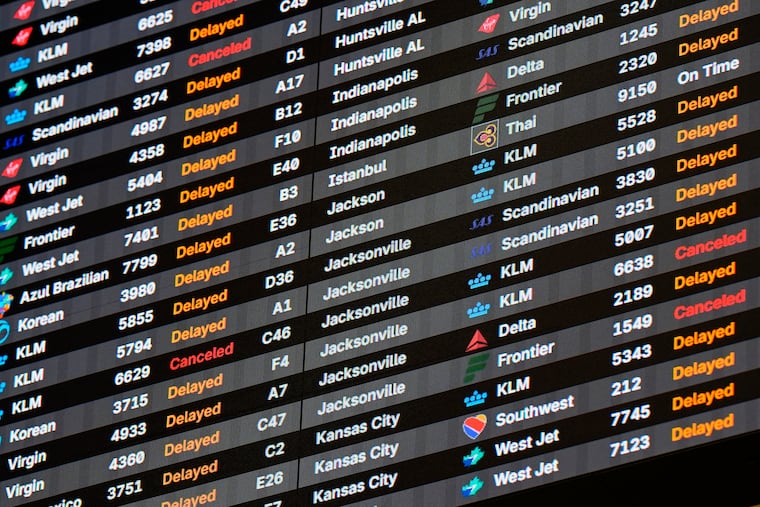
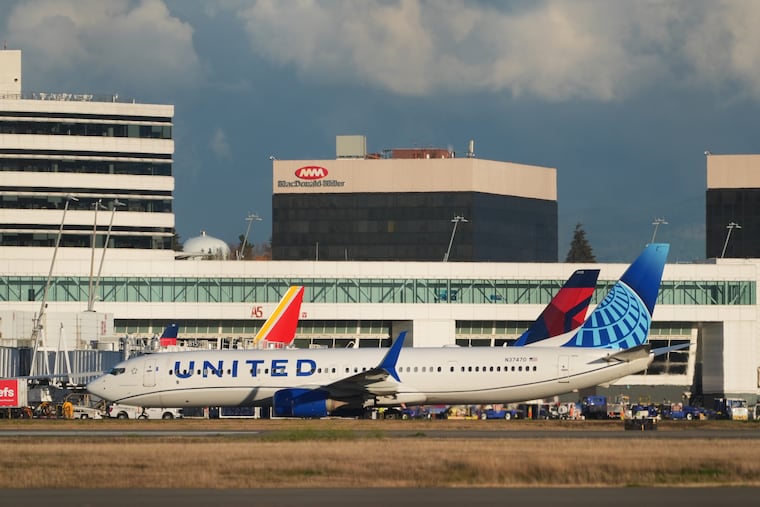
Trump returns to a nation on edge and questions about his administration’s leadership after a flurry of digital crises, including aviation-system meltdowns and outages at several large banking systems.
While on his trip, the president largely shrugged off the domestic concerns, from the outages to a sustained slide in the stock market. “It’s life,” Trump said. “When you’re big and powerful and you have all the money, things like that happen. It’s fine.”
This article originally appeared in the New York Times.