Trump gets caught in a dilemma over a saudi plea for military help
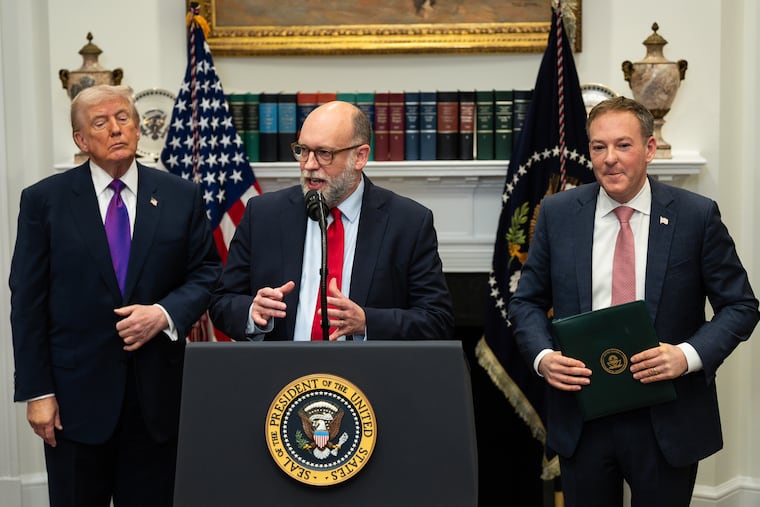
For two weeks, the question of whether to yield to pleas from Saudi Arabia and order the U.S. military to strike targets in Yemen controlled by the Iran-backed Houthis has bedeviled President Donald Trump.
For two weeks, the question of whether to yield to pleas from Saudi Arabia and order the U.S. military to strike targets in Yemen controlled by the Iran-backed Houthis has bedeviled President Donald Trump.
A decision to go forward could open another front in the war against Iran that Trump started but has been unable to end as it spreads economic shock around the globe.
The president had wavered for weeks over the Saudi appeals for help in fighting the Houthis, who took advantage of the instability in the Middle East and reignited their war with the kingdom this summer.
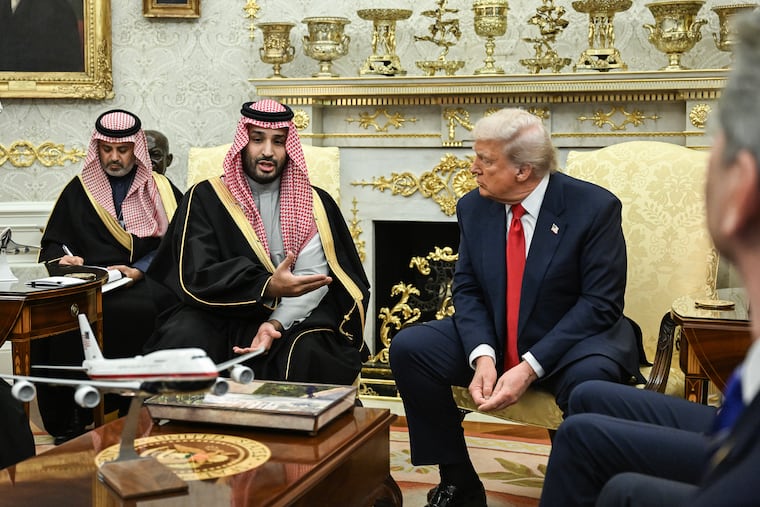
But things came to a head Thursday: Crown Prince Mohammed bin Salman, the kingdom’s de facto leader and a major ally in the Iran war, called the president to implore him, again, to step in to help blunt the rapidly advancing group, administration officials said.
Trump had met with advisers just the day before and told them he did not favor strikes. But after speaking with the Saudi crown prince, he reversed himself and told the Pentagon to prepare for airstrikes against the Houthis.
But by midday Sunday, the president appeared to have reversed himself again. There would be no U.S. airstrikes against the Houthis — at least not for the time being, according to administration officials. The officials spoke on the condition of anonymity because they were not authorized to discuss military planning.
The White House press office declined to discuss Trump’s deliberations for the record. A senior administration official would say only that “the U.S. has a defense agreement with Saudi Arabia and we will always defend our allies.”
Most of the president’s inner circle was either deeply skeptical or outright opposed to joining the Saudi fight against the Houthis, especially given the existing strains facing the U.S. military in the war with Iran, according to a senior administration official.
Trump’s decision to pull back from, or at least delay, striking Houthi targets came as commanders had approved target lists, troops were loading bombs onto U.S. warplanes selected for the missions and the wave of attacks was just about to begin, according to two people briefed on the operation.
In a telephone call with Fox News on Sunday morning, the president told reporter Trey Yingst that he was in “deciding mode” on what to do in the larger war with Iran. On the topic of the Houthis, the president said the United States was in constant communication with the group, mentioning that the Houthis had so far agreed not to fight the United States, Yingst reported.
The gyrations reflect the quandary in which the president now finds himself: He is correct when he says that the Houthis have steered clear of attacking U.S. ships. But they have gone after Saudi Arabia, creating a dilemma for Trump.
Some U.S. military officials have argued that the United States needs the kingdom’s help with the war in Iran, and Saudi officials have shown they are willing to exercise what leverage they have in the absence of U.S. cooperation. For instance, in May, Saudi Arabia effectively halted the Trump administration’s plan to use the U.S. military to escort commercial oil tankers through the Strait of Hormuz by refusing the United States use of its airspace and American air bases in the country.
If the United States did join the Saudi fight, it could be in conjunction with a new planned ground offensive by Yemeni government troops, officials said. But those forces have proved ineffective against the Houthis.
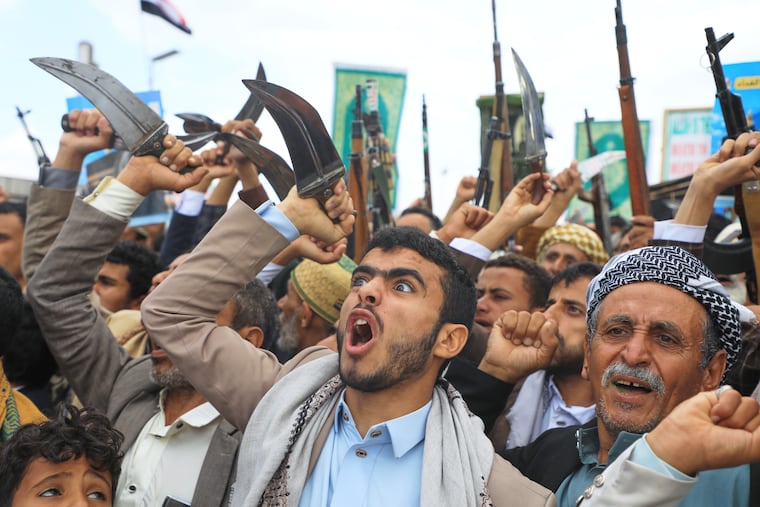
The Houthis have been fighting with Yemen’s internationally recognized government, which is backed by Saudi Arabia, since 2014. The violence slowed after a truce took effect in 2022, but the group waded into the widening war in the Middle East this summer by declaring a blockade on Saudi shipping in the Red Sea and attacking Saudi vessels.
Amid the fighting, the Houthis captured critical areas near the Bab el-Mandeb Strait — a major choke point along the Red Sea — threatening to unsettle global energy markets already reeling from the U.S.-Israeli war against Iran.
Current and former U.S. diplomats and commanders who served in the Middle East expressed skepticism that a limited U.S. bombing campaign would compel the Houthis, who withstood nearly eight weeks of U.S. bombardment last year, to negotiate and drop their most hard-line demands.
The officials also voiced doubts about the efficacy of supporting a dysfunctional Yemeni force that has melted away at the first major contact with the Houthis in recent weeks.
“The anti-Houthi coalition is really a Frankenstein of all the leftover parts in Yemen that aren’t the Houthis,” Gregory Johnsen, a nonresident fellow at the Arab Gulf States Institute in Washington, said about the Yemeni ground force that the air campaign is supposed to be supporting. “The disparate Yemeni groups have vastly different and, in some cases, diametrically opposed goals for what they want in Yemen, so they spend more time fighting one another than they do the Houthis.”
In the spring of 2025, the U.S. military bombed the Houthis for more than 50 days to restore freedom of navigation in the Red Sea and to stop the group’s attacks on commercial and U.S. naval shipping vessels.
During that campaign, U.S. Central Command struck more than 1,000 targets, including radar systems, air defenses, ballistic missile sites, drone launch areas and a drone production hub near Sanaa, the Yemeni capital.
The Houthis fought back and shot down several American drones, and they continued to fire at naval ships in the Red Sea, including a U.S. aircraft carrier.
The U.S. strikes burned through weapons and munitions at a rate of about $1 billion in the first month alone. During the campaign, two $67 million F/A-18 Super Hornets tasked with conducting strikes against the Houthis accidentally tumbled off America’s flagship aircraft carrier into the sea.
Less than two months into that campaign, Trump abruptly announced a ceasefire with the Houthis, proclaiming that they “gave us their word that they wouldn’t be shooting at ships anymore, and we honor that.”
The Houthis stopped firing at American ships. But that would probably change if the United States were to restart an air campaign, one official said. The official also warned that, with the Strait of Hormuz still unstable since the war against Iran started, the world might soon be dealing with further disruptions in petroleum and gas transit routes in the Bab el-Mandeb.
Since last year’s ceasefire, the Houthis have reconstituted much of their capabilities and are even using artificial intelligence to develop and engineer new types of missiles.
The current and former officials said that defeating the Houthis would be difficult, even with the U.S. military helping the Saudis.
This article originally appeared in The New York Times.