Now that the city’s office of arts and culture is permanent, arts leaders have one question: where is the money?
While it's "amazing" to have this office, "the bottom line is funding," said a city arts leader.
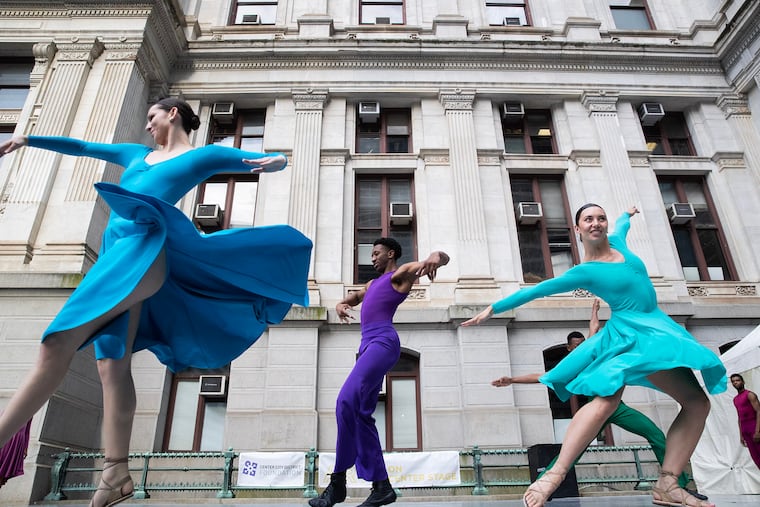
With the passage of a ballot question in Tuesday’s election, Philadelphia’s office of arts and culture is now enshrined in the city charter — a long-sought move that left arts leaders this week feeling elated.
“We achieved a major milestone,” said Greater Philadelphia Cultural Alliance president and CEO Patrcia Wilson Aden.
“Historical” and “momentous” is how Gabriela Sanchez, executive director of the Philadelphia Cultural Fund, described it.
The ballot measure — designed to shield the long-established arts and culture office from any city administration that might seek to eliminate the agency — was approved by about 84% of Philadelphia voters.
But even boosters of the new measure like Aden and Sanchez are under no illusions that the elevation of the arts and culture chief to the mayor’s cabinet will automatically translate into more public money for the sector.
Sanchez’s organization, for instance, recently had its funding from the city reduced. Instead of the $5 million it received in fiscal year 2026, it will get only $3.5 million in the fiscal year of 2027, forcing it to cut the number of grants it gives citywide.
The office was established in 1986 by Mayor Wilson Goode. It was eliminated during a budget crunch in 2004 by Mayor John F. Street and folded into the Commerce Dept., and then resurrected in 2008 by Mayor Michael A. Nutter.
More recently, in 2020, Mayor Jim Kenney proposed eliminating the office. It was kept, with an adjusted structure.
“Every administration has their values, and so it’s contingent on who is the mayor, who is the City Council president, who are the councilpeople,” said Sanchez. “It’s very different, and different administrations’ positions on arts and culture have varied over the years.”
Mayor Cherelle L. Parker backed Tuesday’s measure, and released a social media statement thanking Philadelphians for approving it.
“Just like clean drinking water, safe roads, and great schools, the arts are an essential part of our civic infrastructure. They give us room to dream, create, and imagine what’s possible,” the statement read.
Even though the new ballot measure will put the city’s cultural czar or czarina at the table alongside other cabinet members, that “cannot predict how much any mayor in the future might lean on, embrace, or recognize the input of the chief cultural officer,” said Aden.
The city is providing nearly $32.5 million to arts and culture in fiscal year 2027, according to a list provided to The Inquirer by the mayor’s office in June — funding that ranges from the payment of utility bills at various facilities to millions for major projects.
The question of funding is especially urgent now, as many groups continue to operate with lower post-pandemic attendance, and with the fundraising climate as competitive as it has ever been.
“We’re at a critical inflection point,” said Aden. “Yes, we have seen significant achievements” — such as the Philadelphia Orchestra and Ensemble Arts’s recent completion of a $344 million fundraising effort. “We applaud that. But at the same time, we realize that we continue to experience the crises that can be symbolized by the closing of the Academy of Natural Sciences museum. The sector continues to be fragile, and what we are seeking is stability, sustainability, so that the [arts and culture] community can realize its full potential to contribute to the city of Philadelphia.”
Isaiah Thomas, the City Councilmember who, with support from the mayor, sponsored the legislation putting the arts office question on the ballot, said the change was important because “the creative economy is a permanent part of the DNA of Philadelphia.”
Stacy Maria Dutton, executive director of the Lantern Theater Company, called it an “unalloyed positive” that the ballot question passed, and “a fitting tribute to the esteem in which our current chief cultural officer, Val Gay, is held. Philadelphians, including City Council members, increasingly understand the positive economic, social, and educational benefits of our vibrant arts and culture sector to our city.”
Dutton said she had “confidence that City Council will see the will of the people as confirmed by Tuesday’s referendum as an opportunity to increase resources to a sector that generates economic activity as efficiently as arts and culture do while also creating such positive community-based social and educational capital.”
Some leaders hope that making the office of arts and culture permanent is but one step in a continuum, with the release of the city’s cultural plan next and, perhaps, the realization someday of an elusive, decades-long dream — the establishment of a new, public source of financial support for arts and culture such as the kind surcharge or tax cities like Denver and Portland, Oreg. have.
Asked what kind of funding mechanism for arts and culture he might support, Thomas said he was “open to whatever it takes,” working with state, federal, and local partners on “how we can further invest in the arts.”
It’s “amazing” to have a permanent office of arts and culture, says Sanchez, but “progress would be a dedicated funding source. The bottom line is funding.”