Flights halted at airports across U.S. due to air traffic control communications problems, FAA says
The Federal Aviation Administration did not provide details about the reason.
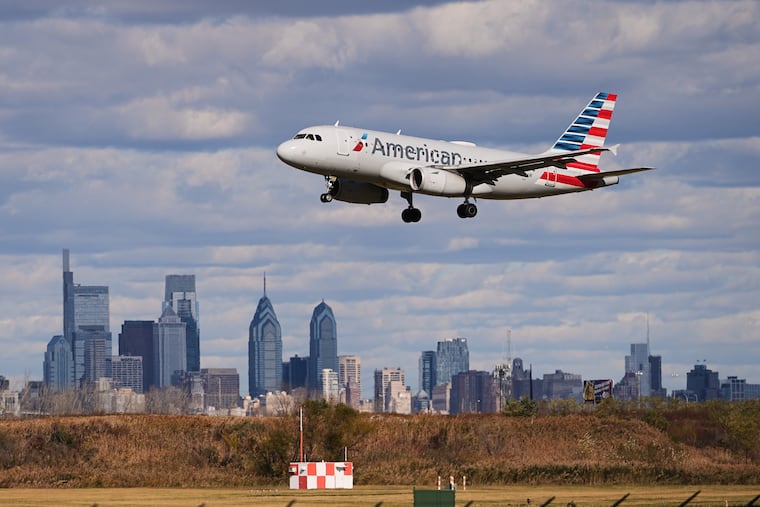
The Federal Aviation Administration grounded all flights nationwide Friday afternoon because of communications problems at regional air traffic control centers.
The FAA notice said the ground stop was being imposed “due to extraordinary circumstances and for reasons of safety.”
Transportation Secretary Sean Duffy said there is a communications issue affecting the 22 regional air traffic control centers that direct planes en route between airports nationwide. He said FAA technicians are investigating.
This is the first nationwide ground stop since January 2023, when a key FAA computer system malfunctioned. Before that the last time had been after the Sept. 11, 2001, attacks.
Secretary of Homeland Security Markwayne Mullin said there was no indication yet that “this was a nefarious attack against us. It’s just a telecommunications outage.”
“Everybody’s safe. There’s no reason to be concerned about your loved ones if they’re flying,” Mullin said.
There is no timeline for restarting flights. Mullin said investigators will look at whether there is any link to the FAA’s nationwide rollout of a new artificial intelligence system to help identify problems and reroute planes. But that system operates out of one location near Washington, D.C., and just sends recommendations to the air traffic control centers.
At Philadelphia International Airport’d Terminal A East security screening a TSA agent broke the news to travelers: “Be advised all flights are grounded until further notice.”
The many screens listing arrivals and departures did not reflect the news, listing some flights as delayed by as little as 40 minutes.
Sabrina Bonn, 40, and her boss stared at the boards with low charges on their phones.“It still says it’s on time,” said Bonn, looking at her flight to Louisville, grateful they weren’t already in the air. “We’re trying to find a charging station, plug up, and make a decision.”
Speaking with colleagues back home, Bonn and her boss tried to glean how likely it’d be for them to get a flight home, considering the inevitable residual delays once the ground stop is lifted.
“We might just drive,” she said.
Nearly a thousand miles stood between New Jerseyan Adit Baruah and his weekend.
The 35-year-old from Mount Royal has been in Minneapolis for a five-day work trip, which was scheduled to end Friday. Baruah was buzzing to get home to his family, as they have a “full weekend planned.”
But his return flight to Philadelphia International Airport — by way of a connection in Chicago — was thwarted by the ground stop.
“I’m going to kind of be scrambling to figure out what to do,” he said in a phone interview, presuming he’d have to spend another night in Minnesota. “It’s just uncertainty.”
Baruah said the travelers around him seemed frustrated, and hordes were leaving en masse after airport personnel announced the ground stop may last well into the night.
“Right now, we’re just kind of in the dark,” he said. “Nobody knows what’s happening.”
The government has been working to overhaul the outdated technology that air traffic controllers rely on since Congress approved $12.5 billion for the project last year. Miles of old copper wires have been replaced with fiber optic lines and old radio systems are gradually being replaced at airports across the country.
But much work remains. Duffy has said that another $30 billion will be needed to complete the work, and the White House has begun lobbying Congress to approve it.
The problem appeared similar to a regional air traffic control communication outage in September that snarled hundreds of flights across the Northeast, aviation safety expert Steve Arroyo said, except this time on a nationwide scale. It may be linked to the outdated technology used by air traffic controllers.
“If you don’t have that ability, whether it’s because the old wires that they have are just run down or for whatever reason, you’ve got to stop airplanes on the ground,” said Arroyo, who is a former United Airlines pilot. “And not put them in the air where you’re going to risk not being able to communicate with them.”
Friday’s ground stop was different than the one after Sept. 11 because planes were not being told to land immediately and pilots likely were able to communicate with ground controllers at airports, Arroyo said.
Staff writers Ximena Conde and Maggie Prosser contributed to this article.