‘Alligator Alcatraz’ used small cages as ‘calming areas,’ report says
Inspectors found the Florida facility did not comply with a variety of national detention standards related to medical care, food service, personal hygiene, and recreation.
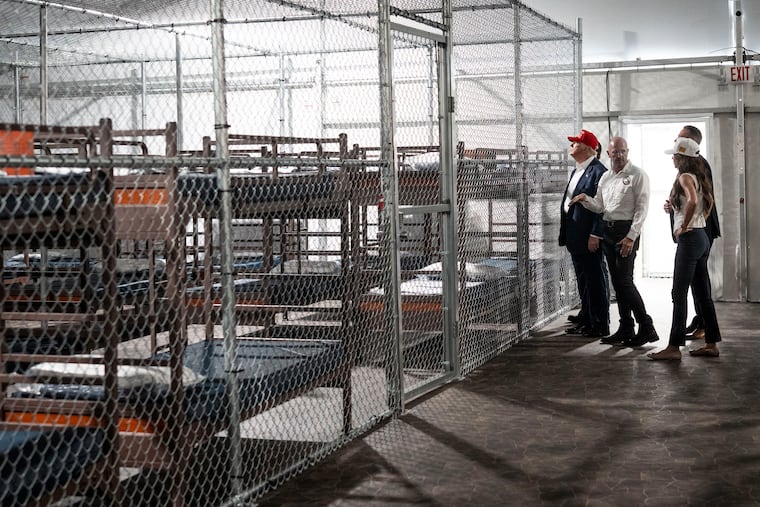
WASHINGTON — A state-run immigration detention center in the Florida Everglades failed to comply with a host of federal detention standards, creating cramped conditions and confining migrants in “small metal enclosures,” according to a new report by the Department of Homeland Security’s independent watchdog.
The report said the use of the enclosures was unprecedented among facilities the watchdog, the department’s Office of Inspector General, has previously inspected and presented “significant risks” to detainees’ health and safety. It focused on a high-profile facility known as Alligator Alcatraz, which came under intense scrutiny before it closed this summer.
The report raised further questions about a facility that became synonymous with the Trump administration’s harsh treatment of immigration detainees. President Donald Trump had joked that the location was in such a remote area that detainees would have to learn “how to run away from an alligator.” It was shuttered after criticism about conditions and cost, and after enduring legal challenges.
Federal investigators found that the metal enclosures — each providing only about 18 square feet of floor space — were used as “calming areas,” where detainees were held for periods ranging from several minutes to nearly two hours. Although facility staff said detainees asked to spend time in the enclosures, federal investigators found at least one instance in which the enclosures were used to discipline a detainee who “failed to comply with a lawful command.”
“The use of such restrictive spaces is highly unconventional and does not align with standards for humane treatment,” the report said.
The Department of Homeland Security did not immediately respond to a request for comment. The office of Gov. Ron DeSantis of Florida also did not immediately respond to a request for comment. Neither did the Florida Division of Emergency Management, which operated the facility before it closed.
Investigators found that the facility complied with intake and use-of-force standards, but it did not comply with a variety of national detention standards related to medical care, food service, personal hygiene, and recreation.
The report said the facility’s staff failed to provide detainees with sufficient living space. National standards require detainees to be given at least 75 square feet of floor space per person. But at maximum capacity, the housing units at the facility only provided 28 square feet per detainee, according to the report.
In July 2025, Florida quickly erected the detention center on a training airport in a rural area between Miami and Naples, championing the facility as part of the state’s efforts to assist Trump’s crackdown on immigration. They even erected an “Alligator Alcatraz” sign on a road to the facility, which critics denounced as cruel.
The facility had cost state officials more than $1 million per day to operate, including for trucking in water and wastewater disposal. Florida officials closed the facility this summer, citing impending hurricane season — even though detainees spent the 2025 season at Alligator Alcatraz.
This article originally appeared in the New York Times.