Former Pa. State Police trooper sentenced to prison for possessing child porn, using AI to make deepfake pornography
Stephen Kamnik created thousands of images of women, including his co-workers and strangers he met while working as a state police corporal.
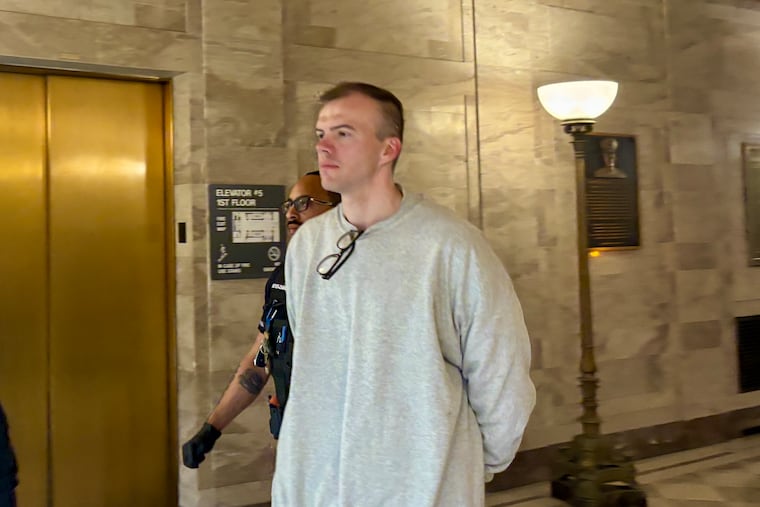
Stephen Kamnik not only traumatized two dozen women by creating deepfake pornography of them, he also tarnished the reputation of the entire Pennsylvania State Police force, a Montgomery County judge said Monday.
“What I find most troubling is that you were the police, you were a state trooper. People looked at you to keep them safe,” Judge Todd Eisenberg told Kamnik, a former corporal stationed at the Skippack barracks. “People need to be able to trust police. You used your job to find people.”
Eisenberg called Kamnik and his thousands of pornographic images, some depicting a 12-year-old girl, “extremely troubling,” and sentenced him to five to 10 years in state prison.
The judge also ruled that Kamnik, 40, is a sexually violent predator and will have to register as a sex offender for the rest of his life. He is also barred from working in law enforcement, security or IT.
In April, Kamnik, 40, pleaded guilty to sexual abuse of children, unlawful use of a computer, official oppression, and related crimes for using AI to create the pornographic images of his coworkers, as well as women he encountered while working as a state trooper.
He generated the pornography through photos and videos he recorded without the victims’ consent, as well as photos from official state databases he had access to, prosecutors said Monday.
Investigators also found a cache of child pornography amid the thousands of images he had created, a collection that prosecutors say he attempted to delete portions of after he was caught.
Kamnik, of Havertown, apologized for his actions in a tearful statement, saying he had lost his career, his wife, and his children.
“I took all I had for granted, and I have no one to blame but myself,” Kamnik said.
His attorney, Fortunato “Fred” Perri Jr., asked the judge for leniency, noting that Kamnik had accepted responsibility from the outset of the case: His plea spared the victims from the embarrassment and trauma of a trial, he said.
“We’ve got two options here. Treat him like someone who can never be fixed and warehouse him somewhere,” Perri said, “or give him a long tail of supervision that would leave him available to have the treatment necessary to fix what’s going on in there.”
But Deputy Attorney General Kimberly Moraski said protecting the public from Kamnik required keeping him in custody.
“He knew the difference between right and wrong, and he chose to do wrong,” she said. “This isn’t a man who just has some urges that can be fixed. He isn’t living a double life. He’s a criminal with bouts of normalcy.”