North Korea launches 2 ballistic missiles toward the sea and dials up pressure on the U.S.
Earlier this year, Kim Jong Un said he could return to talks if the U.S. drops its “hostile policy” against his country and respects what he calls the North’s status as a nuclear state.
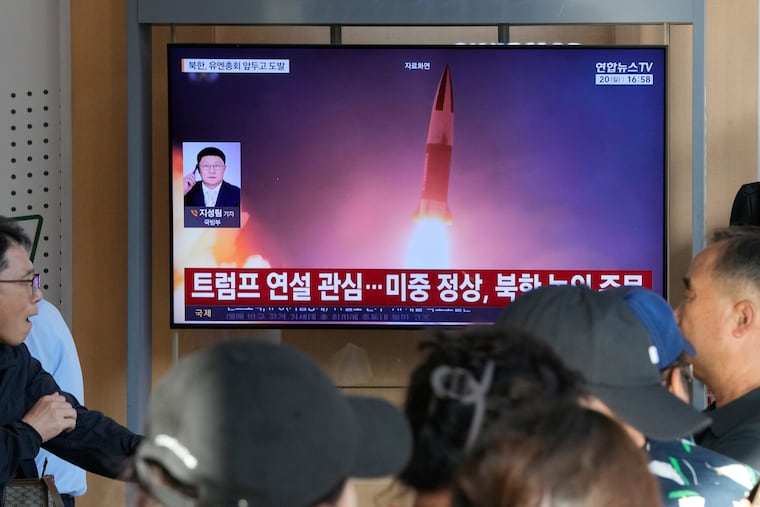
SEOUL, South Korea — North Korea launched two short-range ballistic missiles toward the sea on Sunday, South Korea’s military said, days after the North threatened to bolster its nuclear deterrent capabilities and respond to what it called U.S. hostilities.
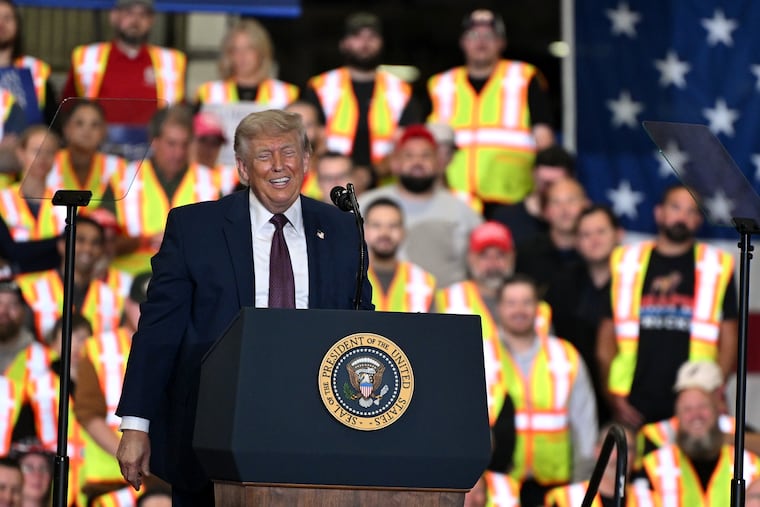
The launches were the latest in a series of weapons demonstrations by North Korea even after U.S. President Donald Trump scaled back a joint military exercise with South Korea last month in an apparent effort to revive diplomacy with the North’s leader, Kim Jong Un.
The two missile launches — about three hours apart — were conducted from North Korea’s eastern coastal Wonsan area. The first missile flew about 280 miles while the second one flew more than 370 miles, both toward the North’s eastern waters, South Korea’s military said.
The missiles eventually ended up in the sea. South Korea’s presidential office urged North Korea to immediately halt ballistic missile launches that are banned by U.N. Security Council resolutions. The South’s military said it maintains readiness to repel any provocations by the North under a solid alliance with the United States.
Japan’s Defense Ministry said it detected a suspected North Korean missile earlier Sunday but that the weapon did not land in its territorial waters.
North Korea escalates pressure on U.S.
Kim’s sister and senior official, Kim Yo Jong, earlier shrugged off Trump’s overture, saying that shortening the drill wouldn’t change its “provocative, aggressive nature.” North Korea’s military later launched about 10 short-range ballistic missiles toward the sea, apparently following through with a previous threat to respond to the U.S.-South Korean drill.
On Friday, Kim’s sister slammed another recent U.S.-led multilateral maritime exercise in the region as a “frantic military move” by the Americans meant to prolong their hegemony in the Asia-Pacific area. The “Pacific Vanguard” exercise brought together the U.S., South Korea, Japan, Australia, New Zealand, and Canada.
She claimed that “regular U.S.-led war rehearsals” are the main source of worsening tensions in the Korean Peninsula and the region.
“Our will to defend our sovereignty will be expressed in clearer action and there will be never ever change in the course of intensifying the nuclear war deterrence,” she said.
Earlier this month, North Korea conducted what it called a joint live-fire drill involving missiles, artillery, and drones, a day after the United States, South Korea, and Japan wrapped their five-day trilateral military drill that North Korea described as a provocation. North Korea said its drill included firing different types of weapons simultaneously, likely aiming at developing the ability to overwhelm South Korean and U.S. air defenses.
Chances of a swift resumption of U.S.-North Korea talks are unclear
Kim Jong Un has been focusing on expanding his nuclear arsenal after his earlier high-stakes diplomacy with Trump collapsed in 2019.
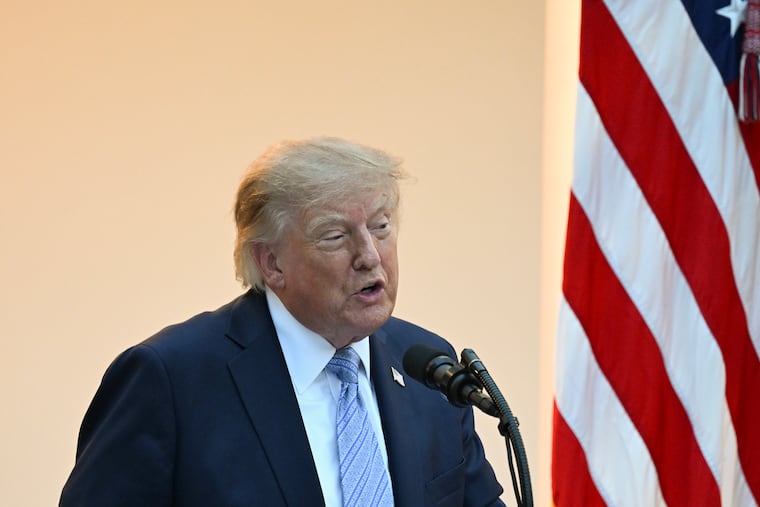
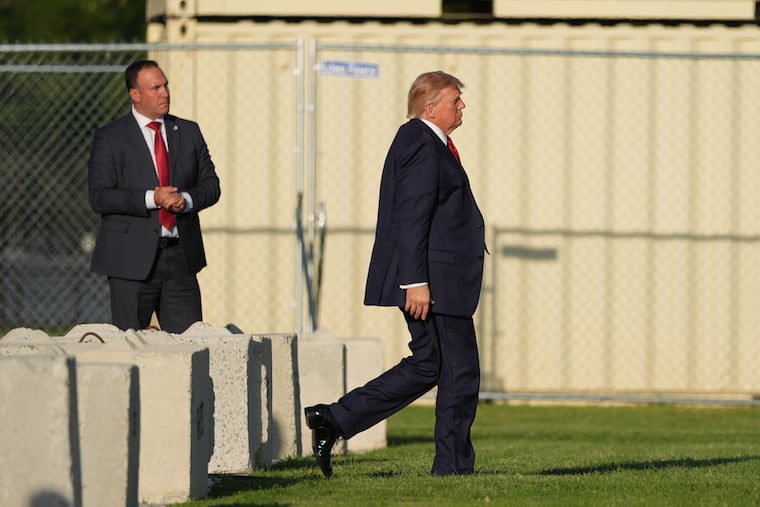
When Trump ordered the Pentagon to “substantially reduce” the annual Ulchi Freedom Shield exercise with South Korea, he cited what he called a good relationship with Kim, who has called such drills invasion rehearsals.
Emboldened by his advancing nuclear arsenal and deepening ties with Russia and China, experts say, Kim likely thinks he now has greater leverage in possible fresh diplomacy with Trump. Earlier this year, Kim said he could return to talks if the U.S. drops its “hostile policy” against his country and respects what he calls the North’s status as a nuclear state.
South Korean President Lee Jae Myung, a liberal who advocates improved ties with the North, said on Friday that a resumption of U.S.-North Korea talks would be “an important starting point” toward boosting chances for peace on the Korean Peninsula.
“What is clear is that President Trump wants dialogue and I’ve also been encouraging President Trump to seek dialogue” with Kim, Lee told reporters.