The controversial head of West Philly’s Mariposa Food Co-op is out. Can new leadership turn the struggling store around?
With a past leader of Weavers Way and Philabundance at the helm — on an interim basis — Mariposa looks to make a comeback.
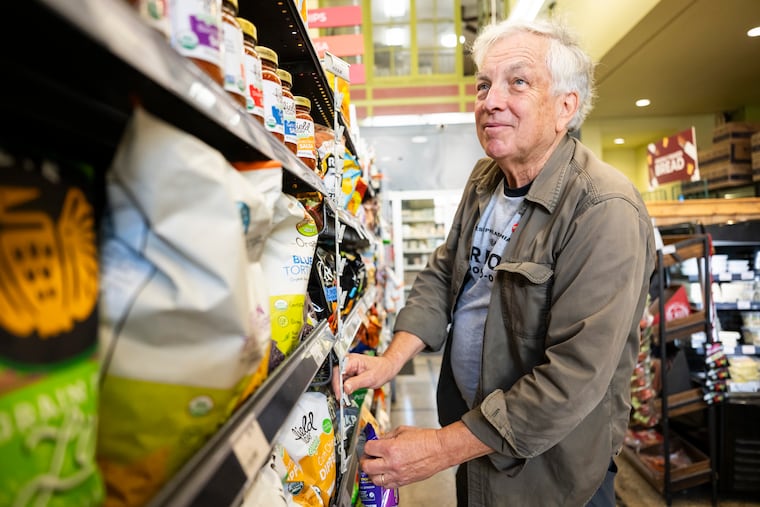
With more than 3,000 member-owners and a 55-year track record, the Mariposa Food Co-op looms large in West Philadelphia. But in recent years, many residents felt that it had lost its way — both financially and spiritually.
So when the co-op board announced late last month that its longtime controversial head was out, effective immediately, the news sped through the neighborhood. “Co-op executive officer” and general manager Aj Hess had managed the co-op since 2016, despite repeated attempts by volunteer board members and workers to oust them.
On social media, some neighbors rejoiced as if a despot had finally been removed from the throne. “I want to dance in the streets,” one wrote.
“It’s weird that someone who just basically ran a grocery store has so much ill will built up in the community that people are celebrating,” said Will Inglis, a local who was, himself, celebrating. Inglis worked at the co-op as an overnight stocker and helped organize a union there in 2022. He left in 2023 and was subsequently banned for life from the store for accusing Hess of wage theft in a public meeting.
Hess declined to comment for this story.
Founded in 1971 as a buying club run by member consensus, the co-op inspires such fervor partly because it is owned by its neighbors. Anyone can buy a $200 stake in the cooperative and have a say in decision-making, although the general manager maintains wide latitude to run the store.
It is also the rare neighborhood institution that pitches itself as a meaningful alternative to some of the problems of our late-stage capitalist era. It is supposed to be a truly community-owned space, one that supports local farmers and food producers while offering neighbors healthy, affordable food. If there are profits, they flow to member-owners as dividends.
Yet in recent years, Mariposa seemed to drift from its ideals. Workers described a culture of vindictiveness, favoritism, and retaliation under Hess’ management, and a workplace teeming with surveillance cameras. Some members complained of unfair board elections that effectively kept Hess in charge.
“This is not what a neighborhood co-op is supposed to be,” Inglis said.
On a practical level, shelves were often bare, making it hard for even those devoted to Mariposa’s values to regularly grocery shop there. Sales tumbled, reflecting the resulting loss in customer traffic.
Now that Hess is gone, the question is whether Mariposa can return to its origins — and remake itself as the thriving co-op it once was.
Losing money and morale
Hayley Tintle, a West Philly resident and senior budget analyst at Penn, ran for the Mariposa board in June of this year because she wanted to understand what had happened to the grocery store.
The complaints she heard after she was elected as a board member were similar to those she had as a customer: The shelves were barren, the store wasn’t clean, there were missing staples. Staff turnover was noticeably high.
“It just felt kind of hard to shop there,” Tintle said. “It didn’t have the same vitality that it once did.“
Financially, the co-op was struggling. Since 2019, sales had plummeted by about 40%, from $7 million to $4 million, according to financial records The Inquirer reviewed. The amount of cash on hand — a figure that represents how long the business could survive if it stopped generating any income — dropped from seven weeks in 2025 to 4 weeks this year. Membership had plateaued around 3,700 people.
At the same time, worker unrest had repeatedly spilled into public view. In both 2018 and 2023, workers submitted statements of no confidence in Hess to the board, pointing to “high staff turnover, abysmal staff morale, inefficient store functioning, and financial risks incurred by both the co-op itself as well as our member-owners.”
After staff won its first union contract in 2022, some told The Inquirer their hours were cut in retaliation.
Hess, who had worked in cooperatives for more than 20 years, largely dismissed the staff concerns and told Grid Magazine last year that the pandemic, as well as “negative press,” had hurt Mariposa sales, but that “overall we are still doing well.”
Over the years, community members had tried to shake up the co-op’s board and oust Hess. But it had never worked, said Kitty Jauregui, who was elected to the Mariposa board in 2024 as part of a reformist slate. Within a year she was kicked off by her fellow board members for sharing an anti-Hess Reddit post, she said, and her membership was terminated.
The whole experience left her with such a sour taste that she avoids walking on the same side of the street as Mariposa these days. But looking back, Jauregui blames more than just Hess. The annual membership meetings were perpetually under-attended.
“The whole community, we all let it happen,” she said. “When only a handful show up, I think we kind of got what we deserved.”
Fresh perspective, old hand
Tintle and the board declined to comment on the nature of the separation with Hess, citing confidential personnel matters.
But in late September, Tintle reached out to Glenn Bergman, a veteran of Philadelphia co-ops, to ask him to temporarily take over the store. When Bergman became general manager of Weavers Way in 2004, that co-op was facing its own financial hardships; when he left 11 years later — to lead Philabundance as executive director — the co-op was an unqualified success. Today, Weavers Way has four grocery stores in Northwest Philly and Ambler.
Bergman, who used to live around the corner from Mariposa in the 1980s and has a soft spot for do-gooder businesses facing trouble, agreed to come out of retirement for three months to serve as interim manager. The board is now beginning its search for a permanent general manager.
“This place is too good to let it go. It’s sacred ground,” said Bergman, 75, on his second day. He was wearing a small red co-op pin buttoned to his corduroy shirt, with two pairs of reading glasses in his front pocket.
He was already full of ideas for how to revitalize Mariposa. More staff, more produce. The calendar should be full of music and classes, the place needs its own newsletter. He wants to revive the working-member program, in which members work volunteer shifts in exchange for discounts. In the first week, he planned a field trip for Mariposa staff to visit the Philadelphia Wholesale Produce Market, as well as a meeting between Weavers Way and Mariposa staff to trade ideas. Maybe the front cashier table could become a bulk olive oil station.
“I feel like it’s a new beginning,” said Bull Gervasi, a former Mariposa general manager who lives across the street and was instrumental in moving it to its current location in 2012.
In between pulling products forward on the shelves and ringing people up, Bergman greeted every customer who entered.
Talking to people was just a start, and there would be a long journey ahead. There were no bananas, Bergman noted. Refrigerator bins for dark ground turkey and white ground turkey were cleared out.
“It’s going to take a little time, but the plan is to have more produce — a lot more produce — more staff,” he told a customer.
“And are you planning to get quart-sized half-and-half?” she asked. He wrote down the idea on a little piece of paper and tucked it in his pocket. (A few days later, the requested half-and-half was stocked).
He was sympathetic to residents who were upset about what had happened at Mariposa and he had already reached out on Facebook to those posting bad experiences, asking them to chat. (He quickly unbanned Inglis, the former union organizer.)
“It’s their money, it’s their investment, it’s their community store,” he said. “They should be upset.”
“That’s done,” he added about the controversies of the past. “I said to the staff, ‘We just gotta do good things for the people. We have to be trying really hard and they have to see us trying hard.’”
Local apples for a local store
One of the first problems to address was the apples.
A longtime member-owner who lives nearby had popped in to Mariposa buy apples. But, as she reported to Bergman, there were no local apples available, despite it being the middle of apple season in one of the states that grows the most apples in the country.
Bergman examined the varieties on offer: Pink Lady and Gala and Honeycrisp, shipped from thousands of miles away and selling for upward of $2.99 per pound. (Eastern apples often have to be sprayed with fungicide, so they’re technically not organic, he noted — but they’re straight off the tree and taste much better.)
“I don’t want any more apples coming from California or Washington state,” he told Mariposa’s purchasing manager. “I want only local apples here. And I want about 10 varieties.”
Two days later, he sent a photo from Mariposa’s produce section. The half-filled cardboard box of pumpkins that used to sit at the front of the store was gone. In its place were boxes upon boxes of green and red and yellow-flecked and golden apples, all grown at Beechwood Orchards in Biglerville, Adams County.
Mariposa was selling them for $1.99 per pound — with a special 15% discount for member-owners.
“This,” Bergman wrote, “is fun.”