Smithsonian head responds to overhaul plan that was spied on train
"The Smithsonian is an independent institution with the responsibility and privilege to present accurate information,” Secretary Lonnie Bunch wrote.
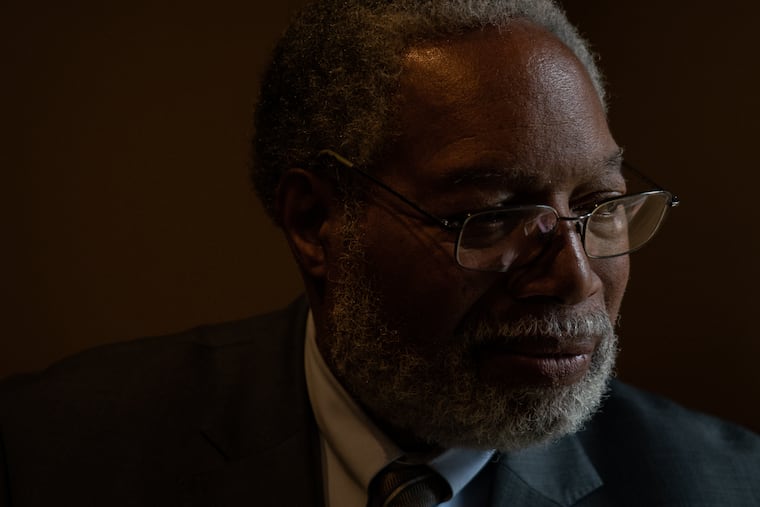
The head of the Smithsonian Institution vowed to preserve its independence a day after photographs surfaced purporting to show a plan to overhaul the institution and fire more than a dozen employees, most of them at one of President Donald Trump’s frequent targets: the National Museum of American History.
In a message to staff Tuesday, Smithsonian Secretary Lonnie G. Bunch III addressed the photographs, which show a man working on a document titled “The Smithsonian Institution Renewal Plan” while riding the Metro. The plan calls for rewriting the museum system’s guidelines for developing exhibitions, reviewing its financial relationships with “woke third parties” such as the American Alliance of Museums, and ousting several senior officials, including American History Museum Director Anthea Hartig.
The Washington Post obtained the photographs, which appear to identify the author by the initials S.B., but has not independently confirmed his identity. Neither the White House nor staff members on its Domestic Policy Council have responded to requests for comment.
“The intended use of this list is unclear. What remains clear is that the Smithsonian is an independent institution with the responsibility and privilege to present accurate information to millions of visitors through our scholarship and educational programs,” Bunch wrote in the message obtained by the Post. “Our independence is something that I have emphasized throughout my tenure as Secretary.”
The photographs, first published Monday by ProPublica, show a document with language and subject matter similar to that of a July report by the Domestic Policy Council, which harshly criticized the institution and its National Museum of American History.
While much of the administration’s public criticism has centered on the content of exhibitions, the document lays out proposed changes to virtually every facet of the institution’s work — from who runs its museums to how it lends artifacts, awards grants, and develops educational materials.
The photographs show a man in a gray plaid suit working on a laptop aboard a Metro train. The computer’s clock indicates it was the morning of Oct. 29. ProPublica identified the man as an associate policy adviser on the White House Domestic Policy Council.
It is not clear whether or how seriously administration officials have weighed any of the proposals. (The president does not have direct control over the Smithsonian, which is independently managed by its Board of Regents.)
The document calls for replacing Kevin Gover, the Smithsonian’s undersecretary for museums and culture, and firing the director of its science education center. It also proposes abolishing the Smithsonian’s Office of Equal Opportunity and dismissing its director.
Among those marked for dismissal at the American History Museum are curators who specialize in political history, music, and entertainment.
The plan also calls for ending the nationwide tour of “The Bias Inside Us,” an exhibition exploring the science of bias and its consequences, and establishing new guidelines for how Smithsonian museums interpret their collections.
Some of the proposals echo demands Trump has already made publicly, including erecting a towering statue of George Washington outside the American History Museum.
The document follows months of intense scrutiny of the museum. On July 4, the Domestic Policy Council released a roughly 160-page report titled “Saving America’s Story,” accusing Hartig and her colleagues of subordinating the museum’s historical mission to political activism. House Republicans subsequently grilled Hartig in two congressional hearings.
Bunch pushed back against the report in a July email to Smithsonian employees, telling them that while there would always be room for improvement, it was “not a fair characterization of the work and totality of the National Museum of American History.”
Unlike the Kennedy Center, whose board Trump remade within weeks of returning to office, the Smithsonian is governed by a Board of Regents whose members the president cannot unilaterally replace. The regents affirmed Bunch’s authority over personnel decisions in June 2025 after Trump announced he had fired National Portrait Gallery Director Kim Sajet. She resigned days later.
But the Smithsonian relies on the federal government for the majority of its funding, and administration officials have repeatedly threatened to cut off financial and other support.
The latest revelations come as the regents prepare to replace Bunch, who announced in September that he would retire by the end of the year. His departure presents the administration with an opportunity to exert greater influence over an institution that has historically operated independently of the White House.
Bunch, in an interview with the Post in September, said his decision to retire was unrelated to the administration’s pressure campaign. Asked what advice he would give his successor, Bunch said the job begins with one responsibility: “To protect the institution.”
He reiterated that message Tuesday in his message to staff.
“The Smithsonian will continue to be driven by scholarship, research, and reflection, free from outside influence and in service to the American people,” he said.