Lower Merion’s firefighters are asking for more funding as volunteer support dwindles and costs rise
Fire department officials say the additional funds will be used to hire a fourth full-time firefighter at each of Lower Merion’s six fire stations and bolster the department’s strained finances.
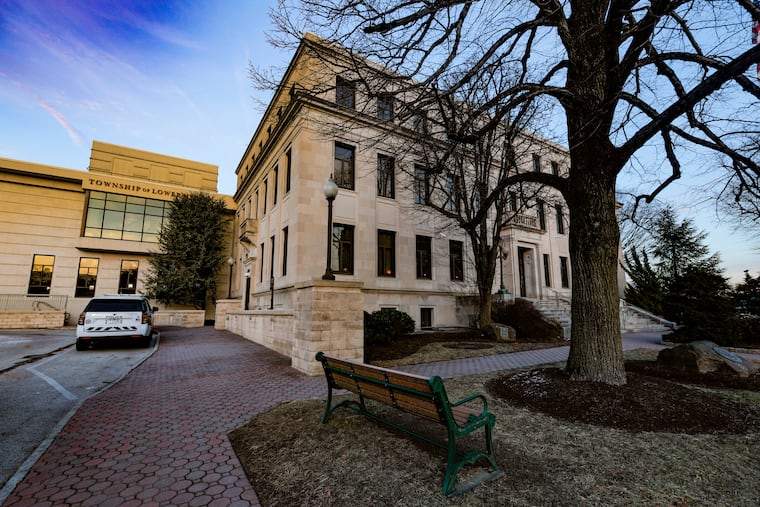
Lower Merion’s firefighters are asking the township to help bridge financial gaps as volunteer participation wanes and operating costs and calls for service rise.
Lower Merion Fire Department officials made their case before the board of commissioners on Wednesday night, arguing that the township’s typical financial contribution to the fire department will not be sufficient in 2027 as they respond to more calls with fewer volunteers, and as everything from health insurance to truck maintenance costs more than it once did.
As call volumes increase and volunteer participation dwindles, municipalities across Pennsylvania have leaned increasingly on paid staff.
The Lower Merion Fire Department is made up of seven independent fire companies: six in Lower Merion, which receive funding from the township, and one in Narberth. Each are staffed largely by volunteers and are supplemented with a handful of full-time personnel.
The fire department is asking the township for an additional $1.1 million in funding in 2027 to meet operational and personnel needs. The department’s request is on top of the nearly $2.5 million Lower Merion is already poised to allocate to the fire department next year. Fire department officials say the additional funds will be used to hire a fourth full-time firefighter at each of Lower Merion’s six fire stations and bolster the department’s finances as it strains to meet mounting operating costs.
Lower Merion’s 2026 budget projected net expenditures of $167 million.
Lower Merion’s fire companies are funded largely through contributions from the township, fundraising events, donations from residents, grants, and investment revenue. Since 2017, the township has approved modest annual funding increases for the fire department within the 2%-3% range.
“Our volunteer system is stressed right now,” Brooke McMullin, president of the Merion Fire Company, told commissioners.
» READ MORE: Volunteer firefighters in Pa. are battling faster-burning fires with a tenth of the staff they once had
Lower Merion’s volunteer firefighting apparatus is more than a century old. The Merion Fire Company was founded in 1890 by a group of citizens who rented a garage and borrowed horses to respond to incidents. In 1908, the volunteers raised funds to build a firehouse on Greenfield Avenue, where the Merion Fire Company still operates. By 1946, Lower Merion had a network of six volunteer fire departments, and Narberth had its own.
In the mid-1960s, it became apparent that volunteer fire departments were having difficulty responding to calls during the day, McMullin said, prompting the township to fund three paid firefighters for each department. Lower Merion’s firefighting system has operated that way ever since.
Now, a cascade of factors has made it more difficult for Lower Merion’s fire companies to respond to calls.
Volunteer firefighter numbers are dwindling, and existing volunteers have become increasingly unavailable to respond to calls during the workday.
At the same time, calls to Lower Merion’s fire companies increased 30% between 2017 and 2025.
Demand on township firefighters has risen in part due to the 2018 implementation of a mutual aid system that dispatches crews from multiple fire companies to incidents, a policy that allows Lower Merion to meet personnel standards set by the National Fire Protection Association but requires more manpower.
Coinciding with staffing challenges, the cost of everything from health insurance to fuel has also risen, said McMullin.
Truck maintenance costs alone have increased 136% from 2019 to 2026, according to data presented to commissioners at the meeting.
“It’s eating into our reserves and also forcing us to raise more money,” McMullin said.
While firefighting costs have risen 31% over the past six years, McMullin said, township funding has only gone up 17%.
Efforts to support volunteers have helped, officials said.
Some Lower Merion firehouses have set up remote work stations so volunteers can respond to calls more quickly during the work week. In Gladwyne, subsidized housing is offered to firefighters, many of whom wouldn’t otherwise be able to afford living in the expensive community.
Lower Merion Township offers a 100% property tax rebate for volunteer firefighters and ambulance personnel who meet a certain number of volunteer hours each year.
In making the case for bolstering Lower Merion’s volunteer department, McMullin pointed to Cherry Hill, a demographically comparable community to Lower Merion, which largely phased out volunteers and created a consolidated township fire district in 1994.
The Cherry Hill Fire District’s 2025 budget was $33 million. Lower Merion’s proposed 2027 budget, according to McMullin, is closer to $6 million.
Having a volunteer force supplemented by career firefighters is a “bargain that the citizens of Lower Merion Township are receiving,” he said.
Commissioner Daniel Bernheim at the meeting said asking volunteer firefighters to fundraise for their budget may be untenable.
“[Residents] don’t recognize that the backbone of our fire service are the volunteers, and we are asking the volunteers to volunteer more of their time to raise money so they can volunteer to save life and property. There’s something where that paradigm, back maybe in 1890, made sense [and] does not anymore,” Bernheim said.
Lower Merion is set to present its proposed 2027 budget on Wednesday and to adopt a budget on Dec. 16.

Inquirer Lower Merion
This suburban content is produced with support from the Leslie Miller and Richard Worley Foundation and The Lenfest Institute for Journalism. Editorial content is created independently of the project donors. Gifts to support The Inquirer’s high-impact journalism can be made at inquirer.com/donate. A list of Lenfest Institute donors can be found at lenfestinstitute.org/supporters.