Philly strike ends: Trash collection to resume next week; terms of new deal between city, union; some DC 33 members not thrilled
Garbage and recycling collection is set to resume Monday, Philadelphia Mayor Cherelle L. Parker announced Wednesday.
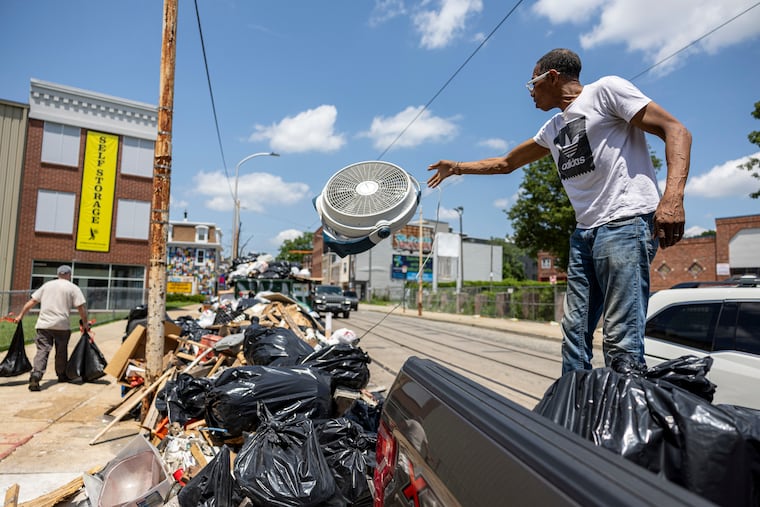
Trash collection will resume after Philadelphia and DC 33 union leaders agreed to a new three-year contract.
City pools and libraries will also reopen, and rec centers will return to their normal hours, though no announcements have been made. Here's what we know and don't know.
The impact of the DC 33 strike depended on where you live, forcing Philadelphians to get creative with their trash management.
Mayor Cherelle L. Parker turned to nonunion city workers and sanitation trainees to help with trash removal during the DC 33 strike.
Watch: Mayor Parker speaks following deal to end Philly strike
Philly trash collection to resume Monday
Philadelphia will resume regular trash collection on Monday, Mayor Cherelle L. Parker said during a news conference at City Hall Wednesday.
Until then, the city is directing residents to either hold onto their trash or take it to one of the six sanitation centers located throughout the city. The centers will be open from 6 a.m. to 10 p.m. this week and return to their regular schedule beginning Saturday.
The 60 temporary drop-off sites set up across the city will be removed.
Striking DC 33 workers might've lost more than they gained
The tentative agreement reached between District Council 33 municipal workers and the Parker administration includes an increase in wages of about $8,500 over the three-year contract.
But if the eight days of lost strike wages, totaling $1,458 for the average salary, are subtracted from the first year’s wages, then workers will earn less this year compared with the previous contract.
Additionally, over the life of the contract, workers would have made more under Parker's previous proposal than under the tentative agreement because of the lost eight days of pay.
'I started getting fruit flies'
Cindi Banner handed over a single bag of trash to back-at-work sanitation department worker Robert Wesley at the drop off site at 18th Street and Fitzwater Street Wednesday morning.
Banner said she was “holding out" because sanitation workers deserve to be paid more, but bad scents forced her hand.
"And then I started getting fruit flies, and my kitty litter started to smell," Banner said. "I heard it’s over, but I still don’t want it in my apartment, because who knows when it’s going to get picked up?"
When will Philly trash pickup resume and other strike questions
The city worker strike in Philadelphia — the first major city strike since 1986 — is over and the union employees are returning to work.
That’s about 9,000 trash collectors, 911 dispatchers, street pavers, library employees, and more resuming operations on Wednesday. So, does that mean you can return your library books? Or, perhaps the most pressing question being asked in Philly today: When will trash be picked up again?
DC 33 attorney acknowledges union leaders disappointed with final deal
Sam Spear, the lead attorney for AFSCME District Council 33, said union president Greg Boulware ended the strike because the laws for public sector employees make it difficult to carry out extended work stoppages before being ordered back to work by the courts.
“He’s very disappointed, but it’s a strike dynamic. You strike to try to get your maximum effectiveness,” Spear said in an interview. “The point of the strike is to create enough discomfort to get them to meet as many of the demands as we can get them to meet, but at some point, then the threat of the injunction kicks in.”
Philadelphia’s last major municipal strike in 1986 ended shortly after a judge ruled that sanitation employees had to return to work to prevent a public health crisis due to the build-up of trash. The maximum point of leverage, he said, is likely well before that point.
'The DC33 strike is over': City Council members react to deal
Philadelphia City Council President Kenyatta Johnson is “happy” that the strike is over.
“The strike by members of AFSCME District Council 33 is over,” Johnson said in a statement on X Wednesday morning. “Both sides came to a tentative agreement just after 4 a.m. today. While this deal ends the strike, the new contract won't become official until it's voted on by union membership. I am happy the strike is over.”
Last week, Johnson told reporters that “a strike isn’t good for anyone” and that his role during negotiations consisted of ensuring all parties continue having conversations and “urging both parties to stay at the table so we can get a deal done.” It’s unclear what role, if any, Johnson played in the contract deal struck early Wednesday morning.
'The strike is over, and nobody’s happy': Deal was tough for some DC 33 members to agree to
DC 33's new deal is for a three-year contract with 3% raises each year — close to Mayor Cherelle L. Parker’s demands throughout negotiations and far below the 5% annual increases union president Greg Boulware went on strike for.
The contract also includes the creation of a fifth step in the union pay scale, which will likely boost wages by approximately 2% for veteran DC 33 members.
The deal applies retroactively to July 1. Parker said her previous offer for a similar deal would cost the city $115 million over three years. The final version will likely come in slightly above that total.
Trash collection to resume as city, DC 33 workers agree on deal to end strike
Sorry, rats. The “Parker piles” are about to disappear.
Philadelphia’s first major city worker strike since 1986 lasted eight days and four hours before Mayor Cherelle L. Parker and Greg Boulware, president of the American Federation of State, County and Municipal Employees District Council 33, reached a deal for a new contract at about 4 a.m. Wednesday morning.
Dep Mayor Sinceré Harris and DC 33 prez Greg Boulware sign the agreement pic.twitter.com/pjYE6HFB9v
— Sean Walsh (@sbcmw) July 9, 2025
That means the union’s roughly 9,000 members — blue collar city employees such as trash collectors, street pavers, 911 dispatchers, and other front line workers — will return to work immediately.
The impact of the DC 33 strike depended on where you live
Franklinville resident Maria Garay had no idea how her groceries were going to fit in her fridge that was increasingly full of garbage.
Before Philadelphia’s municipal sanitation workers came to a deal with Mayor Cherelle L. Parker in the wee hours of Wednesday morning in their second week on strike, the 47-year-old was putting her food scraps in the freezer. She doesn’t have a caged, wrought-iron porch like some of her neighbors, which is where some started to pile their trash, or a car. But Garay refused to let food fester in the humidity and heat.
Even if she wanted to, she could not afford to pay someone to take her trash to the closest temporary dump site, more than half a mile away, so she neatly lined up her trash in the far corner of the abandoned lot next to her home.
This strike was much shorter than the worker stoppage in 1986
DC 33's strike was much short than their infamous work stoppage in July 1986, which lasted nearly three weeks.
Like this year's strike, that work stoppage kicked off July 1, and quickly resulted in mountains of trash piling up on city streets. After about 20 days, it resulted in roughly 45,000 tons of “stinking, maggot-laced garbage” sitting at neighborhood disposal sites, the Daily News and the New York Times reported nearly 40 years ago.
That buildup continued for weeks, until July 19, 1986, when trash collectors returned to work and began clearing tons of refuse at trash-transfer sites around the city. Since then, there has not been a major DC 33 work stoppage — until this week.