A very, very slow and final bon voyage for the SS United States along the Florida Panhandle
That sinking feeling took quite a bit longer than expected, but it finally submerged.

DESTIN, Fla. — The SS United States broke speed records crossing the Atlantic in its heyday. It did not break any records for what ended up being a very, very slow sink to the bottom of the Florida Panhandle.
It was a spectacle of a retirement full of 11th-hour dramas, including lawsuits and a longer-than-expected sinking process, worthy of a vessel used to a life of celebrity and notoriety.
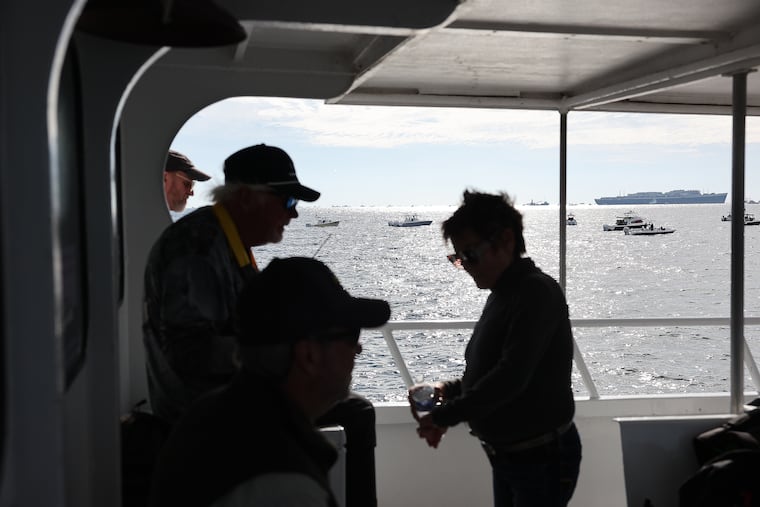
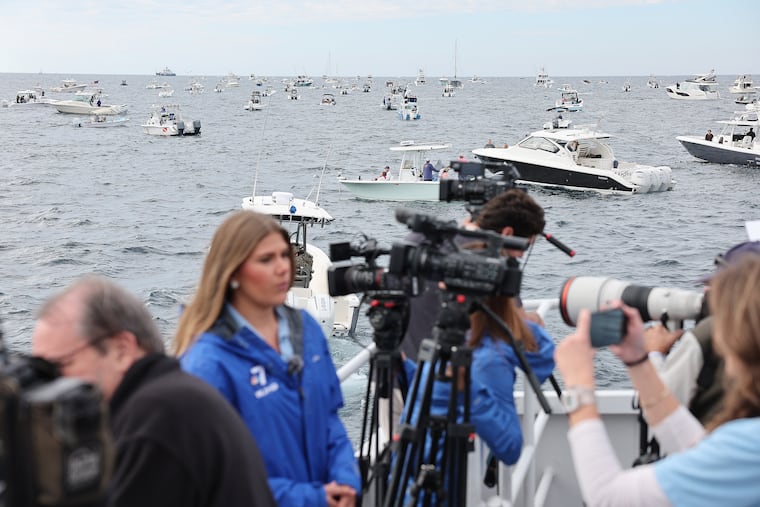
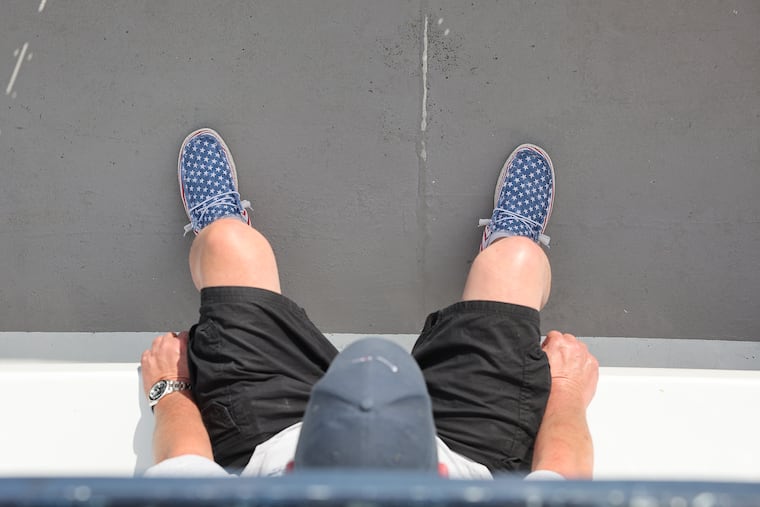
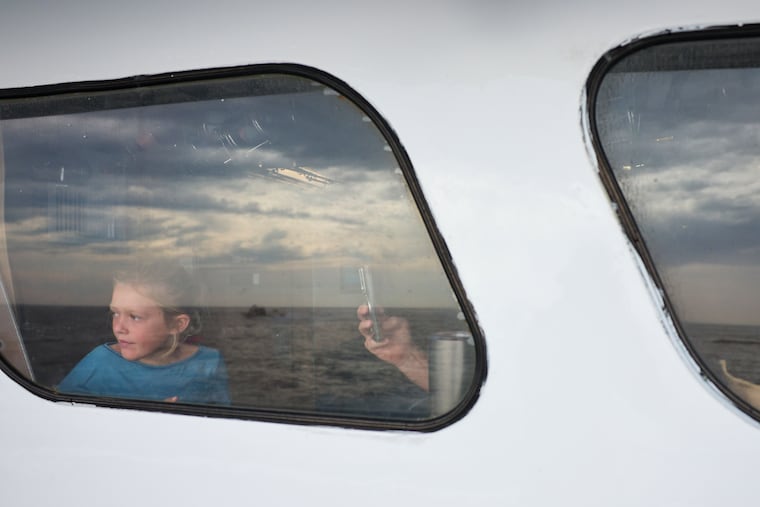
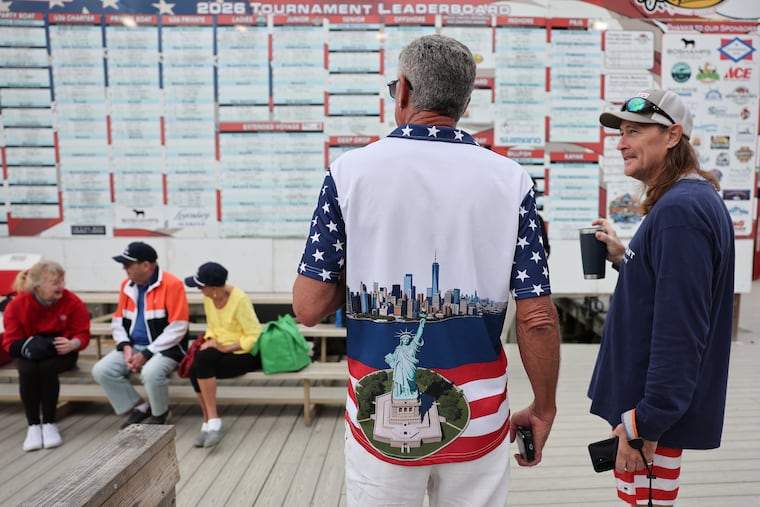
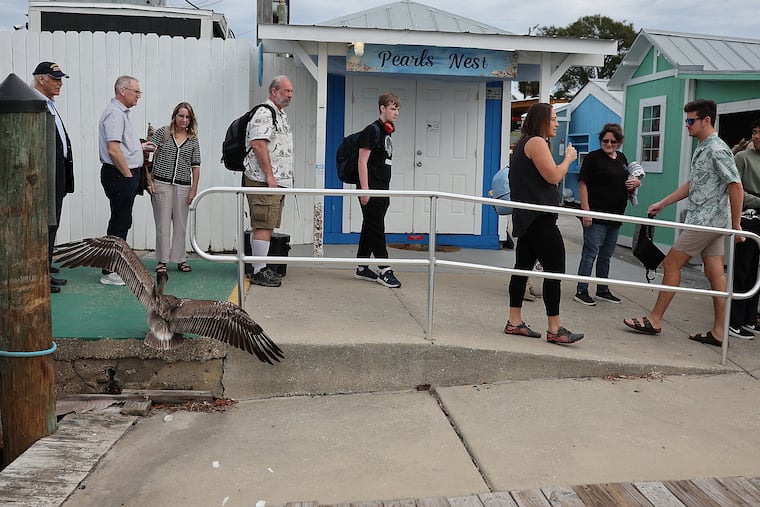
Hundreds of boats tried to get as close as the U.S. Coast Guard would let them, angling for a better view of the slow drop into the Gulf of Mexico, with some passengers coming from as far as California and Philadelphia.
At about 10 p.m. Philly time, the ocean liner finally submerged to take its place on the Gulf floor. The ocean liner’s final moments, scored by sweeping string music, had a cinematic feel as the water overtook one side of the vessel and then the rest.
“This is history,” said Panama City Beach resident PJ Hughes, knowing little else about what her day had in store aboard the Gulf Breeze and unknowingly foreshadowing the unexpected delays. “I’m just like a little puppy dog. We might be out there for about six hours, I don’t know.”
For many, the trip to sea was much longer than that.
The ocean liner had to undergo some last-minute prep when it was supposed to begin the controlled flooding. The sinking was then much slower than expected when it finally began, submerging inches by nightfall, not feet. It was not immediately clear when the process would end, said the Okaloosa County officials in charge. Many captains took the news as a sign to turn back, with floodlights doing little for those trying to see the vessel slowly dropping into the sea.
It was an anticlimactic return to shore as buzzes wore off and light sunburns set in.
The event had drawn media from across the country. Reporters descended on Destin to cover the once-unthinkable sinking of one of the last and fastest ocean liners the United States ever produced.
“It is very emotional,” said Susan Gibbs, granddaughter of the vessel’s designer, who desperately fought for redevelopment as the head of the SS United States Conservancy.
“It’s almost overwhelming. We tried for decades to save the ship, keep her afloat. But this is a poignant, poignant transition, and may she rest in peace.”
Gone were the days when the ship carried close to 8,000 quarts of ice cream and 500 pounds of caviar for guests looking to travel in luxury. A household name like Marilyn Monroe, Judy Garland, or Grace Kelly had not stepped aboard its decks in decades. And the SS United States, stripped of its furnishings and gutted, would not be considered a secret military weapon by anyone — it once could transport 14,000 troops.
The SS United States spent close to 30 years as a Philadelphia resident that locals loved or loved to hate. Stripped of its remaining interiors in the 1990s, its frame acquired the rusty patina of a shipwreck, deemed an eyesore by many, dubbed the Ikea boat because of its proximity to the Swedish big box store’s South Philadelphia location.
Various owners sank more than $40 million into buying, maintaining, and unsuccessfully reimagining the SS United States during its time in Philly. But they all eventually learned the gutting of the ocean liner only made redevelopment ambitions all the more difficult to pitch.
The SS United States could not move on its own and required extensive environmental remediation. Restoration was estimated to run to the tune of $400 million.
No one took the bait.
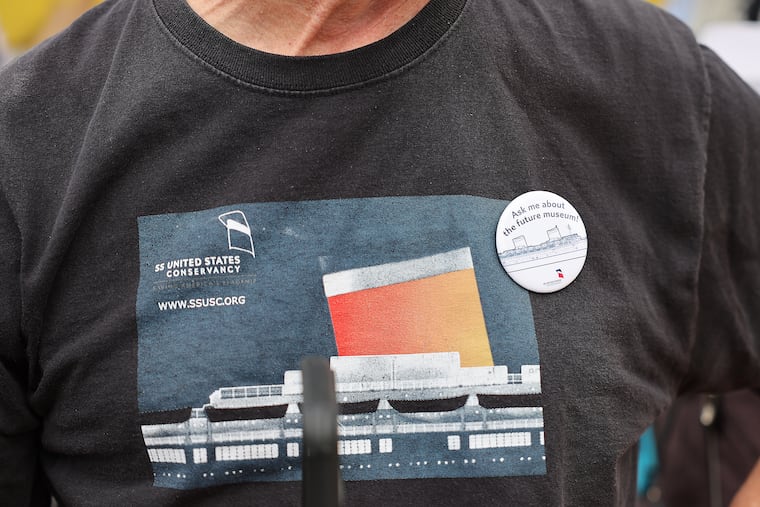
The conservancy took to selling its namesake for $1 million in 2024 as an alternative to sending it to the scrap heap. It is now focusing its advocacy efforts to fundraise and build a museum in Okaloosa County, Fla., that will feature more than 10,000 artifacts, including the first-class bar. The conservancy also has possession of the vessel’s two iconic, once red-and-white smokestacks.
Warren Jones is one of the conservancy members who is now directing his energy to building the museum.
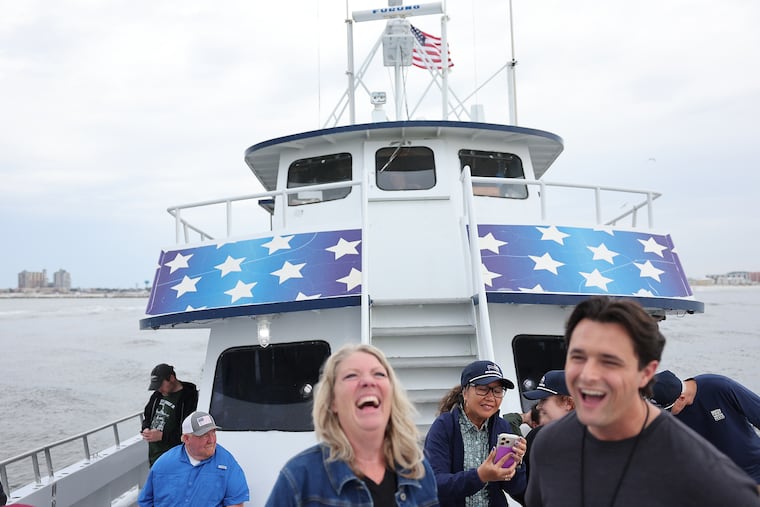
He noted the irony of waiting for the SS United States to sink aboard a boat named the American Spirit. Even so, he maintained the sinking was a rebirth better than the scrapyard or, worse, a purgatory on some pier — not unlike how the vessel existed in Philadelphia.
“That would be disrespectful,” he said, looking onto the vessel. “You know that would be what people would remember the ship as, and that’s not right.”
Onlookers like David Heath, 62, put it more bluntly.
“This is probably the best outcome rather than it being made into razor blades,” he joked.
Some of the most fervent critics of reefing the vessel also appeared resigned to the idea Wednesday. No protesters showed, as once suggested, and the final lawsuit to stop the sinking was dismissed Friday.

A fresh start
Okaloosa County jumped at the opportunity to sink the SS United States 22 nautical miles southwest of Destin-Fort Walton Beach. The area has undergone a bit of an artificial reef renaissance in the last decade under Alex Fogg, the county’s natural resources chief.
Unlike the Florida Keys or the Caribbean, Destin-Fort Walton’s shores do not have natural reefs.
“We rely on artificial reef habitat, things we intentionally deploy to be reef habitat for the fish to thrive, for people to have places to go fishing, and for places for people to go diving,” Fogg said earlier this year.
Okaloosa County has deployed hundreds of concrete structures and smaller ships in the last decade but by reefing the SS United States, the county aims to cement its place as a diving attraction.
“Divers are going to have that place completely swamped up for the first four or five years,” mused Jim Westbrook, captain of the American Spirit, a charter boat.
Westbrook welcomes what hosting the world’s largest artificial reef will mean for tourism, but as someone who would visit for fishing, he knows he will have stiff competition.
“I expect to maybe fish it in 2030,” he joked. “I’ll have to go out when it’s nasty. Otherwise, there’ll be 20 and 30 dive boats anchored up on it every day.”
The vessel is expected to draw divers of all abilities. Because the SS United States’ main deck is expected to hover about 60 feet underwater, it will be perfect for those starting out. Meanwhile the bottom is about 175 feet, ideal for the technical diver.
Local diving companies confirm people are already booking trips for this month. People have the all-clear to explore the gutted vessel as early as Thursday, weather permitting. Marine life will be limited in the first few weeks, limited to bait fish. But scientists expect groupers, snappers, amberjacks, and sea turtles within the year.
As the American Spirit headed back to shore full of dejected spectators, Jones, the member of the Conservancy, couldn’t help but laugh.
A quote by William Francis Gibbs, the vessel’s designer, came to mind, he said. Gibbs used to say the vessel couldn’t catch fire, sink, or be caught.
“Well, we’ve caught her, but she hasn’t caught fire, and she definitely hasn’t sunk yet,” Jones joked, as the American Spirit headed back to shore.