Bob Mackie, designer who bedazzled Carol Burnett and Cher, dies at 87
"He dressed every spangly woman in show business," author Frank Caro said.

Bob Mackie, the exuberant costume and fashion designer whose glittering, beaded, sequined, rhinestoned, feathered, and often winged creations bedecked, bedazzled and elevated performers like Carol Burnett, Diana Ross, Tina Turner, Bernadette Peters, Bette Midler, Mitzi Gaynor, Liza Minnelli, Elton John, RuPaul, and, most memorably and enduringly, Cher — as well as an 11.5-inch model named Barbie — died Monday in Palm Springs, Calif. He was 87.
The death, at a hospital, was confirmed by Joe McFate, Mackie’s longtime design director.
“He dressed every spangly woman in show business,” said Frank DeCaro, author of Unmistakably Mackie: The Fashion and Fantasy of Bob Mackie (1999). “You can mention some of the greatest names in fashion, and the average person won’t be able to conjure up, for example, a Giorgio Armani suit. But if you say to an American of a certain age, ‘What is a Bob Mackie?,’ they know exactly what you’re talking about.”
Mr. Mackie got his start in Hollywood, dropping out of college to sketch for costume designers Jean Louis and Edith Head, but it was television that made his name. When Carol Burnett put together her variety show in 1967, she picked Mr. Mackie to design the costumes. At the time, he was in his late 20s — though he looked about 12, Burnett often said. Over the show’s 11 seasons, he created an average of 60 costumes a week for Burnett, Harvey Korman, Vicki Lawrence, Tim Conway, and Lyle Waggoner, as well as the show’s guest stars and supporting performers.
The skits, of course, were comedic gold, and Burnett said that she frequently found her characters through Mr. Mackie’s designs. For Mrs. Wiggins — the dim and indifferent secretary whom “the IQ fairy never visited,” in Burnett’s words — he assembled a frosty blond wig, a pushup bra, and a tight black skirt that wasn’t quite tight enough for Burnett’s lanky frame. “Stick your behind back into it,” he instructed her, and the character’s mincing walk was born.
The show was known for its zany movie parodies, and when it took on a scene from Gone With the Wind (renamed Went With the Wind) in which the main character, fallen on hard times, has a dress made out of her curtains, Mr. Mackie asked the prop department for a curtain rod so he could fashion his own version for Burnett as “Starlet O’Hara.” It was such an instant, irresistible sight gag that Burnett made sure to warn Korman, playing “Ratt Butler,” beforehand so he wouldn’t lose his composure onstage.
“That gown is gorgeous,” Ratt exclaimed in the skit.
“Thank you,” Starlet replied. “I saw it in the window, and I just couldn’t resist it.”
Mr. Mackie’s curtain dress is now in the permanent collection of the Smithsonian National Museum of American History in Washington.
Television variety shows were the closest thing to movie musicals, as Mr. Mackie liked to say, particularly in the 1970s; they were nightly extravaganzas that delivered high-wattage stars and over-the-top, glamorous fashion to America’s living rooms.
Sonny Bono and Cher had veered from their folk roots and were playing Las Vegas when CBS hired them to do a weekly show. Mr. Mackie had seen photos of them, and as he told Vogue, which put together an oral history of the designer in 2019, “They were kind of like New Age cave people. There they were in their fur vests and funny pants and belts and just a whole look that nobody had had up until that time.”
The producers, he added, didn’t know what to do with Cher, but Mr. Mackie did. (He noted that she was built just like Burnett, a perfect size 6 with no cleavage: a human clothes hanger.) Their collaboration, first on The Sonny and Cher Comedy Hour, which ran from 1971 to 1974, delighted television audiences and confounded the network’s censors, as Mr. Mackie bared more and more of Cher’s extraordinary physique in ever more outlandish getups.
Mr. Mackie recalled a censor complaining of one outfit that revealed the undersides of Cher’s breasts. (The industry term was “underboob.”)
“Well, if we stand her on her head,” he retorted, “it will just be cleavage.”
Later, Cher became the first person allowed to show her belly button on television.
“People can watch a show and see people stealing hubcaps, and then they can go out and steal hubcaps,” she told TV Guide, “but I don’t think my show will provoke anybody into stealing a belly button.”
Reviewing Cher, her postdivorce variety show that ran for 11 months in 1975-76, Newsweek declared that the performer “played second banana to the show’s real star — a cool, hip, certifiably freaky costume designer named Bob Mackie. Television hasn’t shown so much glitter and flash since NBC did a special on Liberace’s closet.”
As DeCaro observed, “He brought glamour to a sequin-starved America.”
In the process, Mr. Mackie’s name became a gay touchstone. “For gay kids sitting at home like me or RuPaul, looking for a way out of our drab surroundings, Bob Mackie was the portal,” DeCaro said. “He made women look like drag queens, but in the best possible sense. He was a window into a glamorous, funny, inclusive glitter world. For me, the ultimate Mackie moment was when the first Cher special ended in a sea of white balloons, and it’s Bette Midler, Elton John, Flip Wilson, and Cher, all dripping with mirror tiles and looking like glamorous disco balls come to life.”
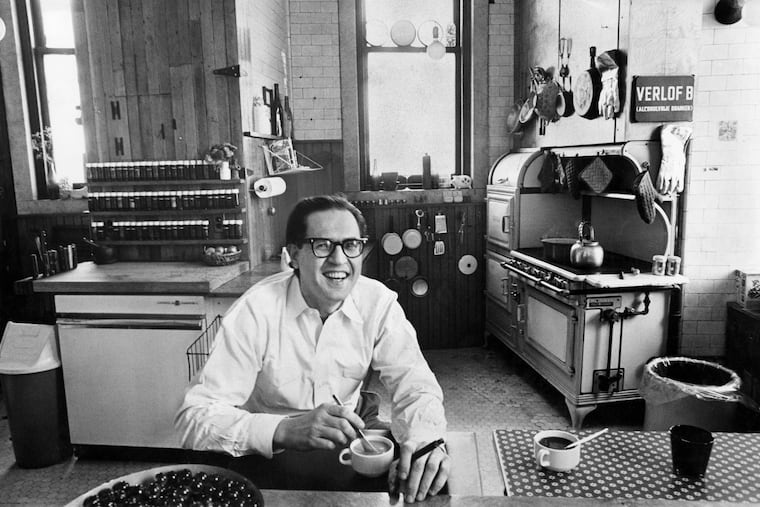
And yet Mr. Mackie — preternaturally boyish, always soberly dressed in his uniform of button-down shirts and khaki pants, like he had stepped out of a Ralph Lauren ad — looked as if he would be allergic to sequins.
Robert Gordon Mackie was born in Monterey Park, Calif., a bit east of downtown Los Angeles, on March 24, 1939. That was the year, he liked to say, that Gone With the Wind, The Women, and The Wizard of Oz came out.
His father, Charles Robert Mackie, who worked at Bank of America, and his mother, Mildred Agnes (Smith) Mackie, a homemaker, divorced when he was young, and he was raised by his paternal grandmother, Bessie Ida Mackie, in Alhambra, Calif. Her house, he recalled, was on a busy highway with not much neighborhood, and he was often alone and lonely. He drew to entertain himself.
“I was a weird kid,” he told Vogue in 1990. “But I was always pretty good with crayons.”
His mother and his older sister would visit on weekends and take Bob to the movies — Technicolor musicals, mostly, that entranced him. “It didn’t look like that at my house, and I wanted to be part of that,” he said. He remembered being dazzled by the dance numbers in An American in Paris. When the credits rolled at the end, he discovered that costume design was a job.
Mr. Mackie attended Pasadena City College and then the Chouinard Art Institute, now part of the California Institute of the Arts, before dropping out to work on movies, first with Fred Thompson, then Louis and Head. (Mr. Mackie sketched the skintight gown that Louis made for Marilyn Monroe when she sang “Happy Birthday” to President John F. Kennedy in 1962.)
In 1963, he was hired by Ray Aghayan, an Iraqi-born designer who was working on Judy Garland’s television variety show. The two became business and romantic partners, sharing the first Emmy ever awarded for costume design, in 1967, for their work on Alice Through the Looking Glass, an eye-popping confection of a television movie.
The pair received Oscar nominations for Lady Sings the Blues, the 1972 biopic of Billie Holiday starring Ross, and for Funny Lady, the 1975 sequel to Funny Girl. Mr. Mackie was nominated on his own for Pennies From Heaven, the 1981 film musical starring Steve Martin and Peters.
He won an Emmy in 1999 for Cher’s costumes in Cher: Live in Concert From Los Angeles and again in 2003, for Cher: The Farewell Tour.
A brief marriage to Marianne Nicholson, an actor whose stage name is Lulu Porter, ended in divorce in the early 1960s. Their son, Robert Gordon Mackie Jr., who was known as Robin and worked as a makeup artist, died of AIDS in 1993. Aghayan died in 2011. Mr. Mackie’s survivors include a granddaughter and two great-granddaughters.
In the early 1980s, Mr. Mackie began designing ready-to-wear. A decade later, he created a line of clothing and home furnishings for QVC, the shopping channel. While critics enjoyed the high camp factor of his cinema-siren clothes and the theatricality of his fashion shows, he was often derided for being not an authentic fashion designer, although his clothes were meticulously made, like couture garments.
“Subjecting Mr. Mackie to serious fashion criticism is a little like asking Ada Louise Huxtable to meditate on Malibu Barbie’s dream house,” Ginia Bellafante of the New York Times wrote, reviewing his 2002 fashion show.
Yet Mr. Mackie was proud to design for that diminutive doll, which he began doing in 1982, creating outfits as exotic and outrageous as those he made for his human muse, Cher. Goddess of the Sun Barbie, out in 1995, has 11,000 sequins on her hand-sewn gown.
“They called him Barnum Bob, the Raja of Rhinestones and the Sequined Sheik,” McFate said. “They thought of him as a Hollywood guy. It was hard for him to get a footing on Seventh Avenue.”
In 2001, the Council of Fashion Designers of America gave Mr. Mackie an award for “fashion exuberance.” In 2019, he earned the organization’s lifetime achievement award. That same year, he won a Tony for the costumes in the Broadway musical The Cher Show, a dizzying, giddy paean to the performer and her style.
As he told Vogue, “For a long time, everyone just thought all I knew how to do were Cher’s dresses, you know, with her tummy out and showing half her whatever.”
He added, “I always just sort of pray in my life somebody will give me a nice 19th-century movie or a good 1930s Depression film.”
This article originally appeared in the New York Times.