Murphy: The ballad of Sam Hinkie, or, "The establishment endures"
As mediocre as such thinking might seem to men who would rather die climbing the mountain than never leave the valley, the power of the mob is something for which any wise ruler must account.
One day, we will look back on it and see it for what it was: the Era of Egregious Mistakes, its defining moment the acquisition of an injured big man who has yet to play a game in a Sixers uniform, its faith placed in shooting guards who couldn't shoot, in point-guards who couldn't slash, in "assets" that yielded less value than the young talent used to acquire them.
It was the Era of False Promise, the Era of a Bill of Goods. It was the Era before the Sam Hinkie Era. Or, as the pearl-clutching basketball establishment refers to it, the Good Old Days.
Well, the reactionaries awoke to good news this morning. The Ancien Régime is back, all thanks to a fickle, gutless, disloyal ownership that on Wednesday night allowed its front man to throw himself onto the worst kind of sword: somebody else's. As you read the 13-page resignation letter/manifesto that Sam Hinkie submitted to the members of the Sixers' limited partnership, you could almost see him with his palms on his temples, mumbling in a moonlit window, "What am I missing? Where did I go wrong? Why does this make sense only to me?" It was just three years ago that he took the reins of a front office that, for the previous five years, had engaged in many of the same behaviors that would later earn him a torrent of ridicule. They traded away promising young players in Nikola Vucevic (22 win shares, 16.2 ppg, 10.8 rpg) and Marreese Speights (13.1 WS, 8.2 ppg, 4.4 rpg) and a first round pick that another team would use on Trevor Booker (19.8 WS, 6.5 ppg, 5.2 rpg). They parted with some of their most valuable assets (Andre Iguodala and a future conditional first round draft pick among them) to acquire an injured, mercurial Andrew Bynum. They drafted a bust at No. 2 overall.
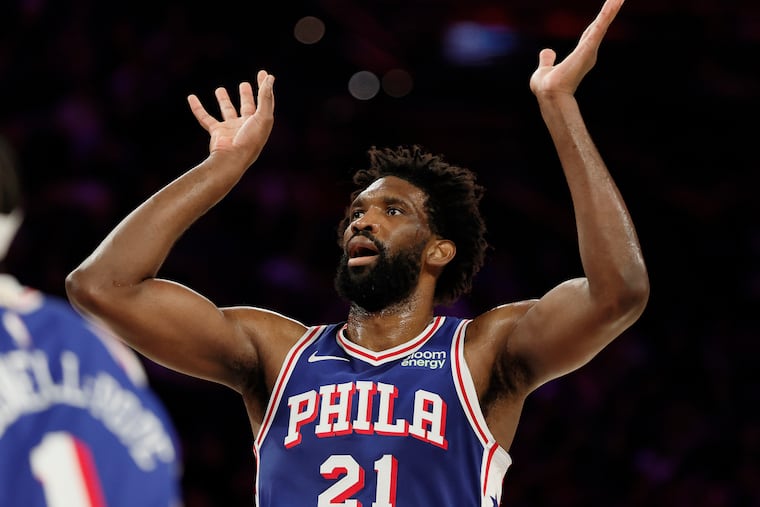
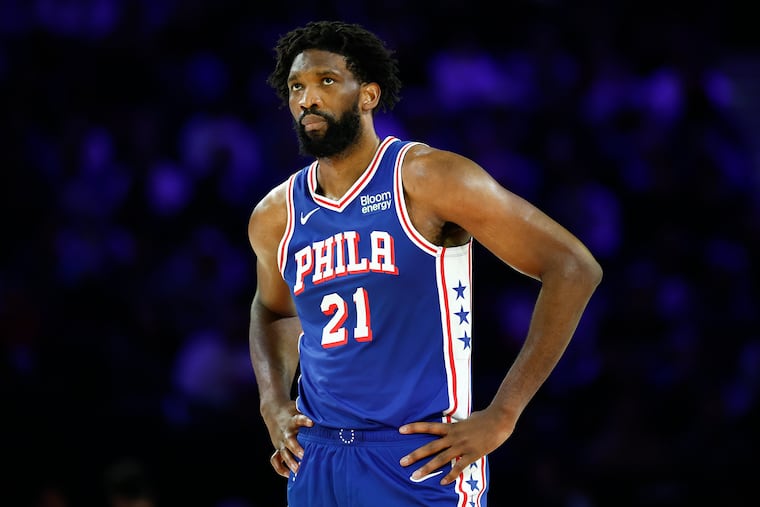
Yet it is Hinkie who will go down as the con artist, as the man who sunk the Sixers, who squandered a franchise's respectability. Forget that Jrue Holiday, Michael Carter-Williams and Thaddeus Young have combined for just 18.3 win shares in a total of 6.5 seasons since their departures, and that Vucevic and Speights have combined for 35.1 win shares in nine total seasons since they left the Sixers (not to mention the 19.1 accumulated by Booker since he was drafted with the Sixers' pick). Forget that Hinkie will leave behind a future brighter than the one he inherited. Forget that Bynum played as many games for the Sixers as Joel Embiid has played, that Evan Turner at No. 2 overall brought as much to the offensive end of the court as Nerlens Noel at No. 6 overall. Forget that, in three seasons, Hinkie led the Sixers to one fewer playoff series victory than they had achieved in the previous 10 seasons, and the same number of winning records as they'd managed in the previous eight.
Billy King, Ed Stefanski and Tony DiLeo? They may not have been beloved, but they surely were not reviled, not nearly as reviled as Hinkie. The revilers will explain themselves thusly: Hinkie turned a city that lives vicariously through its sports teams into a national punchline, he made a mockery of his franchise, he committed the cardinal sin of sports: he did not respect the game, he did not play it the right way, he did not abide by the spirit of the law, even if he followed the letter of it.
There is some validity to these sentiments, provided you pretend that a professional sports franchise is what you want it to be, the thing it was when you were a kid, a civic institution with local owners and administrators whose primary loyalty lay in the community and not the profit margin -- you know, the same kind of institution this nation's colleges and universities used to be. But in order to believe in this kind of thing, you have to ignore your city's economic reality within pro basketball's framework. You have to believe in the illusion that losing in the Eastern Conference semis really means you are only two series away from a parade down Broad Street, that a 35-31 record in a strike-shortened Eastern Conference schedule really means that you will enter the following season with a legitimate chance to repeat or improve upon that performance. You have to buy what King, Stefanski and DiLeo were selling.
That's not to say that Hinkie's process was flawless, or even that it will eventually bear fruit. If Joel Embiid never plays a game and this year's draft fails to land them a transcendant player, then the Sixers might not be any closer to an NBA title than if they'd played out the string with Holiday and Co., and finished 40-42 each year and perhaps added a couple of first or second round postseason losses to their illustrious history. Optimal processes sometimes lead to suboptimal results. There is reward and there is risk, and the greatest risk in Hinkie's process was exactly what transpired: talent flows in cycles, and the Sixers found themselves chasing talent during a downturn. In 2012, Damian Lillard was the No. 6 pick. In 2013, it was Noel. In 2012, there were four players on the board at No. 3 who would go on to average more than 14 points per game or 4.5 win shares per season. In 2014, when the Sixers picked Embiid at No. 3, there were zero (and only one such player in the entire draft).
That can be read as a defense of the decision to draft Embiid, or a repudiation of the decision that led the Sixers to the woeful record that put them in position to draft Embiid. Whatever your opinion on the process, there remains much that we will never know about Hinkie's ability to execute it. Draft picks are one thing; evaluating what to spend them on are another. The timing of Hinkie's resignation would certainly jibe with a sudden realization that there is an organizational schism regarding the latter thing. Now is the time that scouting notes are being compared, that tools are being graded, that analytics are being consulted, that preliminary draft boards are being compiled. That kind of process leads to plenty of table-pounding even in an environment where there is maximum trust and mutual respect. Perhaps the future will show that the Colangelos really were the right people to decide how to proceed with Hinkie's assets.
Yet it is impossible to ignore the parallels between Hinkie's resignation and the firing of a certain renegade coach by the football team across the street are numerous, starting with the tragic flaw that hastened each of their falls. Hinkie and Chip Kelly both learned an important lesson that they would be wise to incorporate into their respective processes moving forward: the establishment is the establishment for a reason. There is safety in numbers, which is why most large gatherings of members of the species homo sapiens are infected with a potent strain of psychological insecurity: people who look outward for affirmation do so out of a lack of internal confidence, an inability to resist the nagging doubts inflicted by the risk averse angels of our nature. They submit to the rule of Gov. Fear, the thought of dying alone driving them deeper into his jurisdiction, where the masses huddle together and regard each other's presence as evidence that they all must be doing something right. We might all go down together, they say, but at least there will be nobody left to laugh at us.
As mediocre as such thinking might seem to men who would rather die climbing the mountain than never leave the valley, the power of the mob is something for which any wise ruler must account. One of the establishment's mortal sins is acting smarter than the establishment, and the establishment has numbers and mediums in its favor. If you are going to take on the establishment, you better control the message, and neither Hinkie nor Kelly seemed to possess a firm grasp of the power of messaging. Ultimately, the blame rests above them: you do not hire men like Hinkie and Kelly for their ability to communicate. You hire them for their ability to think outside of the box. Like any portfolio, you must balance the volatility of such minds with a support system of human assets who possess the human and emotional intelligence that the Hinkies and Kellys of the world so often lack.
Sometimes, controlling the message means blowing smoke: for whatever reason, the mob seems to enjoy the feel of it. It came easier to the last three guys, native sons who answered phone calls and espoused the almighty power of the cheesesteak and the Catholic League. Hinkie was an outsider who had little interest in ingratiation.
If he proves to be a visionary, our realization of it will come too late to do him any good. But when you look at visionaries in general, you find that's often the case.