After midterm elections, don't expect economic miracles | Expert Opinion
The goals of President Donald Trump and the Democrats for the next two years are not in sync.
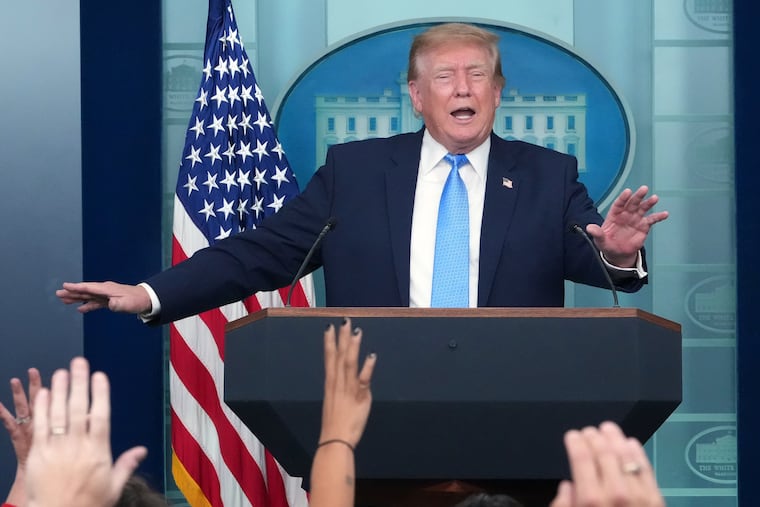
The blue tsunami that resulted from last week’s election has scrambled just about everything and raised questions about where the nation is headed.
While it is clear what the Democrats will try to accomplish, the question is: Will their proposals lower costs and inflation without harming growth?
The economy is solid, maybe
To judge the impact of potential Democratic policies, we need to know the economy’s condition.
After a lackluster start to 2026, growth has improved. Still, over the last year, the economy expanded by an unexceptional 2.1%.
Of concern is the heavy dependence on massive investment in AI and related industries, which accounted for as much as 40% of GDP growth in 2025 and into this year.
If that investment growth is not sustainable, overall economic growth will be at risk. That threat will hang over the equity markets no matter what the Democrats do.
The labor market: Solid or mediocre?
The labor market, too, is showing signs of strength. Recent monthly job gains have exceeded expectations, and the unemployment rate is consistent with full employment.
But again, the headlines mask underlying issues.
What is considered strong job gains now would have been viewed as mediocre over the previous 50 years.
The unemployment rate has remained low, but only because a dramatic drop in immigration, combined with retiring baby boomers, counterbalanced tepid hiring.
To sum it up, the economy is moving forward, but risks are emerging.
Making things less expensive is really difficult
The Democrats ran largely on the issues of affordability and accountability. While the two are interrelated, let’s talk economics.
The electorate is irate about the high price of just about everything, except maybe eggs, whose prices have dropped sharply.
Can the Democrats do anything to lower costs?
For the most part, no. Except for a few commodities, most prices are sticky downward.
What they can do is slow the rate of price increases, especially where costs have risen excessively.
How? By dealing with the root causes of the higher inflation.
Tariffs should top the Democrats hit list
There are two major underlying factors pressuring prices: Tariffs and wars.
Job No. 1 for the Democrats is likely to be passing bills to repeal the Trump tariffs.
The New York Fed’s economic researchers recently calculated that the 2025 tariffs not only added to inflation but if they had not been imposed, consumer prices might have been flat or even down.
If the Democrats want the biggest bang for their efforts, they need to reduce or eliminate as many tariffs as possible.
While passing bills repealing tariffs should be easy lifting for the Democrats, getting the bill signed by the president or overriding a veto could be problematic. That is a political issue. The economic necessity is to repeal tariffs.
Energy costs are second, but more intractable
Nothing angers consumers more than high gasoline prices. Every day, drivers literally see how much the Iran and Russia/Ukraine wars have caused costs to surge.
It needs to be understood that both wars are at play here.
Energy prices are set internationally.
It is not just the production and delivery of energy products by Russia or Middle Eastern nations that move prices. Geopolitical reactions to the wars, such as Chinese or European decisions on energy imports and strategic inventories also impact markets.
Democrats have limited control over those wars, and until they are ended, risks will remain elevated, and energy price reductions will be limited.
The Fed cannot do much
The Federal Reserve may not be of much help as its inflation-fighting tool kit consists mainly of raising interest rates.
The Fed increased rates a quarter-point once this year. That barely changes borrowing costs. More hikes may be coming, but their effectiveness is questionable.
Why? Supply, both actual and expected, is driving energy prices, not demand. The wars are why the markets are worried about supply.
Without raising rates significantly, there may be little the Fed can do to slow inflation.
Restraining AI and data center investment makes sense
The race to dominate AI and the need to build out data centers is powering the economy. Yet voters despise the process.
Democrats are likely to pass laws regulating the behavior of AI firms and data center builders.
Surprisingly, that may be beneficial.
The debt load of the major AI-related companies is staggering, and the costs are starting to be factored into decision-making and stock prices.
But this is a race to be the Google of AI, and it is not clear who will blink first.
Maybe the AI race should decelerate? As the saying goes, “You really don’t know you are in a bubble until it bursts.”
Given mounting risks and resource constraints on the ability to build out capacity, Democratic restrictions may actually provide the breathing room needed to prevent overbuilding the sector.
Unwinding the ‘One Big Billionaire Boondoggle Bill’
Taxes will be a Democrat target.
The overweighting of upper-income beneficiaries in the One Big Beautiful Bill will likely be addressed.
The bill was terrible not simply because it accelerated the redistribution of income and wealth toward upper-income households. It also contained truly stupid tax cuts supposedly for lower-income people.
Giving special tax breaks only to tipped workers is not rational tax policy. It is pure politics. Why are tipped workers worthy of tax cuts but not workers in any other occupation?
And what logic is there in allowing the tax breaks to fully benefit single filers with incomes of $150,000, or $300,000 for married couples? Those aren’t poor people.
If the Democrats are smart, they will replace these tax breaks with real tax reform.
Of course, that will require the president signing the bill or Republicans voting to override the likely veto. Good luck with that.
The Democrats can pass bills, but that’s all
The Democrats won a massive electoral victory. But their power to implement change is limited.
So, look for bill after bill being passed that forces Republicans and the president to take stands on issues the voters said they wanted to see resolved.
But don’t expect much to change.