Bristol's new school chief faces big job in small district
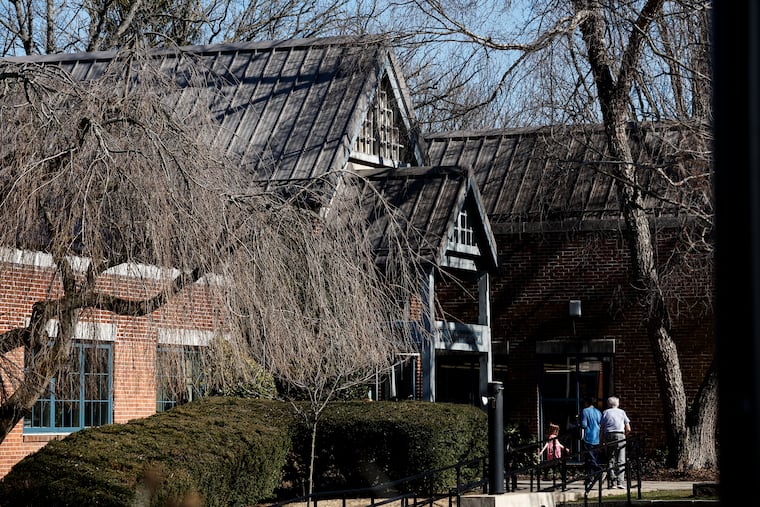
As Jerome Mead, Bristol Borough High School Class of 1968, and daughter Selma Mead, Class of '95, sat in the auditorium of the district's elementary-middle school at a back-to-school night for Selma's sixth-grade daughter last week, it felt like home.

As Jerome Mead, Bristol Borough High School Class of 1968, and daughter Selma Mead, Class of '95, sat in the auditorium of the district's elementary-middle school at a back-to-school night for Selma's sixth-grade daughter last week, it felt like home.
The school itself is only a few years old, but many teachers are longtime fixtures in the district. There are only 1,300 students and 99 teachers in the two schools, so parents "have the chance to not only know the teachers, but some of them taught you," Jerome said.
And, he added with pride, "a lot of these kids go to school with the same kids for 12 years and graduate together. It's Bristol - if you drink the water, you want to stay."
The size and tight-knit character of the Bucks County borough - about 9,700 residents - and the schools - the senior class has only 80 students - are among the attributes that drew Gregory Wright, the new superintendent, to the district. He began work Aug. 1.
In the borough, he said last week, "everybody knows who played on the basketball team in 1975 and 1985 and 1995. . . . There is a tremendous amount of loyalty here. You walk around, you see Bristol T-shirts."
Bristol's good qualities attracted Wright. But he was brought in by the school board to tackle financial woes, painful program cuts, and lackluster academic achievement.
The blue-collar district's greatest strength is also its greatest weakness. It has a tiny tax base, with not much commercial property and only about 3,500 tax parcels, said Board President Ralph DiGuiseppe 3d.
About 70 percent of students qualify for free or reduced-price lunches, a measure of poverty. The district tax rate is the third highest in Bucks County and this year's increase - 11.6 percent - was the highest in the Philadelphia area. The year before, taxes were raised by 15 percent. "The tax increase is that large because of the limited number of taxpayers," DiGuiseppe said last week.
Faced with cuts in state and federal funding this year, the district laid off its elementary music, art, and physical-education teachers, and a special-education teacher. Teachers in the lower grades are handling the instruction in those subjects; there is no elementary instrument instruction.
The board is sandwiched between older residents angry about tax increases and parents angry about the cuts, DiGuiseppe said. "I talk to a lot of seniors. They have the attitude of 'cut everything you can; I can't afford that extra $50 or $100,' " he said. "Then the parents are saying, 'I'll pay an extra $100; give my kid the musical instruction and the PE from a different teacher.' "
Academics in the district are described as "not so good" or "not that bad," by board members and administrators, but everyone agrees there is lots of room for improvement.
Wright, 42, was hired to provide instructional leadership and figure out how to do it at a lower cost, or bring in new funding streams.
He started as an English teacher in the Philadelphia schools and has served as a charter high school principal, a K-8 school principal, and, most recently, the curriculum director in Delaware County's William Penn School District.
In an age of public education financial woes, he's the prototype of a new-style superintendent, with a master's in business administration from Drexel University to go with his education credentials. And he's a big believer in measuring student and staff performance and finding ways to improve instructional delivery.
Despite the district's problems, the new superintendent has quickly become a cheerleader, reminding parents that they have much to be proud of. At the high school back-to-school night, he told parents: "There are all these people here who want to do good things and help the kids. And it shows - the students here are really great."
Many share that perspective. Bristol has the third-lowest enrollment in Philadelphia's Pennsylvania suburbs; it's so small that there is no bus transportation to school. Parents say that children who might not make the cut in a big district get the chance to compete on varsity teams, perform in the school play, and make the cheerleading squad. And if there is a problem, said Doris Simmons, mother of a ninth grader and herself a Bristol High graduate, "the teachers will call you and make sure they are on top of it before it escalates."
Wright vows to use the district's strengths to overcome its weaknesses - and soon. "They brought me in because I promised results," he said. "And we will get them."
It is too soon to implement comprehensive change, he said, but one fix could involve special education. Bristol has 24 percent of its students with that label, and he thinks that early intervention and targeted teaching should bring those figures down.
Already, most agree, there's a new atmosphere in the district. "The board and teachers are saying: 'Wow, this is what it's supposed to be like. This is what it looks like to have a leader,' " DiGuiseppe said.
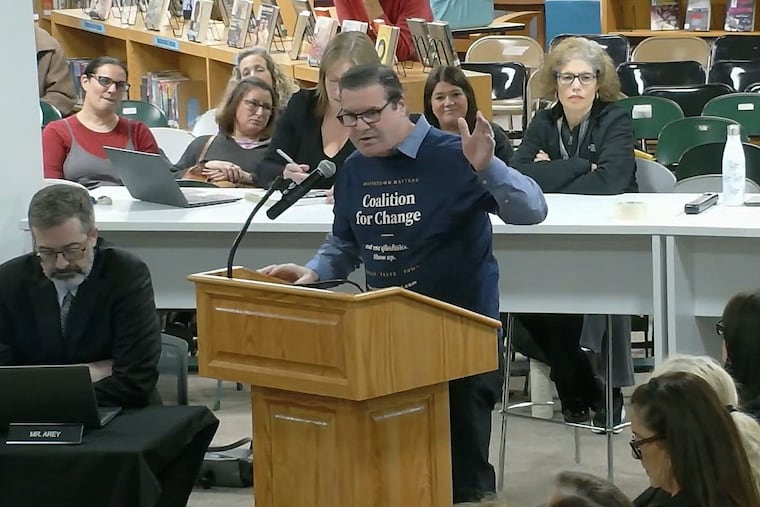
Indeed, at a school board meeting this month, special-education aide Louise Conners praised her new boss. "I want to thank the board for finding Mr. Wright," she told board members. "His presence and enthusiasm is appreciated."