Songs in the key of Harbison
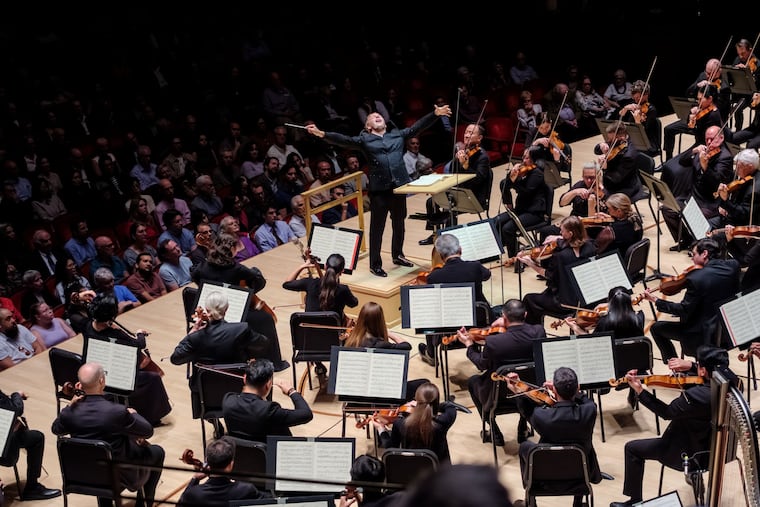
If John Harbison ever entertained the thought of joining the current march away from dissonance, he's showing no signs of it. Happily, Harbison is firm in a musical language that perches, entrancingly, at a point just dissonant enough - at least according to the two premieres Sunday night by Network for New Music. Prefacing each new work with a much earlier one filled out important context. The MIT professor, at 75, has a musical style as concentrated as ever.
If John Harbison ever entertained the thought of joining the current march away from dissonance, he's showing no signs of it. Happily, Harbison is firm in a musical language that perches, entrancingly, at a point just dissonant enough - at least according to the two premieres Sunday night by Network for New Music. Prefacing each new work with a much earlier one filled out important context. The MIT professor, at 75, has a musical style as concentrated as ever.
The concert at the Curtis Institute's Gould Rehearsal Hall came at the end of a Harbison residency that included a Friday concert dabbling in jazz. His sound world is larger than most (folk tunes, a quick hit of rock), but sparingly applied. All the works presented Sunday were songs in one form or another. There was no voice in Fourteen Fabled Folksongs (1992), played by violinist Hirono Oka and marimba player Angela Nelson, but an abundance of wit. Marimba suggested Deep Purple's 1972 "Smoke on the Water" in "They haven't met." "Nice but too short" was short (and nice). "Deep and mysterious" ends, mysteriously, on a high note. The set is a series of short puzzles, designed to match titles to musical cues.
Eugenio Montale's poetry was the more opaque inspiration for Harbison's Mottetti di Montale, Book I: La Primavera di Sottoripa, from 1980, performed by the impressive, dusky-voiced mezzo Julia Bentley and excellent pianist Susan Nowicki. One of the pleasures in Harbison's songs is hunting for the way he connects words and text - a great pleasure since the links are never obvious. And yet they are there, like the way, in the last song of the set, the piano tiptoes through the graveyard as mezzo mentions death. Insistent, pulsating anxieties in the piano part play out in the third song against Montale's inscrutable sketch of a threatening visitation.
How has Harbison's art song evolved? If anything, he has grown more economical, developing shorthand signals for emotion. Crossroads (2012), commissioned by the Networkers and scored for soprano, oboe, and strings, sets pensive pizzicatos to the phrase "sit and dream"; later, "living takes you away from sitting" leads to a concerned oboe. Soprano Sarah Joanne Davis had a friend in the composer, who skillfully pared back textures so words could travel easily. The spring of the second movement found form in jumpy harmonics, reaching up like delicate, green shoots.
Harbison's The Right to Pleasure (2013), also a Network commission, deserved to be heard, and then immediately repeated. For string quintet and mezzo - the wonderful Julia Bentley again - each one of the four movements took a different personality from poems by Jessica Fisher. The third, "Brancusi's Heads," not only echoed the sculptor's lyrical forms, but, in the creamy voice-string doublings, also something of the artist's material. Marble may be an unyielding material, but it rolls like water in the right hands - Brancusi's, or Harbison's.