Trump tells Congress: 'Time for small thinking is over'
Sounding familiar themes from his campaign rallies, Trump outlined an ambitious agenda involving tax cuts, job growth, immigration, military spending, and infrastructure investment, but offered few details on financing his ideas.
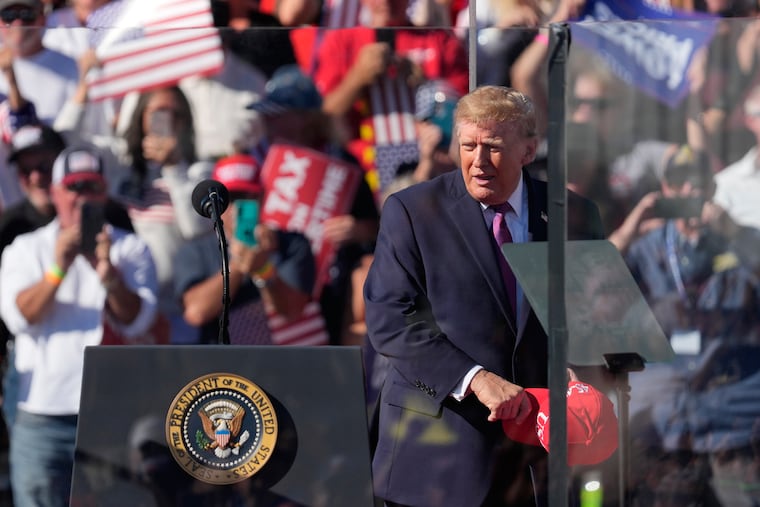
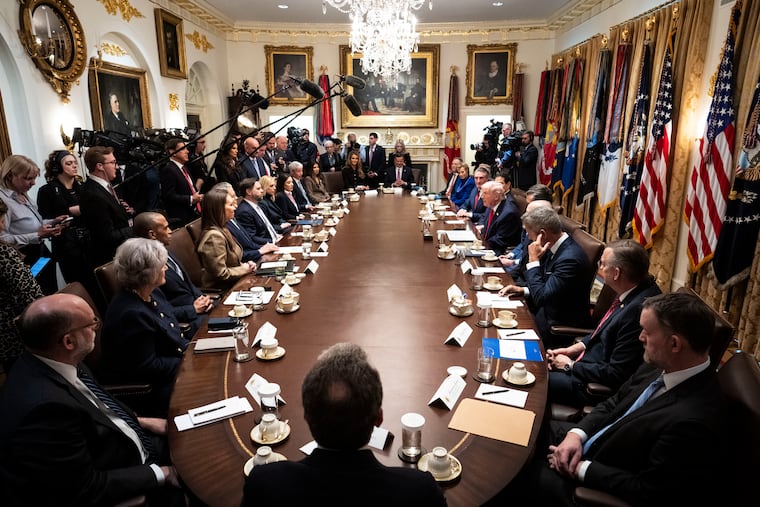
President Trump used his first joint address to Congress on Tuesday to outline a broad agenda that echoed last year's campaign rallies: "historic tax cuts," a massive increase in defense spending, and $1 trillion to rebuild the nation's infrastructure.
Though the list was heavy on ambition, it was light on detail, offering no guidance for congressional leaders on how the pricey promises would be paid for while also replacing the Affordable Care Act and building a wall along the southern border.
Trump tempered his familiar phrases of fear, like "beachhead of terrorism," with expressions of optimism, asserting that "every problem can be solved" if Republicans and Democrats work together. "Action is not a choice; it is a necessity," he said.
It was a marked rhetorical departure from his bleak inaugural address five weeks ago, in which Trump spoke of his presidency as the solution to "American carnage" and "rusted-out factories scattered like tombstones" across the land.
"This was much more optimistic and hopeful and more likely to unify the country," Sen. Pat Toomey (R., Pa.) said.
"The time for small thinking is over; the time for trivial fights is behind us," Trump said. "From now on, America will be empowered by our aspirations, not burdened by our fears."
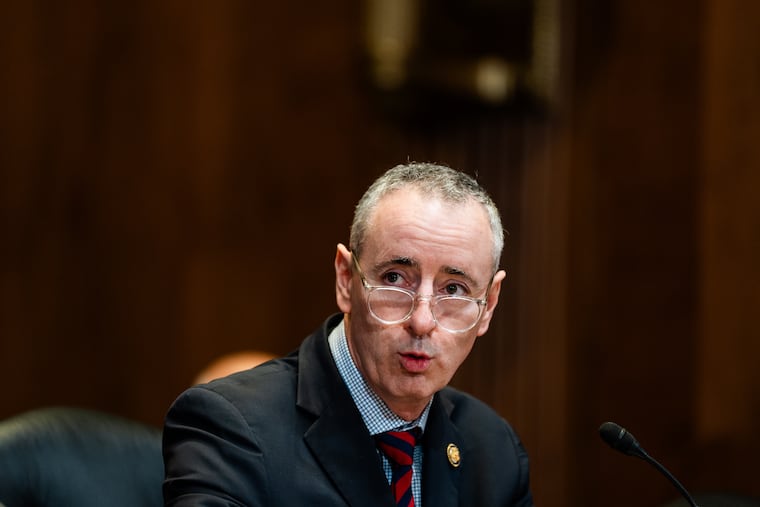
Rep. Bill Pascrell (D., N.J.) said Trump gave one of his "better platitudinal speeches." Asked whether the president's words would help soothe the divisions of the first 39 days of his administration, however, Pascrell said no. "Consider the source," he said.
At the beginning of the speech, Trump condemned bomb threats against Jewish community centers and day schools and vandalism at Jewish cemeteries across the nation, including in Philadelphia and Cherry Hill. "We are a country that stands united in condemning hate and evil in all of its ugly forms," Trump said.
Critics say that Trump's nationalist rhetoric has empowered anti-Semitism, Islamophobia and hatred of immigrants among some of his supporters, and that he has resisted addressing those concerns.
Democrats gave Trump an icy reception from the start, barely applauding even when he entered the chamber. Most remained sitting throughout the majority of the speech, and a number of Democratic women lawmakers -- dressed in white to honor suffragists -- held up their hands, thumbs pointing down, when he talked about repealing Obamacare.
There were moments when some Democrats applauded, including when Trump mentioned infrastructure spending and seeking new trade deals.
"In his address tonight, President Trump indicated that one of his first priorities would be cutting taxes for billionaires, millionaires and big corporations at the expense of funding programs that are vital to the middle class," said Sen. Bob Casey (D.,Pa.). Trump should prioritize the infrastructure plan and renegotiation of trade deals "instead of more tax giveaways for those at the very top," Casey said.
Trump stepped onto the rostrum of the House chamber in the Capitol with historically weak approval ratings for a new president and battling the perception that the administration governs by chaos, with infighting among his closest advisers and embarrassing leaks from the West Wing and the intelligence services.
In the early weeks of his administration, the president has obsessed over the election, claiming he would have won the popular vote over Hillary Clinton if he had campaigned in California and New York; asserting with no evidence that he was robbed by fraudulent votes; and boasting that his Electoral College victory was the largest in 40 years, which is not true. He did not go down that road Tuesday night.
Trump has carried on a war with the media over how he is covered, branding as "fake news" stories he does not like. "They are the enemy of the people," Trump said of journalists last week. "Because they have no sources, they just make them up when there are none."
On Tuesday, Trump said that victims of violent crime carried out by undocumented immigrants had been "ignored by our media, and silenced by special interests."
The big stage gave Trump an opportunity to dispute the notion he was off to a rocky start, and he used the occasion to frame himself as a man of action relentlessly keeping campaign promises.
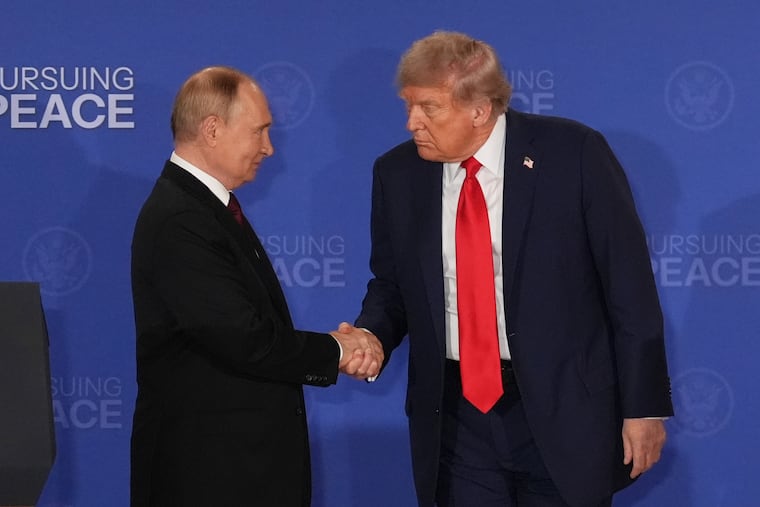
Trump has faced serious accusations of closeness to Russia and its leader, Vladimir Putin, including calls even from some Republicans for an independent investigation of those ties. And some of the campaign promises Trump has acted on have been controversial, such as the botched rollout of a ban on travel from seven majority-Muslim countries, now suspended by the courts, raids by federal agents to round up and deport undocumented immigrants, and executive orders rolling back environmental regulations.
There have been protests in the streets on these and other issues, such as Trump and the Republican Congress' drive to repeal the Affordable Care Act. Though he is an unconventional political figure who at first seemed to offer the chance to transcend partisan divisions, views of the president so far are polarized, reflecting the degree to which he dominates the GOP.
In one recent Pew Research poll, 84 percent of Republicans and those who lean Republican approve of Trump's job performance. Among Democrats and Democratic leaners the number was 8 percent. By contrast, about a third of Democrats had a favorable view early in the first term of President George W. Bush, and an equal percentage of Republicans had good feelings about President Barack Obama.
Trump tried to reach out at several points during his speech. "We are one people with one destiny," he said. "We all bleed the same blood. We all salute the same great flag. And we are all made by the same God."