Tale of two cities
By Ron Avery 'I bet you've seen a lot of changes in the city," said a man I had just met. I had told him that I was 71 years old and had lived my entire life in the city of Philadelphia.
By Ron Avery
'I bet you've seen a lot of changes in the city," said a man I had just met. I had told him that I was 71 years old and had lived my entire life in the city of Philadelphia.
I knew what he was driving at: the skyscrapers in Center City, the gentrification of the neighborhoods surrounding it, fancy restaurants, the Kimmel Center and the new Barnes, all the young professionals, etc.
I just nodded and said, "Yeah, a lot of changes." What I wanted to tell him was to take a ride through North Philadelphia, as I had recently done, to glimpse the other side of the city. What I wanted to explain is that Philadelphia encompasses 134 square miles; that wonderful core, with all its fancy restaurants and young professionals, covers only four or five of them.
The man I was talking to lives in a suburb. When he comes to Philadelphia to go out to eat or attend a concert, the city looks pretty damn good.
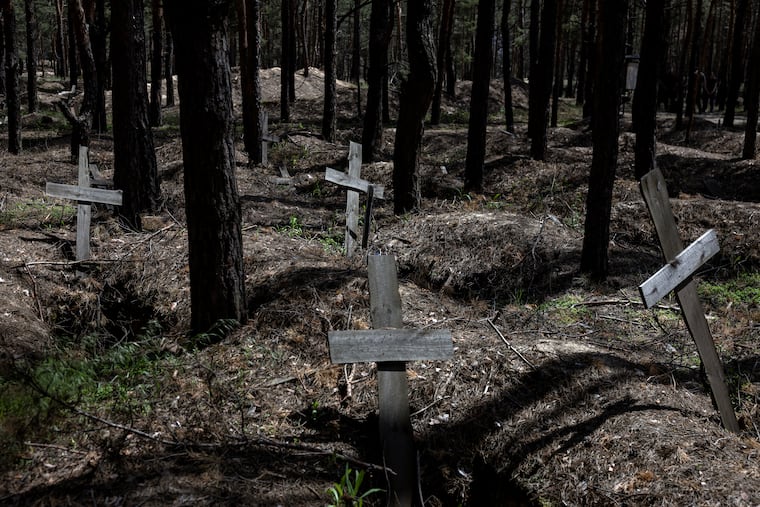
He may not know that 25 percent of Philadelphians live below the poverty line, or that since 1950, the city has lost 500,000 more people than it's gained. He had probably never seen the mile after mile of empty lots, rundown houses, and trash-strewn streets of some neighborhoods. And of course he had never witnessed the two-block-long "rainbow coalition" of the poor waiting under I-95 in South Philly for their weekly bag of free food.
The man didn't share my childhood memories of Christmas shoppers so thick on Center City sidewalks that you could hardly move. He didn't remember the factories, mills, and small manufacturers that employed hundreds of thousands: Philco, Exide battery, Midvale Steel, Stetson hats, Curtis Publishing, Bayuk Cigars, and countless others. Most of those businesses died; others just deserted the city.
Yes, there were poor people in the city then, too, particularly in the African American neighborhoods of North and West Philadelphia. But there were few abandoned houses or empty apartments. Every corner had groceries, dry cleaners, drugstores, bars, or storefront churches. I remember the black entertainment districts along South Street and Lancaster Avenue being filled with people dressed to the nines. They stood in long lines to get into the Uptown Theater.
Sure, there were teenage gangs. But there were few drug addicts, and the sound of gunfire was not common.
The public and Catholic schools were packed with kids. Cardinal Dougherty High had 6,000 students.
Now Dougherty, Northeast Catholic, and many others are shuttered. My alma mater at Eighth and Lehigh, the old Northeast and later Edison High, is a burned-out shell. In Pennsport, where I live, two Catholic elementary schools within a block of my house recently closed due to low enrollment. Another Catholic school about eight blocks away, in Bella Vista, also closed this year.
Where are the kids of middle- and working-class families? Walking through Queen Village, I see parents pushing baby carriages, but teenagers in that neighborhood are as rare as whooping cranes. When the babies reach school age, their parents generally head to the suburbs.
So, if factories and jobs and teenagers have disappeared, and if the ghettos are plagued by violence, drugs, and despair, why do so many think Philadelphia is so vibrant?
Because they're ignoring most of the city's 129 square miles. And because the healthy part of the city has become a sort of playground for the suburban bored.
Suburbanites pour into the city on weekends. They pack the sidewalks on South Street, Main Street in Manayunk, and Northern Liberties. They stand in long lines to buy cheesesteaks at Pat's, Geno's, and Jim's. As soon as word spreads of a hot new restaurant on Passyunk or Broad, the place is mobbed. Strolling through the Italian Market or Chinatown is far more interesting than hanging out in a suburban mall.
Theater companies pop up like weeds. They're even shooting Hollywood movies here. There are endless concerts, fireworks, duck boats, and lecture series. There are countless walks, runs, and sporting events. There are arts festivals, pub crawls, and ghost tours.
Yippee, what an exciting city! It's Disneyland on the Delaware.