Trump keeps losing in court. Here’s how he gets what he wants anyway.
Legal experts said the administration’s aggressive legal tactics have blunted the impact of the courts’ traditional role as a check on the executive branch.
Judges have ruled against President Donald Trump at an unprecedented clip during his second term, but time and again the administration has found ways to do what he wants regardless.
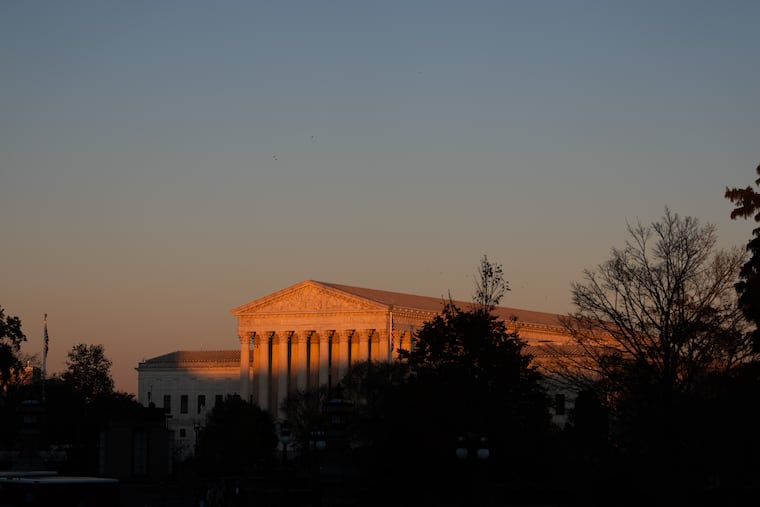
The Supreme Court killed a suit against Trump’s White House ballroom on a technicality, though Chief Justice John G. Roberts Jr. wrote that the project was “likely unlawful.” Breakneck construction has ensured that the project should be done before any court can stop it.
The high court struck down Trump’s sweeping tariffs, but he sidestepped that narrow ruling by using other legal authorities to reconstitute his import levies on about 60 countries.
Government lawyers said they would notify a federal judge before starting work on Trump’s project to turn D.C.’s East Potomac Golf Links into a championship course, then abruptly gave notice and bulldozed 400 trees on a holiday weekend. The judge said she had “trusted you all not to do precisely what you have done.”
In these cases and many others, the administration has employed a kind of legal jujitsu: using the courts’ cautious pace, preference for narrow rulings, and traditional presumption that the executive branch is being forthright to gain advantage.
The playbook could be a preview of how the Trump administration may try to stymie oversight and investigations promised by the new Democratic majority in Congress that takes over in January.
Legal experts said the administration’s aggressive legal tactics have blunted the impact of the courts’ traditional role as a check on the executive branch and done damage to the relationship between judges and the Justice Department that could outlive Trump’s tenure.
The sheer scope of the administration’s efforts to outmaneuver the courts has gone beyond any previous administration’s efforts — and it has knocked judges off-balance, said David Super, a Georgetown University law professor who has focused on Trump’s interaction with the courts.
“This administration doesn’t respect some orders that are not legally binding and some orders that are,” Super said. “They just rush ahead. Judges who are accustomed to the Justice Department bending over backwards to be compliant are surprised and shocked.”
The Justice Department did not respond to a request for comment, but the administration has repeatedly accused the lower courts of bias and has tried to remove judges from cases. It points to its winning record before the Supreme Court as proof of its contention.
The White House said in a statement that the administration is abiding by court orders and going through proper legal reviews for its projects. It said Trump is acting quickly to fulfill promises to voters.
“President Trump is moving at lightning speed because we don’t have time to waste in our mission to make America greater than ever before,” said Davis Ingle, a White House spokesperson.
‘Trump speed’
Trump issued more executive orders in the first 100 days back in office than any other president. The White House has a term for it: “Trump speed.”
The administration has adopted an analogous strategy in the courts, asserting a sweeping vision of executive power and speeding forward with construction projects, deportations, and agency cuts as legal challenges have played out at what can often be a plodding pace.
In the case of the ballroom project, the administration demolished the East Wing of the White House over three days in October 2025 without any public notice. Court challenges soon followed.
While the cases wound through the courts, a crew of 250 worked 20 hours a day, seven days a week on the project. By the time a lawsuit reached the Supreme Court in August, Solicitor General D. John Sauer told the justices the project was 65% complete — and too far along to stop.
“That line has long since been crossed,” Sauer wrote in a filing.
The administration has used the same tactic elsewhere. Trump officials plunged forward with a controversial paint job on the Reflecting Pool this summer, allowing work to be completed before a judge could rule on the legality of the project.
The administration had planned a similarly aggressive timeline for Trump’s proposed 250-foot triumphal arch: launching as soon as the project got approval from a federal commission and continuing with near-round-the-clock work.
But a judge halted that project soon after amid lawsuits brought by veterans and local government officials.
The case that most crystalized the administration’s approach came in the opening weeks of Trump’s second term, when Justice Department officials allowed planes carrying Venezuelan deportees to continue to a prison in El Salvador despite a judge’s order to halt them, said Leah Litman, a University of Michigan law professor who has studied the administration’s compliance with court orders.
A whistleblower later claimed that a top Justice Department official, Emil Bove, told government lawyers that they “would need to consider telling the courts ‘f— you’” and ignore the order as the episode unfolded. Bove denies the account. He was confirmed months later as an appeals court judge.
Supreme Court Justice Ketanji Brown Jackson, one of the court’s three liberals, has described the administration’s legal strategy as a “catch-me-if-you-can approach.”
Litman said the administration appears to be using a fait-accompli strategy to hamstring courts — rushing executive actions until they are so far along that it becomes difficult or impossible for judges to stop them.
“There are projects that are just way more difficult to unwind once the bell has been rung,” Litman said. “The East Wing is gone. Is a court really going to say, like, ‘Rebuild it’?”
Evolving legal rationale
When the Supreme Court in February struck down Trump’s unprecedented 10% tariffs on nearly every trading partner, along with higher levies on Mexico, Canada, and China, opponents hailed the ruling as a significant check on a president overstepping his authority.
But just months later, Trump has rebuilt most of his trade wall. In July, he announced tariffs of 10% to 12% on more than 60 countries that account for 99% of imported goods. He used a different legal authority than the one the high court blocked.
Many other presidents have tried to reformulate policies curtailed by courts, but legal experts said the way Trump has tried to leverage the law is bolder and more sweeping.
Trump had initially enacted tariffs under a law known as the International Emergency Economic Powers Act that is commonly used to impose sanctions.
After that was struck down, he reimposed the levies under a 1974 statute that allows the president to enact tariffs on countries using forced labor to produce goods exported to the United States.
“The failure of our most important trading partners to address the importation of goods made with forced labor is unacceptable,” Jamieson Greer, the president’s trade chief, said in imposing the tariffs.
Critics and groups that have sued over the levies called the newer legal rationale a pretext for reimposing the tariffs struck down by the Supreme Court, noting that the administration had previously cut $500 million for programs that combat international forced labor and trafficking.
Many of the countries targeted for tariffs have good labor records, critics said, while nations with poor performances were not targeted.
“If he was serious, he would not be applying the same tariff rate to China, one of the worst forced labor abusers in the world, as he does to countries like Australia,” Rep. Linda Sánchez (D., Calif.) wrote on social media.
Super said that even if legal challenges against Trump’s new tariffs are ultimately successful, any rulings won’t come for months — or even longer — and the president could try to remake them under yet another authority.
“He’s strung many of the courts out so that he gets his way even without a court ruling in his favor,” Super said.
In a similar vein, Trump has reworked his attempted ban on birthright citizenship.
The administration has often performed an end run around individual rulings, as well.
A federal judge barred the administration from issuing a blanket freeze on billions in foreign aid in a pair of cases early in Trump’s second term. The judge also said officials could still end contracts for overseas work on an individual basis.
Within weeks, administration officials told the judge Secretary of State Marco Rubio personally had reviewed more than 13,000 contracts in about 40 days and decided to cancel the vast majority of them — a rate of about 340 a day. The cancellations mirrored the blanket freeze.
The plaintiffs questioned how the agency could carry out such a massive review so quickly given that most of its employees had been laid off or furloughed by the Department of Government Efficiency, a Trump administration initiative that restructured wide swaths of the federal government last year. They said Rubio’s review happened too fast “to be plausible.”
The court raised questions about the contract terminations but ultimately allowed them to go forward.
In some other cases, the administration has invoked national security concerns to justify projects it initially said were necessary on other grounds.
Trump originally touted the White House ballroom as an event space, but as a court challenge dragged on, lawyers increasingly linked the construction to a military complex that was being built beneath it.
After Trump said initially that the triumphal arch would be a tourist attraction, he more recently claimed it would house drones, snipers, and ammunition at the military’s request. A judge called that rationale “belated and unsupported.”
The administration has also cited concerns about national security in cases that seem only loosely tied to it, including a bid to block media outlets from the White House and an effort to halt offshore wind power projects.
Rachel Heron, who worked for a decade as an attorney in the Justice Department, said there is a legal reason the administration keeps returning to national security in court cases.
“The courts have historically given great latitude to the executive branch telling them that something needs to happen for national security,” Heron said. “They’re in danger of becoming the administration that cried national security.”
A fraying trust
U.S. District Judge Ana Reyes reached her breaking point with Trump officials in October over a straightforward question: Did the federal government have plans to turn a public golf course in D.C. into a championship course?
Trump had posted on social media that the administration had “developed a plan” with a well-known course architect, but government lawyers insisted in hearings there was no final plan. Golfers and preservationists had challenged the project in courts.
Reyes was incredulous.
“Rarely, if ever, has the United States Department of Justice urged a federal court not to believe the sitting President,” Reyes wrote in an opinion blocking any work on the project. “And yet, here we are.”
The case has become one of the clearest windows yet into the fraying trust between judges and the executive branch.
Federal courts have long worked on the assumption that the president and other officials are being honest and carrying out their duties in good faith unless there is reason to think otherwise, a concept called the “presumption of regularity.”
Reyes seemed to apply that principle when the golf course case began.
The plaintiffs asked for an injunction against the project, but Reyes said in court that she declined based on government representations that the renovation was still at a conceptual phase and that the administration would give notice of any work.
Then, at 4:55 p.m. on the Friday before the long Columbus Day weekend in October, the Trump administration filed notice that it planned to begin removing trees at the course as part of long-deferred routine maintenance.
At hearings that followed, Reyes said she was furious and suggested it was implausible that the tree-clearing wasn’t related to the course renovation.
Trump responded on social media, calling Reyes a “crazed lunatic.” Government lawyers pushed for her recusal over her comments critical of their actions. Reyes has opened a still-ongoing inquiry into whether the administration misled the court.
Skye Perryman, CEO and president of Democracy Forward, a liberal group that has taken legal action against many Trump policies, said the government’s misdirection and obfuscation in the case are part of a pattern she has seen in the more than 200 lawsuits filed by her organization.
“It is a highly troubling and unprecedented threat to the rule of law, far more than in the first Trump administration,” said Perryman, whose group is representing plaintiffs in the golf course case. “We have seen it play out across a number of our cases where we secure court orders and the administration skirts the orders or tries to weaken or undermine them in some way.”
Legalistic noncompliance
Litman and fellow University of Michigan law professor Daniel T. Deacon have coined a term for the Trump administration’s approach to the courts: legalistic noncompliance.
The idea is that government attorneys are using the language of the law and compliance to obscure what is actually resistance to judges.
“They are making specious arguments about why they are complying with lower-court orders when, in fact, they are not,” Litman said. “It doesn’t allow courts or public to say, ‘Aha, they are defying court orders.’”
Heron, the former Justice Department attorney, said the department’s stance toward the courts is “night and day” from previous practice.
Stacey Young, a senior attorney who spent 18 years at the Justice Department before leaving in January 2025, echoed that theme.
She said the guiding ethos of the department for decades was transparency and compliance with the courts, recognizing that the government wields massive powers and represents the people. That principle has badly eroded, said Young, who founded a group called Justice Connection to provide legal support and other services to current and former Justice Department employees, and to document breakdowns in the rule of law.
“It’s a new attitude … that is unrecognizable to anyone who worked there before this administration,” Young said. “I think it reflects a general attitude toward the courts — they are often seen just as an impediment to what the government wants to do.”