Inquirer Editorial: Pedal harder to save race
Just as dozens of nearly winded cyclists make one last push up Manayunk's steep hill nicknamed The Wall during the annual Philadelphia International Cycling Championship, city leaders must try harder to revive professional bike racing in the city by next year.
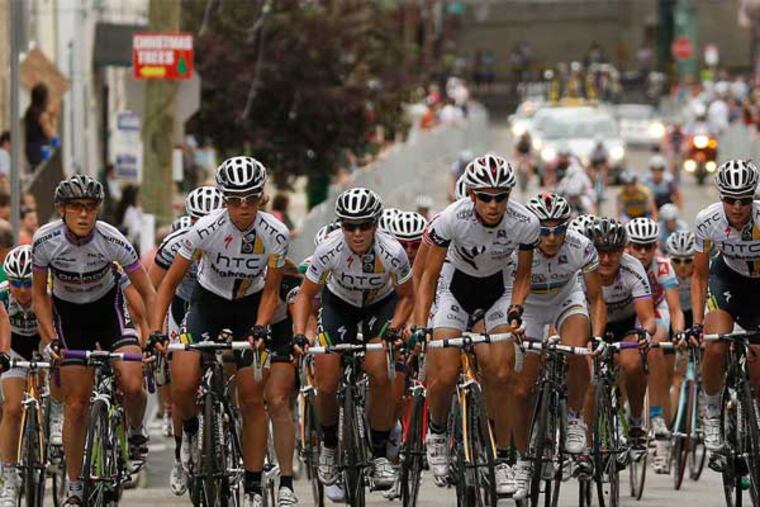
Just as dozens of nearly winded cyclists make one last push up Manayunk's steep hill nicknamed The Wall during the annual Philadelphia International Cycling Championship, city leaders must try harder to revive professional bike racing in the city by next year.
There's no doubt that cycling enthusiasts, merchants along the racers' route, and officials in the city's visitor industry will miss the June 2 race, now cancelled by event organizers after the loss of the title sponsor that had provided the lion's share of funding.
With the race close to rounding out its third decade, it's a signature event that helped the city promote itself among amateur riders as a bicycle-friendly destination. But that legacy will endure, whether or not mediation efforts this week by U.S. Rep. Bob Brady (D., Pa.) manage to salvage the competition in some form.
Indeed, Mayor Nutter is moving ahead with an important addition to the city's cycling infrastructure: a bike-sharing program that should be up and running well before he leaves office in three years. That's a long-needed complement to the city's growing network of bike lanes, along with Nutter's progressive move to reshape road repairs to include amenities safeguarding pedestrians, cyclists, and motorists alike.
But the financial woes revealed this week by the Pro Cycling Tour group that runs the bicycle race clearly make an event this year a long shot. For starters, the group still owes the city $320,000 in fees for the 2012 race.
While unfortunate, it's clear that race organizers weren't able to dig out from a financial hole created several years ago when the city - facing its own budget crisis - reasonably asked event sponsors to pay for city services.
Had the race's marquee sponsor, TD Bank, boosted and maintained its support, or had the Pro Cycling Tour delivered on its plans to generate other sponsorship income, the event might have kept rolling along.
As big a burden as the city-services fees might be, the real challenge in reviving the race could be the generally difficult climate for cycling sponsorships - which may have become even more difficult thanks to cyclist Lance Armstrong's admission that his Tour de France edge was drug-driven.
That said, Nutter's encouraging pledge to cast a wide net for "the very best promoters to develop a complete event in 2014" holds out hope for renewing the city's exciting annual encounter with professional cycling.
The Wall awaits.